

Historical Crime:Crimes that Changed the World
Crime, when examined historically, reveals more than individual pathology. It exposes the social tensions, institutional weaknesses, cultural anxieties, and legal limitations of its time. This section does not treat crime as spectacle, but as a structural event — an intersection between human behavior and the systems designed to contain it.
Historical crimes endure in public memory because they disrupted more than lives; they destabilized communities and tested institutions. Investigations conducted before the development of modern forensic science often relied on testimony, rumor, confession, or public pressure. Courtrooms became arenas where psychology, morality, and fear converged. In many cases, legal standards evolved only after catastrophic failure.
This category explores crimes within their historical framework. It asks not only what happened, but how the legal system responded, how evidence was interpreted, and how social context shaped both accusation and verdict. From cases of mass hysteria to instances where psychological complexity entered the courtroom, these events illustrate how justice systems adapt — or fail to adapt — to new forms of understanding.
Topics addressed within this section include:
Trials shaped by fear and collective belief
Early twentieth-century investigations constrained by forensic limitations
Court cases where mental health redefined criminal responsibility
Rural homicides influenced by community isolation
Institutional responses to crimes that challenged existing legal doctrine
In examining these cases, the focus remains disciplined and analytical. Rather than sensationalizing violence, the emphasis is placed on structural analysis: investigative process, evidentiary standards, courtroom strategy, and the broader social climate surrounding each event.
Historical crime is not simply about past wrongdoing. It is about the evolution of justice. It reveals how societies define responsibility, how law attempts to regulate human behavior, and how fragile institutional certainty can be under pressure.
Understanding these crimes is ultimately about understanding the systems that seek to prevent them.

Endmund Kemper: The Killer Who Shaped FBI Profiling.
Edmund Kemper III was 6 feet 9 inches, with an IQ in the 140s, and by the time he walked into a phone booth in 1973 to confess, he had killed ten people, including his own mother. What followed was unprecedented. Special Agent Robert Ressler of the FBI's Behavioural Science Unit interviewed Kemper repeatedly. The transcripts from those Vacaville sessions became the bedrock on which modern offender profiling was built.

Richard Trenton Chase: A Mind At War With Reality.
Richard Chase is often remembered only for the horror of his crimes. But the deeper story is more unsettling. Long before the violence, there were signs of collapse: paranoia, bodily delusion, withdrawal, and a mind drifting further from reality. This article looks at the Richard Chase case not as spectacle, but as a disturbing study in untreated breakdown, missed warning signs, legal responsibility, and the point at which private collapse becomes public catastrophe.

Jack The Ripper: The Shadow Over Whitechapel.
Jack the Ripper remains one of history’s most infamous criminal mysteries. In the autumn of 1888, a series of murders in Whitechapel turned London’s East End into a place of terror, rumour, and relentless suspicion. The killer was never identified, but the case grew far beyond the crimes themselves — into a story of urban fear, media frenzy, failed investigation, and a darkness that history never fully contained.

The Mystery of Julia Wallace’s Impossible Murder.
The Julia Wallace murder is one of Britain’s most unsettling historical crimes. A quiet Liverpool couple, a mysterious phone call, a nonexistent address, and a husband convicted, sentenced to die, then freed on appeal. Nearly a century later, the case still refuses to settle into certainty. This is not just a murder story, but a study in timing, silence, and the unsettling possibility that truth can remain permanently out of reach.

The Axeman: Fear, Music, and Murder in New Orleans.
In 1918, New Orleans was a city alive with music, light, and movement. But beneath that energy, something darker began to take hold. Homes were broken into in the dead of night, and victims were attacked with axes taken from their own homes. There was no clear pattern, no obvious motive — only fear. Then, the killer did something no one expected. He wrote to the city. And what followed was one of the strangest nights in American history.
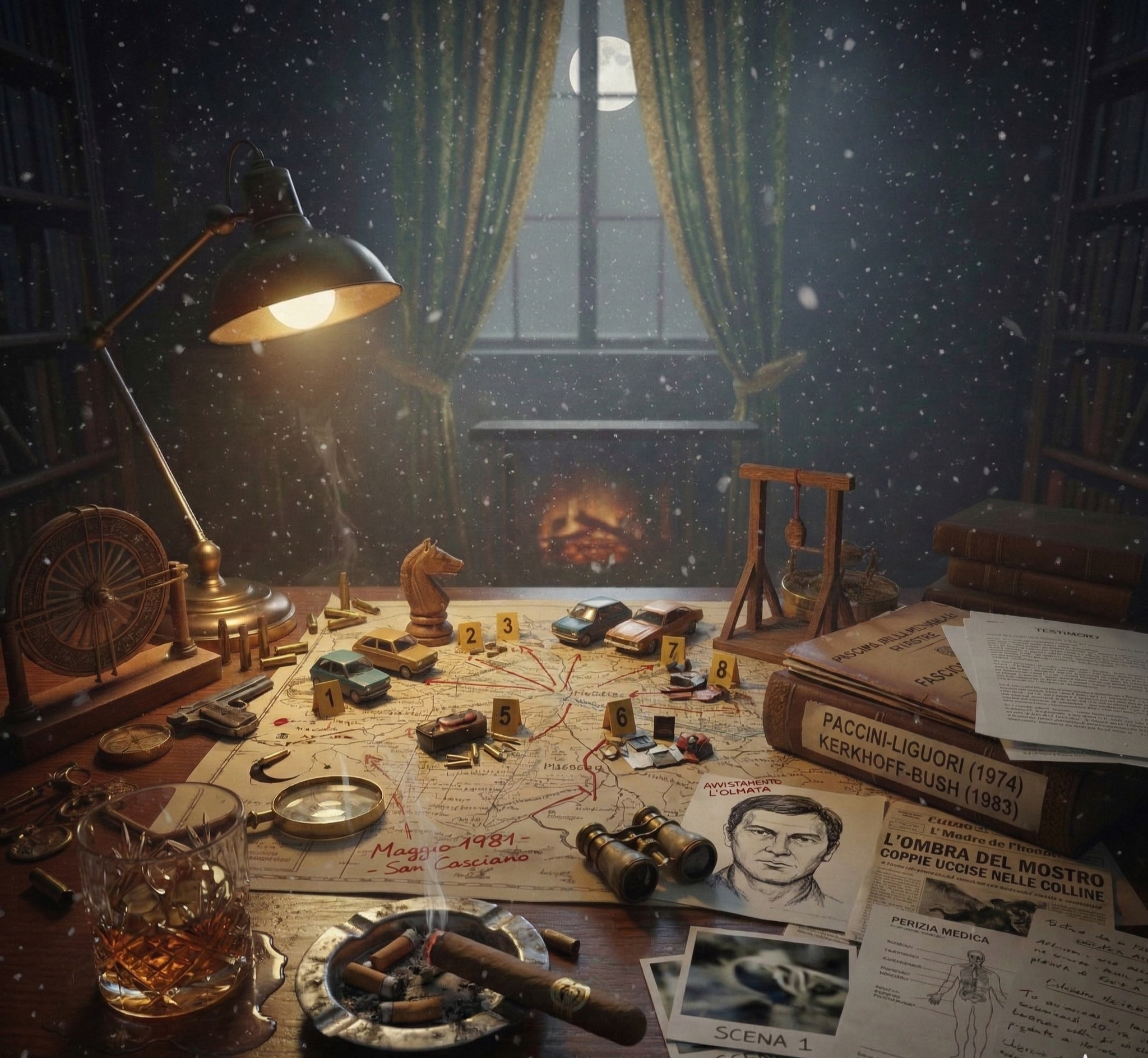
The Monster of Florence: Murder in the Hills of Tuscany
Between 1968 and 1985, couples parked in the quiet countryside around Florence became the targets of a mysterious killer who struck with chilling precision. Armed with a Beretta pistol, the murderer attacked lovers in secluded areas of Tuscany, leaving behind a trail of fear that would terrorise Italy for nearly two decades. Known as the Monster of Florence, the killer was never definitively identified, and the investigation that followed became one of the most controversial in European criminal history.
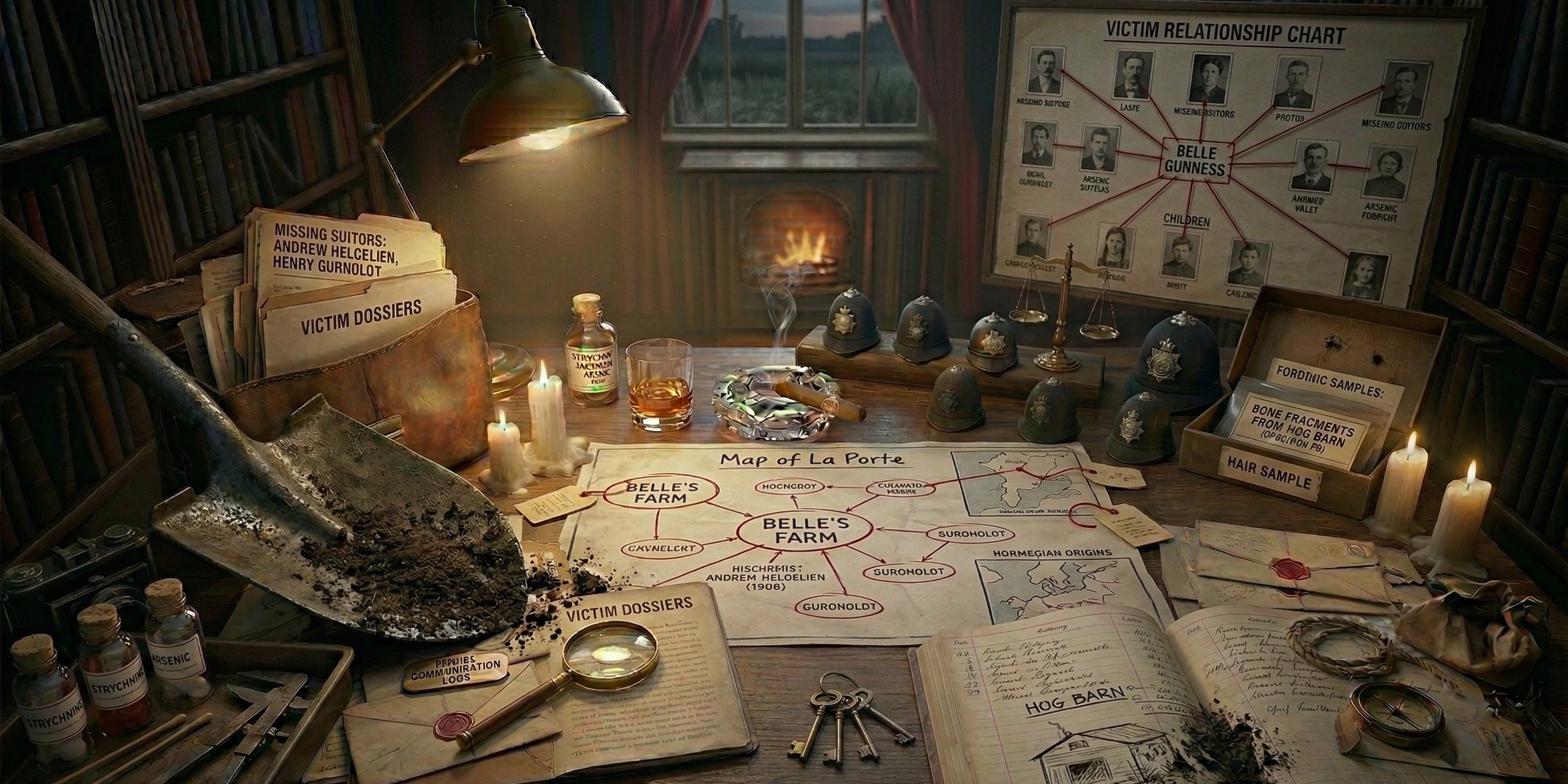
Belle Gunness: The Widow Who Dug Graves.
In the early 1900s, a quiet farm in La Porte, Indiana became the center of one of America’s most disturbing criminal mysteries. Belle Gunness, later known as “Lady Bluebeard,” was suspected of luring wealthy suitors through newspaper advertisements—only for them to disappear without a trace. When her farmhouse burned in 1908, investigators uncovered buried remains beneath the property, raising a chilling question: did Belle die in the fire, or did she escape after building a fortune from deception and death?

The Billy Milligan Case: Identity, Crime, Limits of Justice.
In the late 1970s, a criminal trial introduced the courtroom to a rare and controversial psychological condition. The case of Billy Milligan forced society to confront the uneasy intersection of crime, identity, and mental illness.
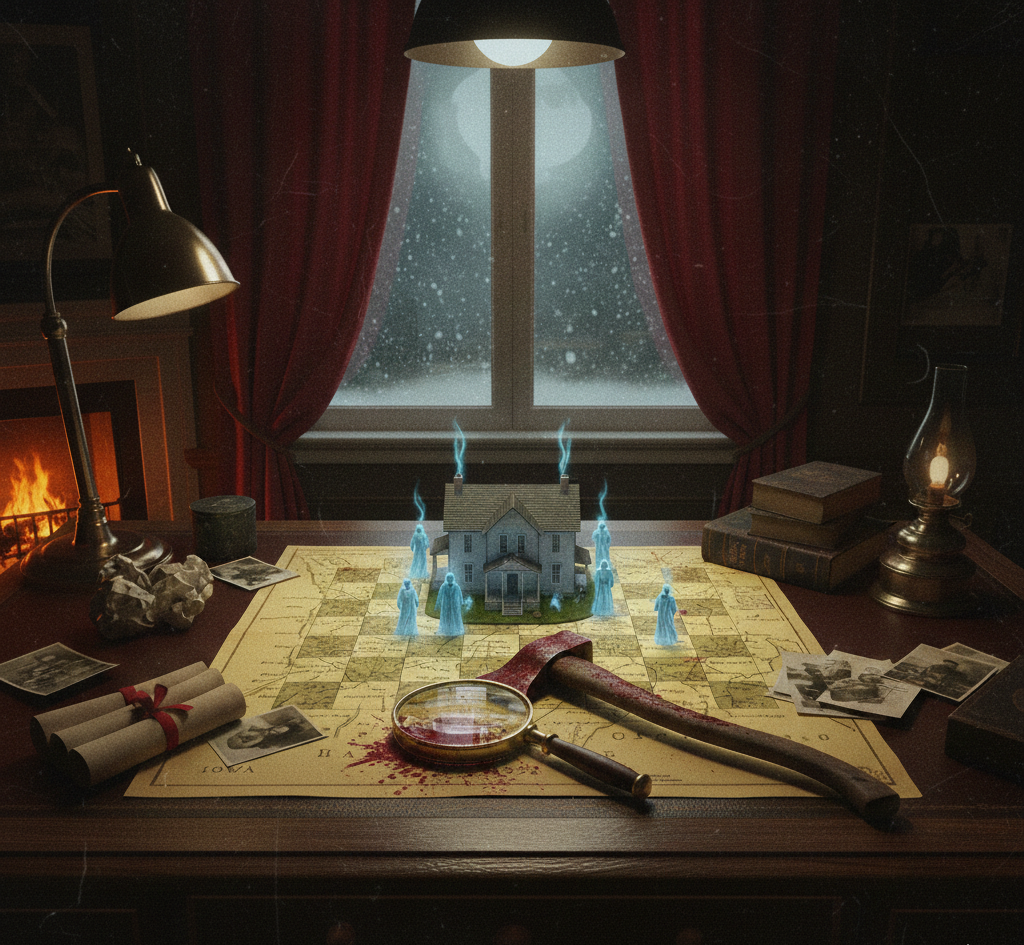
The Villisca Axe Murders: Violence, Suspicion, and the Failure of Certainty.
In 1912, a quiet Iowa town woke to one of the most brutal crimes in American history. Eight people were murdered in their sleep, and the identity of the killer has never been proven.

Salem Witch Trials: Unmasking Fear and Paranoia
In 1692, fear and accusation consumed a small New England town. The Salem witch trials reveal how panic, belief, and authority combined to turn suspicion into deadly justice.

The Werewolf Trials Of Early Modern Europe.
In early modern Europe, fear of the supernatural blurred the line between crime and belief. The werewolf trials reveal how panic, superstition, and authority combined to create one of history’s most unsettling chapters.