The Monster of Florence: Murder in the Hills of Tuscany
Florence, Italy, is internationally recognised as the Cradle of the Renaissance, celebrated for its distinguished art, architecture, and the tranquil Tuscan countryside. Yet beneath this idyllic reputation lies one of the most disturbing and unresolved mysteries in modern criminal history. Between 1968 and 1985, a serial killer targeted young couples seeking privacy in parked cars along the region’s secluded lanes. These locations, formerly associated with romance, became sites of terror, fundamentally altering the social landscape and instilling widespread fear. Consequently, many Italians began to regard the surrounding woods with apprehension.
The unidentified killer, later referred to as the “Monster of Florence,” employed a calculated and brutal modus operandi. Operating primarily during moonless weekend nights, the perpetrator ambushed couples in secluded areas using a .22 calibre Beretta pistol loaded with distinctive Winchester bullets. The violence extended beyond the initial shootings; after killing the male victims, the assailant removed the female victims from the vehicles and inflicted precise mutilations with a heavy blade. The surgical precision of these acts perplexed medical examiners and investigators, suggesting a methodical and highly organised offender whose motives remained elusive.
More than half a century later, the true identity of the killer remains an unresolved enigma that continues to haunt the nation. The decades-long investigation generated numerous false leads, ruined lives, and conspiracy theories. Although various suspects, including an abusive, illiterate farmer and a clan of Sardinian petty criminals, were arrested and tried, the inquiry eventually became chaotic. Detectives encountered allegations of esoteric cults, corrupt officials, and secretive circles of wealthy elites who allegedly commissioned the murders to harvest body parts for illicit rituals. Today, the Monster of Florence persists as both a symbol of unresolved evil and a reminder of the enduring impact of unsolved crimes.

Tuscany Before the Terror
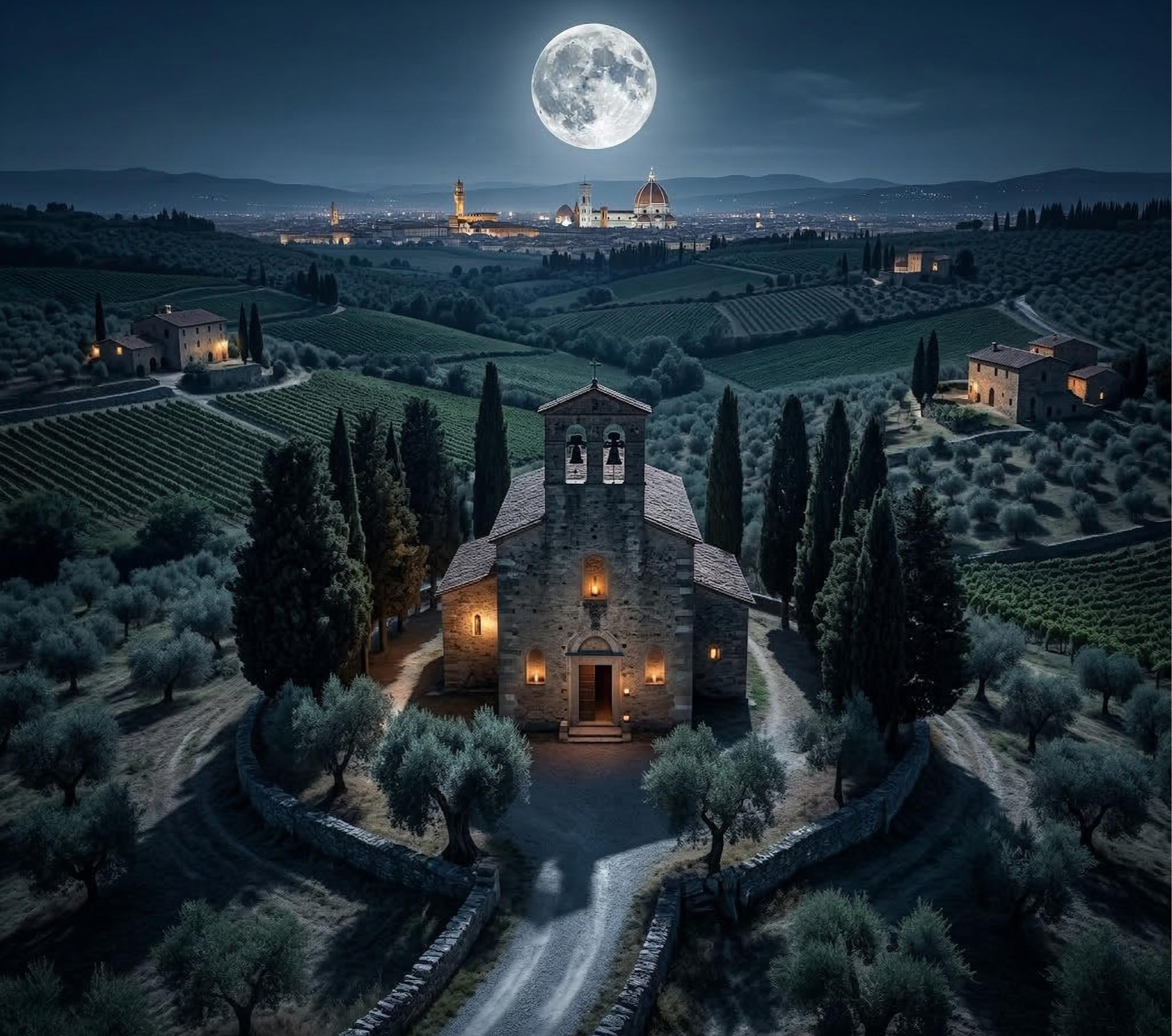
During the 1960s and 1970s, the rural outskirts of Florence were regarded as a tranquil retreat from the city’s historic centre. The Tuscan countryside was internationally admired for its scenic hills, cypress trees, and the abundance of vineyards and olive groves. In summer, the landscape was marked by vibrant fields of sunflowers and poppies. The hills of Chianti and the secluded country lanes epitomised romantic Italy, offering privacy and respite from urban life. Within the prevailing social structures, it was customary for young Italians to live at home with their parents until marriage, leaving unmarried couples with virtually no privacy for romantic encounters. Consequently, seeking intimacy required venturing deep into the isolated countryside. Romantic encounters in parked cars became a widespread cultural phenomenon among young Florentines. Couples frequently drove to dirt roads, hidden wooded clearings, and quiet lovers’ lanes, all surrounded by dark, forested hills. These secluded locations, situated among the vines and trees, provided a haven for romance and intimacy under the cover of moonless nights.
This idyllic and romantic atmosphere was violently disrupted when these secluded locations became the setting for one of Italy’s most notorious series of murders. Beginning in 1968 and escalating throughout the 1970s and early 1980s, an elusive serial killer targeted couples in these lovers’ lanes. The perpetrator, later dubbed the “Monster of Florence,” systematically ambushed young couples during vulnerable moments in their parked cars. The peaceful, moonless nights that once offered privacy for romance were transformed into scenes of terror, sparking widespread panic and prompting residents to avoid the countryside.
The brutality of these attacks disrupted the tranquillity of Tuscany; however, it was the calculated and repetitive nature of the violence that most disturbed the public. The crimes appeared ritualistic, following a consistent sequence of actions. After ambushing and shooting the couples with a .22 calibre Beretta pistol, the perpetrator often removed the female victims from the vehicles to perform post-mortem mutilations. The precision of these acts led investigators and the public to speculate about possible occult or ceremonial motives, which significantly affected the region’s sense of security.

The First Killing
On the night of August 21, 1968, the quiet Tuscan town of Signa, located just west of Florence, became the site of a brutal double homicide. Thirty-two-year-old Barbara Locci and her twenty-nine-year-old lover, Antonio Lo Bianco, were together in Lo Bianco’s parked car near a local cemetery. While they engaged in their rendezvous, a killer emerged from the darkness and shot them both at point-blank range. Locci’s young son, Natalino, had been asleep in the back seat of the vehicle. Upon waking to the sight of his deceased mother, the terrified and shoeless boy fled the car in the middle of the night, eventually reaching a nearby farmhouse at two in the morning to seek help.
Initially, investigators believed this was a straightforward crime of passion, a domestic dispute typical of the era’s standard police work. Barbara Locci, nicknamed the “Queen Bee,” was married to a much older man named Stefano Mele. She was also known to be engaged in several extramarital affairs, notably with a group of Sardinian brothers living in the region. Suspicion immediately fell upon her husband. Under police pressure, Stefano Mele provided a series of inconsistent statements, confessing, retracting his words, and blaming his wife’s lovers before ultimately accepting responsibility. He was convicted of the murders and sentenced to prison, and officials promptly closed the case, assuming it was a local vendetta.

However, the murder weapon, a .22 calibre Beretta pistol, was never recovered from the 1968 crime scene. Fourteen years later, in 1982, an anonymous tip prompted an examining magistrate to dig through the archived records of Stefano Mele’Mele’s. Inappropriately stored inside the old case file were five bullets and five shell casings. When forensic experts analysed forgotten pieces of evidence, they made a disturbing discovery: the distinct Winchester Series H bullets exactly matched the ballistics from a string of recent, gruesome double homicides that had been terrorising the Florentine hills since 1974.
This ballistic evidence overturned the initial conclusion of the 1968 case. Since Stefano Mele was incarcerated during the subsequent murders, the actual murder weapon remained in circulation in the Tuscan countryside. The Signa shooting was therefore not an isolated crime of passion but marked the beginning of a broader pattern.
The Pattern Emerges
Between 1974 and 1985, the rolling hills surrounding Florence transformed from a romantic haven into a hunting ground as a terrifying pattern of serial murder emerged. Seven distinct double homicides took place during this period, striking at the heart of Italian youth culture. The victims were exclusively couples who had parked their cars in secluded, wooded lovers’ to seek intimacy away from the prying eyes of their parents and the public. Striking almost entirely during moonless weekend nights or the eves of holidays, the elusive killer would quietly stalk his prey. Waiting patiently for the couples to become distracted and vulnerable, the murderer would emerge from the darkness and ambush the vehicles.
The execution of these attacks followed a precise and consistent modus operandi. The killer always approached the parked car and opened fire with the same weapon: a .22 calibre Beretta handgun. Winchester Series H bullets, characterised by a distinct ‘H’ stamped on the brass casing, were invariably used. To ensure control of the scene and eliminate any physical threat or resistance, the attacker typically targeted the male victim first, firing through the car windows to incapacitate him. Once the male was dead, the killer then focused on the female victim.

It was the aftermath of the shootings, however, that genuinely defined the killer’s gery. Following the murders, the attacker engaged in a gruesome ritual, often dragging the female victims from the vehicle to perform grotesque post-mortem surgical mutilations. Using a heavy, notched blade which investigators likened to a scuba knife, the killer meticulously excised the women’s nates. As time went by, the violence escalated; in the 1984 and 1985 murders, the killer also amputated the left side of the victims. There were rare anomalies in this pattern, such as the 1982 attack, where the male victim attempted to reverse his car into the street, forcing the killer to flee before any mutilation could occur. Similarly, in 1983, the killer murdered two male German tourists, seemingly mistaking a blonde, long-haired man in a camper van for a woman.
The brutality and precision of these ritualistic killings shocked the nation. Crime reporters soon labelled the perpetrator the “Monster of Florence,” and the case received extensive media coverage. The ongoing threat disrupted social norms, prompting authorities to issue warnings discouraging couples from meeting in secluded areas.
The Investigation
The hunt for the Monster of Florence swiftly evolved into one of the longest, most expensive, and sprawling criminal investigations in Italian history. In an effort to stop the ongoing violence, authorities mobilised significant resources, ultimately interviewing over a hundred thousand men. The Carabinieri and local police forces compiled thousands of pages of information, producing extensive lists and carefully following up on hundreds of suspects who fit the behavioural profile or had a history of violent crimes. The search extended well beyond the city limits, as investigators combed through the vast, remote wooded areas of the Tuscan countryside where the killer was known to strike. Detectives also infiltrated the local subculture of voyeurs, known as Indiani, who routinely prowled these secluded lovers’ lanes equipped with binoculars and night-vision cameras, hoping that one of these individuals might have witnessed the murderer in action.
Despite this unprecedented effort, the killer remained elusive. The vastness of the Florentine hills made it nearly impossible for police patrols to monitor the numerous hidden clearings favoured by young couples. Additionally, the Monster’s modus operandi frustrated traditional police work; the killer acted alone, operated exclusively during moonless nights, and had no personal relationship with the randomly selected victims. This lack of connection left investigators with no clear motives or leads. The attacks were carried out rapidly, often completed in less than ten minutes, allowing the perpetrator to escape before authorities could respond. The Italian government offered a substantial reward of approximately $290,000 for information, yet false leads and wrongful arrests frequently hindered the investigation.

As the number of victims increased and authorities failed to apprehend the perpetrator, public fear intensified. Millions of warning postcards were distributed to residents and tourists to convey the severity of the danger. Consequently, social habits changed significantly; young couples ceased to meet in the countryside, disrupting the region’s longstanding romantic culture.
The Suspects
Over the course of the decades-long investigation, a wide array of suspects emerged. Initially, detectives pursued the “Sardinian trail,” focusing on a clan of petty criminals linked to the 1968 double homicide. However, as the serial killer continued to strike while these primary suspects were incarcerated, investigators were forced to widen their search.
In the late 1980s, the most notable suspect in the case’s story emerged: Pietro Pacciani. Pacciani was a brutish, semi-literate farm labourer with a horrifyingly violent criminal history. In 1951, he had stabbed a man to death in a jealous rage, subsequently forcing his girlfriend to engage in a sexual act with him next to the victim’s. He later served time for fiercely abusing his wife and repeatedly sexually assaulting his two daughters. Following an anonymous letter and a computer database screening, police raided his property. They allegedly found a single, unfired .22 calibre Winchester Series H bullet buried in his vegetable garden. Following a highly sensationalised trial fuelled by enormous public pressure, Pacciani was convicted of the serial murders in 1994 and handed multiple life sentences. However, this judicial outcome was short-lived. In 1996, an appeals court overturned Pacciani’s conviction and ordered his release. The court cited weak circumstantial evidence and suggested that investigators may have planted the Winchester bullet in Pacciani’s case to frame him. Before a mandated retrial could commence, Pacciani died of a heart attack at his home in 1998.e in 1998.
Prosecutors then shifted their focus to Pacciani’s companions, a group dubbed the “Snack Buddies” (compagni di merende) after a memorable courtroom quote. One member, Giancarlo Lotti, provided a series of inconsistent confessions claiming that he, Pacciani, and a former postman named Mario Vanni had committed the murders together. Based almost entirely on Lotti’s testimony, both Lotti and Vanni were convicted in 2000 and sentenced to lengthy prison terms for their roles in several of the double homicides.

Despite these convictions, the case remains controversial, and many investigators believe the full truth has not been revealed. Critics argue that those convicted lacked the precision and organisation required to commit the complex post-mortem mutilations attributed to the Monster. Investigators and prosecutors, led by Chief Inspector Michele Giuttari and Prosecutor Giuliano Mignini, proposed a theory that the crimes were not the work of a lone psychopath but the result of a split-level conspiracy. This theory suggested that the convicted farm labourers, such as Pietro Pacciani and his “Snack Buddies,” acted as low-level executioners or intermediaries. A second level allegedly hired them, an elite secret society composed of wealthy professionals, including doctors, lawyers, and public officials.
According to this hypothesis, the underlying motive behind the murders was rooted in the occult. Investigators believed the murders were directly connected to ritualistic killings and a black market for human body parts. Because the serial killer meticulously excised the female victims’ organs and, in later years, their left breasts, proponents of the occult theory claimed these surgical mutilations were not driven by typical psychopathy but were commissioned to harvest specific biological components. These body parts were allegedly used in blasphemous rituals, esoteric ceremonies, and black masses conducted by the secret sect in remote Tuscan villas. The discovery of a pyramidal stone near a property where Pacciani worked was cited as physical evidence of alleged devil worship.
Despite the sensational nature of the occult theory, many critics contend that the investigation became mired in speculation and dietrologia, a term describing the Italian tendency to suspect hidden conspiracies. Veteran crime reporters and authors, including Mario Spezi and Douglas Preston, dismissed the theory as unfounded and potentially harmful. Ultimately, no concrete evidence supporting the existence of an occult sect or a related black market was substantiated, and no high-level individuals were convicted.
The Endless Debate-
More than fifty years after the initial crimes, the case remains unresolved and continues to influence public consciousness. The Monster of Florence is not only an unsolved criminal case but also a symbol of the limitations of modern investigative methods. Despite extensive efforts, no conclusive evidence has been found to identify the perpetrator.
Numerous unresolved questions continue to challenge investigators. Was Pietro Pacciani the actual killer, or was he a scapegoat framed by planted evidence? Were there multiple perpetrators, possibly a group operating under the direction of a clandestine sect? Alternatively, did the investigation overlook key evidence due to bureaucratic rivalries, compromised crime scenes, and a focus on conspiracy theories rather than concrete facts? The extensive number of ruined lives, wrongful arrests, and collateral deaths associated with the investigation suggests a complexity that extends beyond the actions of a single individual.
For many in Italy, the Monster of Florence represents more than the actions of a serial killer. The case has become a symbol of the challenges and perceived shortcomings within the Italian judicial system. The prolonged investigation reflects broader societal anxieties regarding institutional effectiveness. The unresolved nature of the case serves as a reminder that some crimes remain unsolved.

References
15 Disturbing facts about the Monster of Florence. (n.d.).
Hendrickson, P. (2025, October 21). Who was the Monster of Florence? Mystery still haunts Italy | A&E. AETV. https://www.aetv.com/articles/who-was-the-monster-of-florence-inside-the-mystery-that-still-haunts-italy
Monster of Florence. (n.d.). Crime+Investigation UK. https://www.crimeandinvestigation.co.uk/crime-files/monster-of-florence
Paolo Cochi (Director). (n.d.). The Monster of Florence.
Preston, D., Spezi, M., & Bookey. (n.d.). The Monster of Florence.
Unknown, U. (n.d.). The Monster of Florence: Two men were convicted, but many people, including investigators, believe that the eight double murders remain unsolved (PART 1). In Unknown [Unknown].