Salem Witch Trials: Unmasking Fear and Paranoia
The Transformation of Fear into Testimony
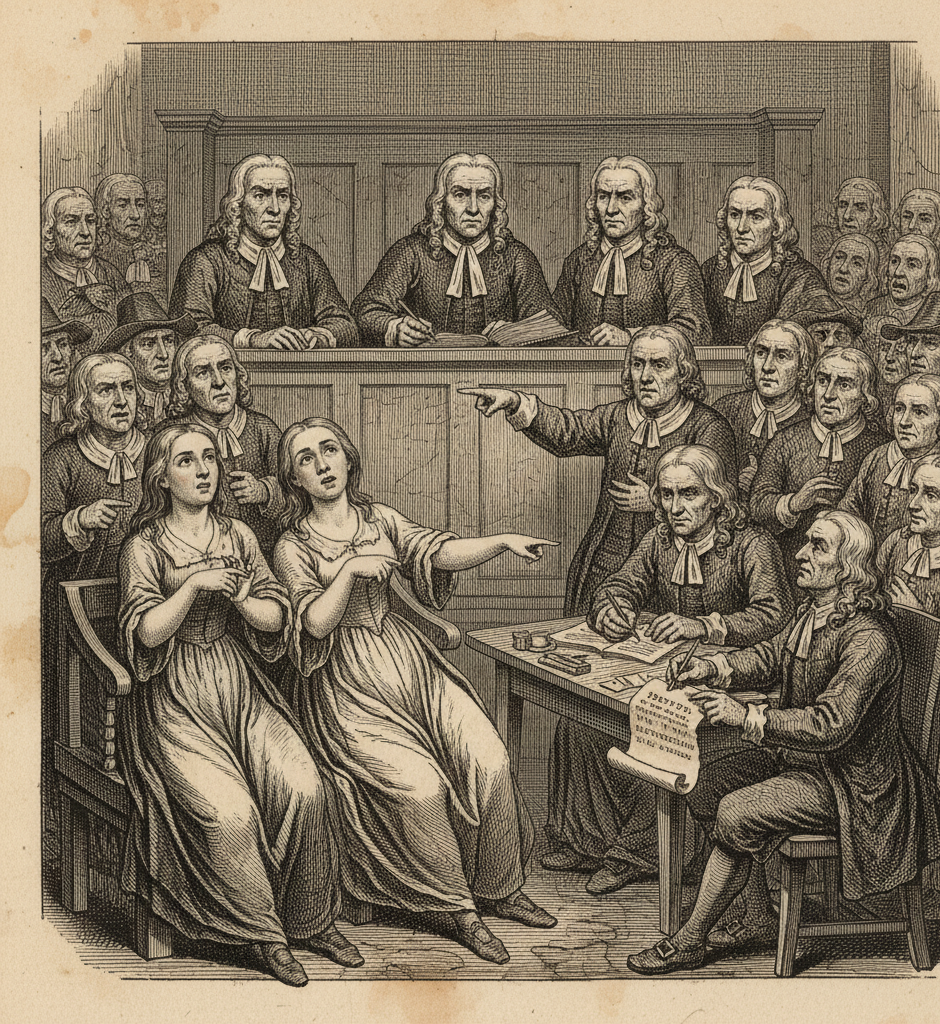
In 1692, Salem, Massachusetts, a small city north of Boston, experienced a period of widespread paranoia. Community members believed that malevolent forces were active among them. During this period, Betty Parris, the daughter of minister Samuel Parris, was diagnosed with demonic possession by a local physician. She reportedly displayed behaviours such as barking and violent limb contortions. Given the limited scientific knowledge of the time, demonic possession was considered the only plausible explanation, leading residents to conclude that the devil was present in their community.
The community became intent on eradicating the perceived source of these possessions, crediting them to alleged witches within Salem. These accusations triggered mass panic and widespread fear of witchcraft. Hundreds of individuals faced accusations and were compelled to stand trial under threat of public execution. While witch hunts were not unknown in Puritan society, the scale and severity of the Salem trials surpassed those of earlier episodes.
The trials resulted in nearly two hundred accusations, twenty-five deaths, and approximately forty-eight reported cases of alleged demon possession. The Salem Witchcraft Trials illustrate how superstition, paranoia, and mass hysteria can produce unsubstantiated accusations and result in numerous deaths. In response to the increasing number of cases, the governor established a special tribunal, the Court of Oyer and Terminer. Legal scholars have identified this court as a primary contributor to procedural failures during the trials. Accused individuals were denied legal counsel, and the evidence presented was frequently vague or ambiguous. In many instances, the only evidence consisted of claims that the spirit or spectre of the accused tormented victims.
The Social Powder Keg Behind Salem
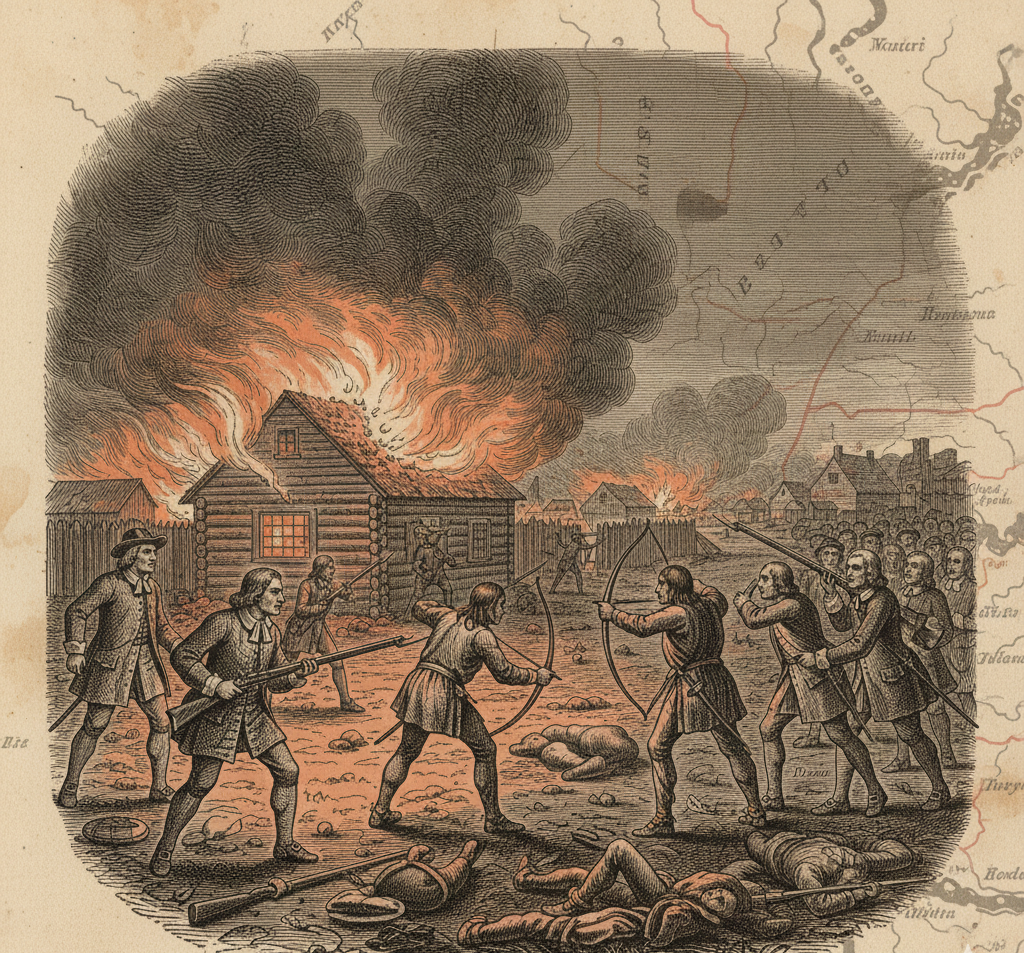
Salem's intense religiosity facilitated the creation, perpetuation, and dissemination of fears regarding witchcraft by mobilising the community’s religious and cultural cohesion against its own members. From the beginning, the Puritan community experienced significant religious repression, viewing dissenting or alternative perspectives as threats to both communal stability and spiritual welfare. Accusations of witchcraft provided a framework to justify and explain adverse events such as death, illness, miscarriages, and poor harvests. This attribution diverted attention from natural explanations for these occurrences. As a result, witchcraft became the primary focus of collective anger and fear.
Many residents of Salem Village regarded the rise of secularism as a serious threat, worried it could provoke divine retribution. For some, the witch trials appeared to represent such punishment. Samuel Parris positioned himself as a defender and sought to unify the community through religious conviction; however, his actions ultimately deepened divisions in Salem. His extreme zeal resulted in a misguided effort to purify the village.
The economic dimension of the Salem crisis is less frequently addressed. After King William’s War, the region experienced an influx of refugees and considerable economic instability, which elevated anxiety and suspicion. A marked division existed between the poorer Salem Village and the commercially prosperous Salem Town, which controlled most of the region's commerce and taxation.
During this period, Salem also faced a smallpox epidemic, which further intensified fear, paranoia, and accusations. Martha Carrier, one of the accused, was blamed by community members for the outbreak, which claimed the lives of seven of her family members. These factors, combined with widespread superstition, contributed to mass hysteria and panic, offering the Puritans a convenient means to attribute misfortune to alleged witches.
Salem rose as a frontier society defined by persistent insecurity, territorial conflict, and social fragmentation. Located on contested land, the community faced continual threats of violence, disease, and economic instability. These pressures eroded social trust and heightened fears of internal betrayal. In such circumstances, anxiety often seeks moral or supernatural explanations, particularly when traditional authority structures are perceived as fragile. The legacy of frontier warfare and displacement normalised suspicion and reinforced a worldview in which unseen enemies were believed to exist within the community. The witch trials thus represented an attempt to impose order on a society formed by ambiguity and dread.
Legal Framework of the Salem Witch Trials
The witch hunt hysteria began in January 1692, initiated by two young girls, Abigail Williams and Betty Parris. The girls experienced uncontrollable fits, including screaming, making unusual sounds, throwing objects, bodily contortions, and complaints of biting and pinching sensations. Unable to determine a medical cause, the local doctor declared that the girls were bewitched. To identify the supposed tormentor, a witch cake was prepared, following an English tradition in which urine from the afflicted was baked into a cake and fed to a dog to reveal the witch's identity.
Abigail and Betty accused Tituba, along with Sarah Good and Sarah Osborn—marginalised members of their community—of bewitching them. While all three women initially maintained their innocence, Tituba eventually confessed to harming the girls. She claimed to have been visited by the devil and to have entered into a pact with him, implicating additional members of the Salem community. The magistrates accepted Tituba’s confession as evidence of a wider witchcraft presence, which intensified the hysteria. Subsequently, other young girls exhibited similar symptoms, resulting in accusations against more than 150 individuals.
The Court of Oyer and Terminer was established in Salem to conduct the witchcraft trials. At that time, the legal system did not recognise the principle of “innocent until proven guilty.” Individuals brought to trial were presumed guilty, and those imprisoned were required to pay for their own incarceration.
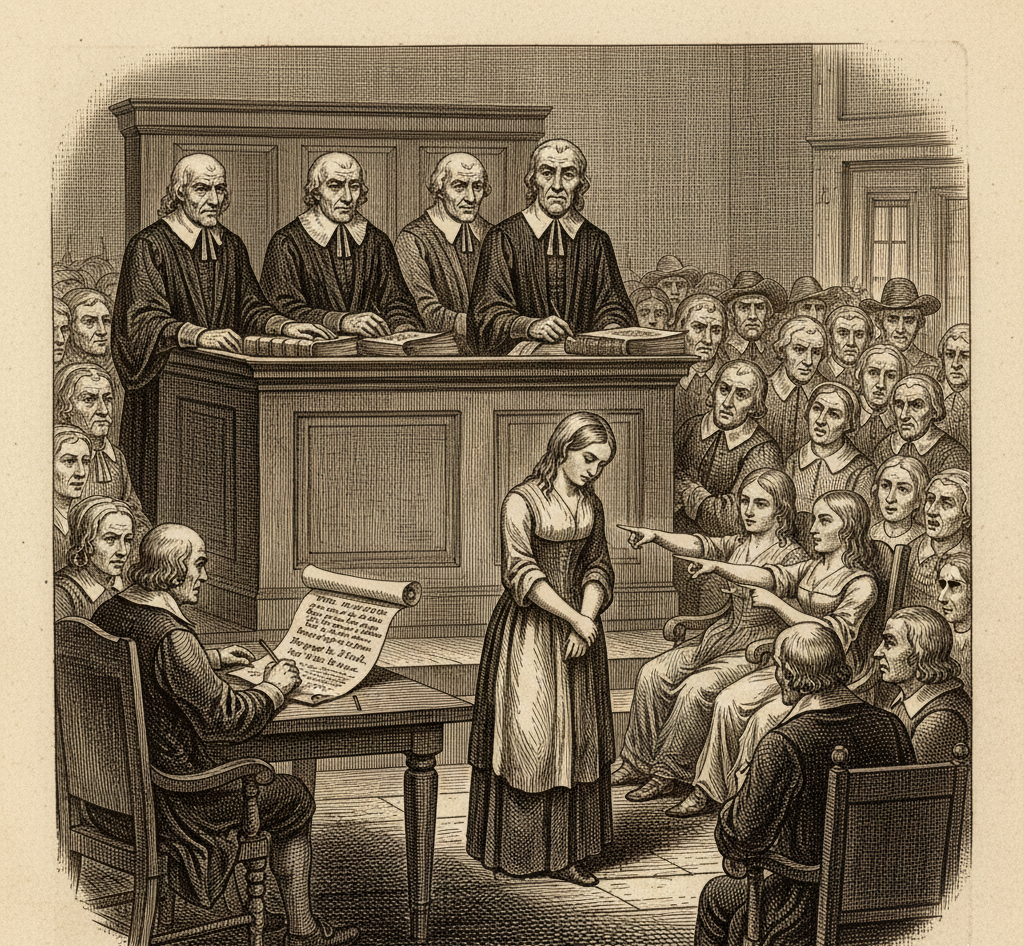
The courts relied on three primary types of evidence: confessions, testimony from two eyewitnesses to acts of witchcraft, and phantom evidence. Spectral evidence involved afflicted individuals interacting with an unseen assailant, believed to be the witch tormenting them. Some authors note that no court convicted an accused individual solely upon spectral evidence; corroborating evidence was required to substantiate charges of witchcraft.
Courts permitted evidence of a 'causal relationship,' such as claims that the accused had possessed or controlled an afflicted individual. Additional evidence included prior conflicts, alleged misconduct by the accused, possession of materials associated with spells, unusual physical strength, and the presence of a witch’s mark. The 'touching test' was also used, in which afflicted girls who were suffering fits became calm after touching the accused. Courts could not base convictions solely on confessions obtained through torture unless the accused reaffirmed the confession afterwards. If the accused recanted, authorities often subjected them to further coercion to obtain another confession. The ability to recite a prayer was considered proof of innocence. Those convicted of witchcraft were hanged rather than burned at the stake.
The first person to confess was Tituba, an enslaved woman accused of bewitching her master’s daughter and niece. Upon Tituba’s admission in court that she had harmed the girls through bewitchment, the afflicted girls' torments abruptly ceased, and after Tituba was jailed, they did not accuse her again. Tituba's confession is important not only for confirming the alleged presence of the devil in Salem, but also for demonstrating that a public confession was perceived as necessary to end the afflicted girls’ suffering. Trials deeply divided the community, with neighbours testifying against each other, children against parents, and spouses against one another. Some children died in prison, and many families were destroyed. After the dissolution of the Court of Oyer and Terminer, the Superior Court of Judicature assumed responsibility for the witchcraft cases and disallowed spectral evidence. As a result, most subsequent accusations of witchcraft led to acquittals.
Confessions, Coercion, and Survival in the Salem Witch Trials
From the outset of the Salem Witch Trials, confessions were used to justify and perpetuate the proceedings, as they provided incriminating evidence against other accused individuals. Beginning in February 1692, over 150 people were accused of witchcraft, and approximately one-third confessed. Although this may not appear significant, the confession rate was unusually high compared to that in English witch trials. Confessions became the primary force sustaining the trials, enabling them to continue for several months amid widespread fear of the devil’s presence. Without confessions, the trials likely would have ended after the initial arrests, but the growing number of admissions led to further accusations and the incrimination of additional community members.
As the trials progressed and more individuals confessed, the afflicted girls regularly showed relief from their symptoms following admissions of guilt. Courts observed a correlation between public confessions and the cessation of fits among the afflicted, which motivated magistrates to pursue additional confessions. This strategy was regarded not only as the most effective means of proving witchcraft but also as a way to secure community support for extracting admissions of guilt, given the widespread fear of the devil’s influence in Salem.
Those who confessed were still sent to jail after admitting guilt, but their incarceration differed from that of individuals who maintained their innocence. Confessed individuals were considered harmless and were not restrained by shackles, whereas those who maintained their innocence were believed to require physical restraint to protect society from their alleged witchcraft.
Even though those who confessed admitted guilt to the crime of witchcraft, which was punishable by death, they were never executed or punished for their confessions. From the beginning of the trials, the court established the precedent that confession spared individuals from execution. Only those who refused to confess and pleaded not guilty were found guilty at trial and subsequently executed. Because confessions were regarded as the most direct evidence of guilt in witchcraft cases, magistrates actively encouraged the accused to confess. From the outset, reports emerged of severe interrogations and harsh methods. Accused individuals were subjected to extended examinations, during which the court used various means, including threats of physical harm, to obtain confessions. Although Puritan beliefs held that physical torture was un-English and unholy, this did not prevent its use during the Salem Witch Trials. Instead, it influenced the court's definition of what constituted torture.
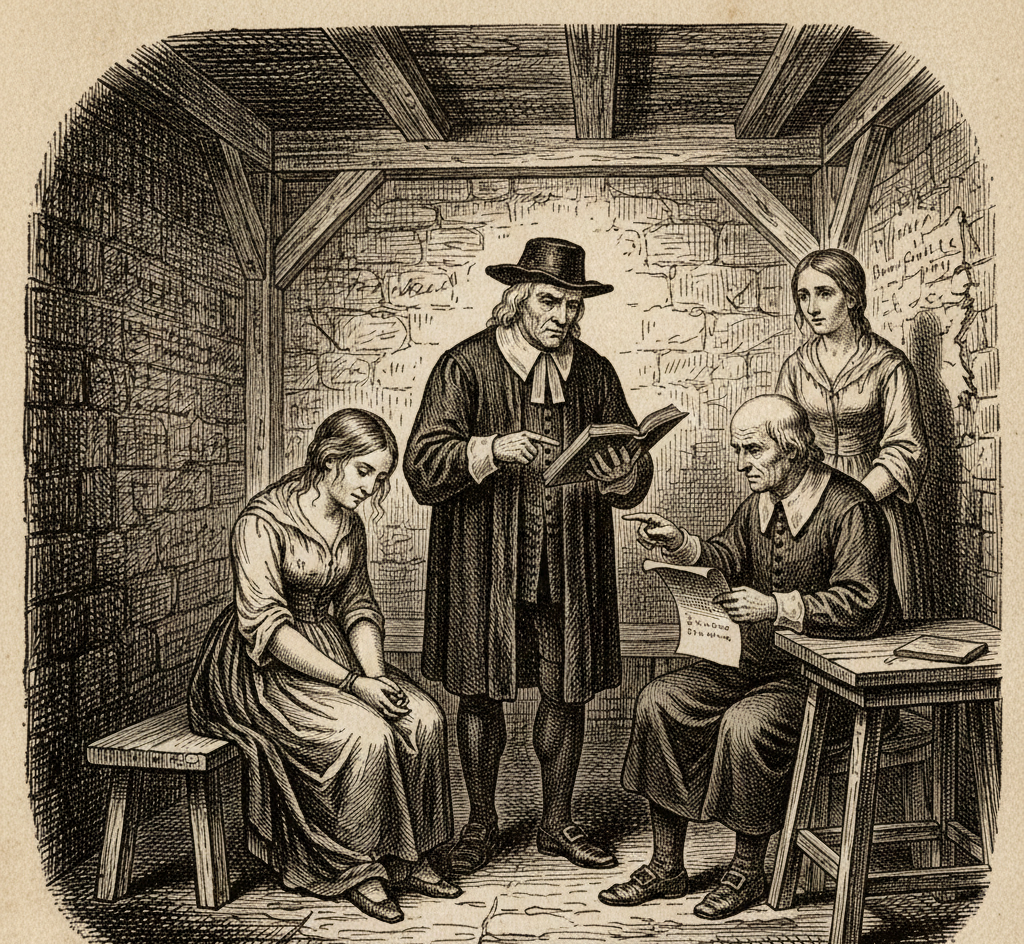
Many of the accused lacked the knowledge or resources to defend themselves or establish their innocence. Without legal representation, they often did not understand the magistrates' questions during examinations. Magistrates employed legal coercion, using threatening language or offering leniency in exchange for confessions, which frequently resulted in the accused implicating others in the community.
In August 1692, seventeen-year-old Margaret Jacobs reported that magistrates coerced her into confessing through legal pressure. During her examination, Jacobs was presented with a choice between confessing or facing execution. Lacking legal knowledge, she acknowledged and implicated her grandfather to ensure her survival. Jacobs later explained that her confession was false and attempted to recant, but the magistrates denied her request. The magistrates recognised that Jacobs, as a young girl, lacked an understanding of the law and the procedures of the Court of Oyer and Terminer. Consequently, the court coerced her into pleading guilty by presenting confession or execution as her only options. Jacobs's case is significant because, upon realising her confession was coerced and false, she attempted to recant her testimony but was denied the opportunity.
Executions and Their Aftermath
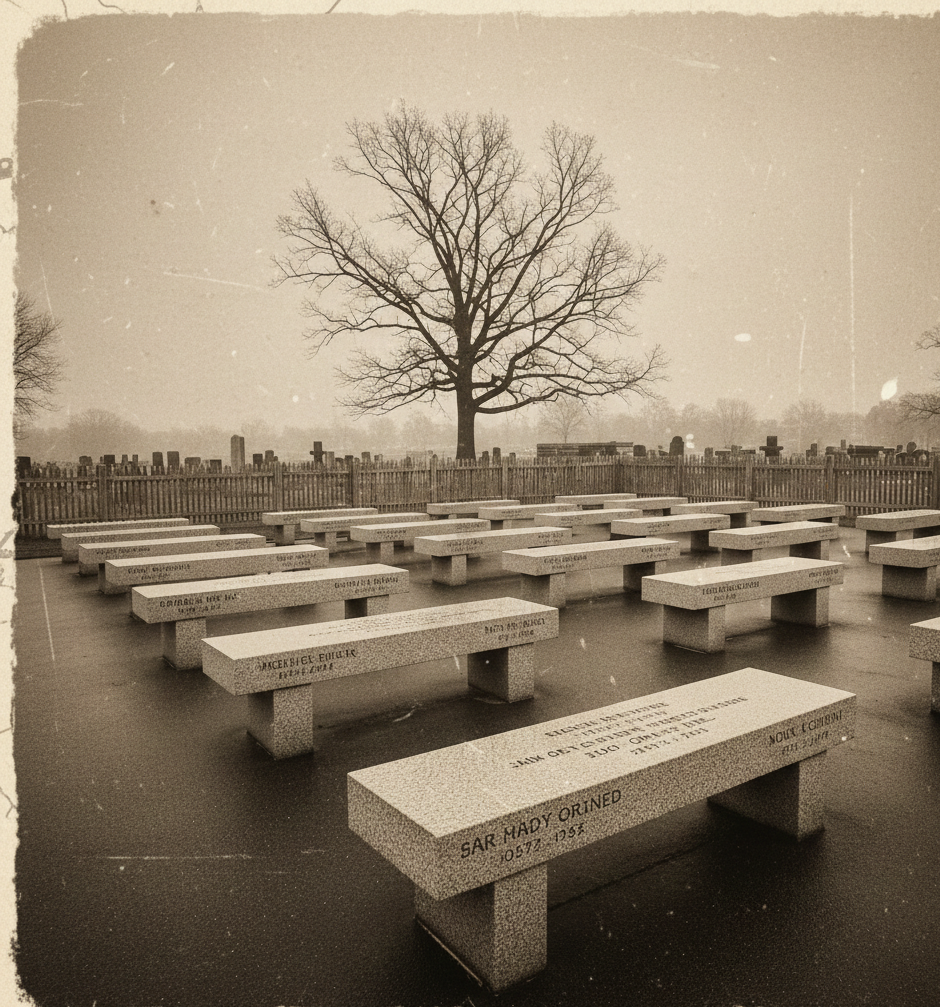
During the trials, nineteen individuals were executed by hanging, Giles Corey was pressed to death, and five others died in prison.
The following is a list of those executed, along with their execution dates
Bridget Bishop: June 10
Sarah Good, Rebecca Nurse, Elizabeth Howe, Susannah Martin, and Sarah Wildes: July 19
George Burroughs, Martha Carrier, George Jacobs Sr., John Proctor, and John Willard: August 19
Martha Corey, Mary Easty, Alice Parker, Mary Parker, Ann Pudeator, Wilmot Redd, Margaret Scott, Samuel Wardwell, and Mary Bradbury: September 22
Giles Corey (pressed to death): September 19. Died in jail: Sarah Osborne, Roger Toothaker, Ann Foster, Lydia Dustin, and one infant.
A shift in evidential standards occurred after Governor Phips's appointment, leading to the Court of Oyer and Terminer's cessation. This development marked the decline of Puritan authority and the 'City upon a Hill' ideology in Massachusetts. Petitions for the reversal of attainder and reparations for families continued for decades, with the last victims formally pardoned in 2001.
Salem as a Representative Phenomenon
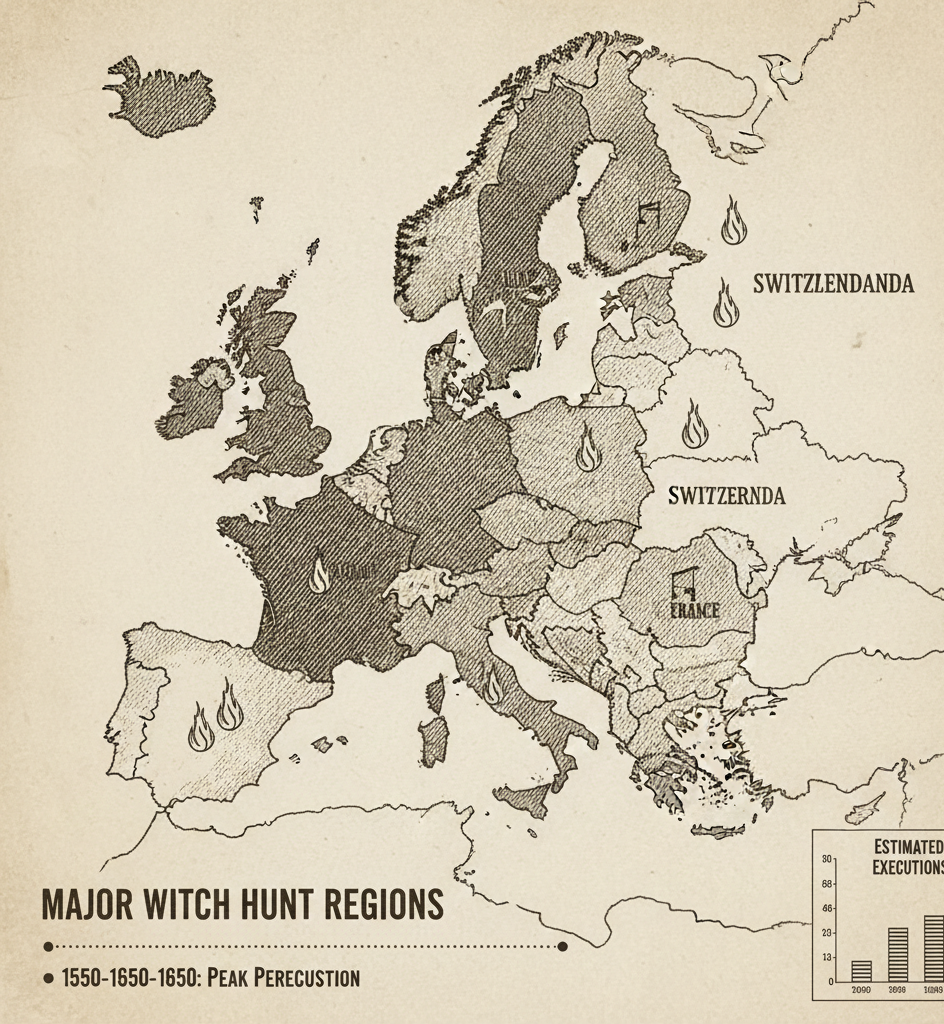
The Salem Witch Trials were not an isolated episode of irrationality but part of a wider historical pattern in which social stress, religious authority, and legal structures converged to produce collective persecution. Throughout early modern Europe and colonial societies, witch trials frequently arose during times of economic uncertainty, demographic strain, and political instability. Similar accusations and court proceedings emerged wherever communities lacked robust institutional mechanisms to manage fear and dissent. Salem adhered to established court precedents, relied on the accepted evidential standards of its era, and drew from widely circulated theological and legal texts. What distinguishes Salem is not its singularity but its preservation in a well-documented colonial record, which reveals dynamics that were otherwise common yet often overlooked.
Fear, Belief, and the Mechanisms of Collective Harm
The Salem witch trials demonstrate how fear, when reinforced by belief systems and legitimised by authority, can produce outcomes that appear irrational in retrospect yet seem internally coherent to those involved. Superstition alone does not account for such events; rather, it is the interaction of uncertainty, institutional power, and social pressure that enables persecution. When societies face instability without sufficient mechanisms for accountability and restraint, moral certainty may supplant empirical judgment. Salem acts as a reminder that human rationality is vulnerable under stress, and that the unchecked impulse to impose order can itself become a source of harm. The lesson goes beyond historical curiosity to emphasise the need for structural caution.
Outside its immediate historical setting, Salem demonstrates how systems of authority can transform social suspicion into formalised violence. Once fear is embedded inside legal and ethical structures, individual doubt entails considerable risk, and silence becomes complicity. Ordinary individuals are drawn into exceptional outcomes not through malice, but through participation in processes that reward conformity and penalise hesitation. The primary danger does not lie in extreme belief, but in the normalisation of procedures that convert belief into action. Salem shows that the most enduring forms of injustice often arise not from chaos but from order imposed without scepticism.
References-
Ocksreider, S. K., McGiffert, M., Axtell, J. L., & Whi11enburg, J. P. (1984). THE SALEM WITCH TRIALS FROM a LEGAL PERSPECTIVE; THE IMPORTANCE OF SPECTRAL EVIDENCE RECONSIDERED [Thesis]. The College of Williams and Mary in Virginia. (Original work published 1984)
Callis, M. (2005). The aftermath of the Salem witch trials in Colonial America. In Historical Journal of Massachusetts (Ed.), Historical Journal of Massachusetts (Vol. 33, Issue 2). Institute for Massachusetts Studies and Westfield State University. https://www.westfield.ma.edu/historical-journal/wp-content/uploads/2018/06/Callis-combined-summer-2005.pdf
McAree, C. & University at Albany, State University of New York. (2024). Confessions in the Salem Witch Trials. In ALL - Honors Theses. https://scholarsarchive.library.albany.edu/all_honors/20
Purdy, S. (2007). CONJURING HISTORY: THE MANY INTERPRETATIONS OF THE SALEM WITCHCRAFT TRIALS. In RIVIER ACADEMIC JOURNAL (Journal-Article No. 1; Vol. 3, pp. 1-). https://www2.rivier.edu/journal/RCOAJ-Spring-2007/J90-Purdy-Salem-Trials.pdf
Reed, I. (2007). Why Salem made sense: culture, gender, and the Puritan persecution of witchcraft. Cultural Sociology, 1(2), 209–234. https://doi.org/10.1177/1749975507078188
Aziz, A. (2022). Salem Trials (1692) in History and in Miller’s The Crucible: Investigating truth claims in historical narratives and drama. Baltic Journal of English Language Literature and Culture, 12, 4–19. https://doi.org/10.22364/bjellc.12.2022.01
Fraser, D. (2020). SOCIETY, SUSPICION, AND THE SUPERNATURAL: THE FACTORS BEHIND THE SALEM WITCH TRIALS. The Great Lakes Journal of Undergraduate History, 7(1), 11–13. https://ojs.uwindsor.ca/index.php/GLJUH/index
Fearful tension: The Salem Witch Trials. (n.d.). In Boston College, Mystērion: The Theology Journal of Boston College: Vol. I (Issue I, pp. 20–22).
Blumberg, J. (2024, March 20). A brief history of the Salem Witch trials. Smithsonian Magazine. https://www.smithsonianmag.com/history/a-brief-history-of-the-salem-witch-trials-175162489/