Jack The Ripper: The Shadow Over Whitechapel.
In the autumn of 1888, the East End of London was enveloped in darkness and suffocated by the sulphurous "London Particular" smog. In stark contrast to the prosperous West End, Whitechapel was marked by severe poverty, disease, and pervasive despair. Nearly a million people crowded into dilapidated "rookeries" and common lodging houses, where residents paid fourpence for coffin-like beds. The streets were saturated with liquid sewage, coal dust, and the persistent stench of slaughterhouses. These conditions forced many vulnerable women into casual prostitution, exchanging sex for necessities such as food or shelter. The unlit alleyways and courtyards of this "wicked quarter-mile" created an environment conducive to the emergence of a violent predator. From this landscape of hopelessness, a figure of unprecedented brutality emerged.
In late summer 1888, an unidentified assailant began stalking the cobbled streets of Whitechapel, transforming the district into a site of repeated violence. Attacking at night, the perpetrator targeted impoverished, alcohol-dependent women who were forced into public spaces by economic hardship. The violence inflicted reached beyond fatal injuries, involving severe mutilation and anatomical disfigurement. The killer acted with alarming speed and silence, overpowering victims and inflicting deep throat wounds. Subsequent acts included the removal of internal organs and extensive facial mutilation, marking the crimes with a distinct and disturbing signature.
Between August and November, the violence intensified. Five women—Mary Ann Nichols, Annie Chapman, Elizabeth Stride, Catherine Eddowes, and Mary Jane Kelly—became known as the "canonical five," linked by the distinctive methods of their murderer. With each crime, the brutality escalated. The culmination occurred on 9 November at 13 Miller's Court, where Mary Jane Kelly was subjected to extreme mutilation and dismemberment, her organs placed around the room by a perpetrator who appeared to have had sufficient time to carry out his actions.
As the murders persisted, the perpetrator began to communicate directly with the public and authorities, most notably by sending taunting letters to the Metropolitan Police. One such letter, written in red ink and addressed to the Central News Agency, began with "Dear Boss" and introduced the moniker "Jack the Ripper." The letter contained threats that appeared to be realised in subsequent crimes. Another package, labelled "From Hell," included half of a preserved human kidney, allegedly from victim Catherine Eddowes. The mass media amplified these communications, transforming the unknown killer into a mythologised figure and portraying him as one of the first modern serial killers to achieve international notoriety.
Jack the Ripper disappeared as abruptly as he had emerged, vanishing into the Whitechapel fog. He left behind a city gripped by fear, a police force hindered by inter-departmental rivalries and the absence of modern forensic science, and a mystery that remains unsolved. The sudden cessation of the murders created a narrative void, prompting the proliferation of theories. The suspect list eventually grew to include over a hundred individuals from diverse professions and backgrounds, such as foreign immigrants, surgeons, slaughterhouse workers, and even members of the British royal family. These developments elevated a series of local homicides into a lasting cultural preoccupation within late-Victorian society. Understanding the full significance of the Whitechapel murders requires a careful study that moves beyond myth and sensationalism.
Whitechapel Before the Murders
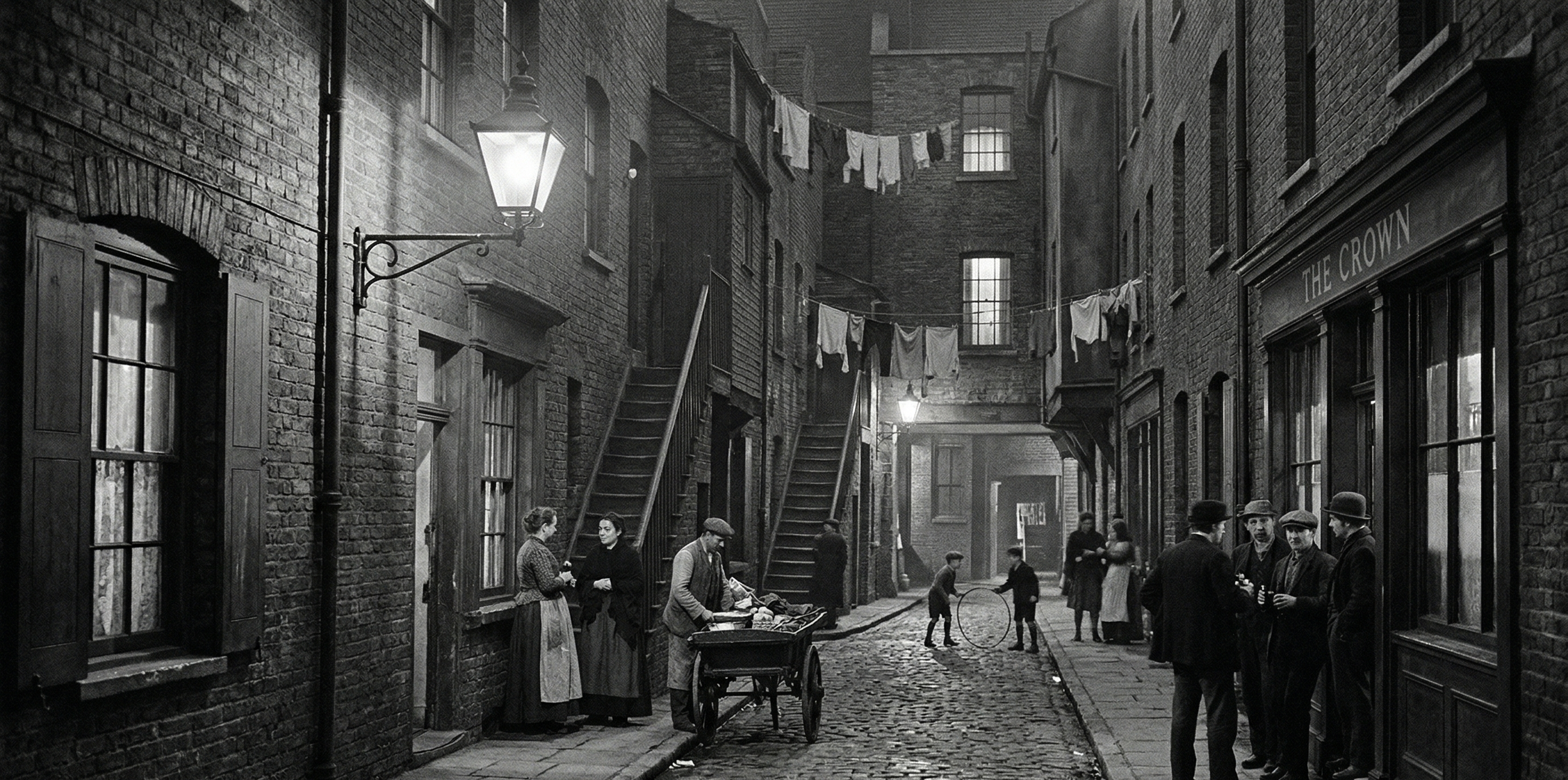
Before the infamous murders, Whitechapel was already regarded as a neglected and impoverished district, largely overlooked by the affluent society of late-Victorian London. The area, often referred to as the "Abyss," was characterised by dense shadows and the persistent, pungent smog known as a "London Particular." In 1888, the East End was noted for severe destitution, widespread disease, and persistent despair. The arrival of Irish immigrants fleeing famine and Jewish refugees escaping persecution contributed to a rapid population increase, with nearly a million people residing in the wider East End. In Whitechapel, population density reached 256 people per acre, forcing families into deteriorating, vermin-infested slums called "rookeries."
Survival in this bleak landscape remained a daily, brutal war. Liquid sewage filled the cellars of crumbling tenements, and the air bore the perpetual, coppery stench of the local slaughterhouses. Malnutrition and disease ran rampant; tragically, fifty-five per cent of the children born in the East End perished before their fifth birthday. For the vast majority, there was no true home, only the desperate daily scramble for a few pennies to secure a miserable space in one of the district's 233 common lodging houses, or "doss houses," which sheltered over 8,500 transient souls a night. For fourpence, a weary person could rent a coffin-like bed; those with only twopence were forced to sleep sitting up, leaning against a rope stretched across a bleak dormitory.
In this environment, vice was often a matter of survival rather than an ethical failing. Sweatshop labour offered minimal compensation for extensive hours, leading many impoverished women to engage in casual prostitution to avoid starvation. Approximately 1,200 women worked in the streets and 62 brothels of Whitechapel, exchanging sex for necessities. These women were frequently caught in cycles of alcoholism, abuse, and poverty, which increased their vulnerability. Violence was so prevalent that cries for help were commonly ignored by residents, who assumed such incidents were routine. The alleys provided absolute darkness and multiple escape routes for anyone wishing to vanish. Street lighting was virtually non-existent beyond the main thoroughfares, rendering visibility so poor that one could scarcely see a hand in front of their face during the thickest fogs. The wealthy elite of the West End viewed this quarter-mile as a completely alien and terrifying world, often comparing the slums to the most dangerous jungles of Africa, swarming with "beasts of prey in human shape." To the privileged classes, the East End's residents were dismissed as a "species of human sewage," a degraded underclass left to fester in brutality.
Within this environment of anonymity and isolation, the value of human life was significantly diminished. Destitute women, compelled to wander the fog-shrouded streets in search of minimal funds for shelter, remained unprotected and largely invisible to society. Whitechapel thus became an area of acute vulnerability, where marginalised individuals encountered persistent danger. These conditions facilitated the emergence of an opportunistic predator, transforming the district into a lasting symbol of urban fear.
The First Murders and the Birth of Panic
While Whitechapel residents were accustomed to persistent hardship, the late summer of 1888 represented a shift from chronic misery to acute fear. Although the district had experienced frequent violence, the emergence of a calculated and elusive predator in August represented a new and more alarming threat.
The nightmare began to form in the pitch-black hours of the night. On 7 August, the body of Martha Tabram was discovered on a gloomy landing in George Yard Buildings, bearing thirty-nine stab wounds. Though her injuries differed slightly from what would become the killer's distinct signature, the viciousness of the silent attack sent a shudder of deep disquiet through the community. But the true birth of the panic—the moment London realised a monster was prowling its streets—happened in the early hours of 31 August. In the narrow, poorly lit thoroughfare of Buck's Row, a carter came across the body of Mary Ann Nichols. Her throat had been deeply severed, yet no one in the densely packed houses nearby had heard a single scream or the sounds of a struggle. The killer had struck with a phantom-like swiftness, executing his grim work and melting back into the urban labyrinth before discovery. Any remaining hope that this was an isolated incident or the work of a local gang was shattered just over a week later. On 8 September, the butchered remains of Annie Chapman were found in the backyard of a lodging house on Hanbury Street. The methodical repetition of the violence confirmed the East End's worst fears: a single, homicidal maniac was systematically stalking the women of Whitechapel.
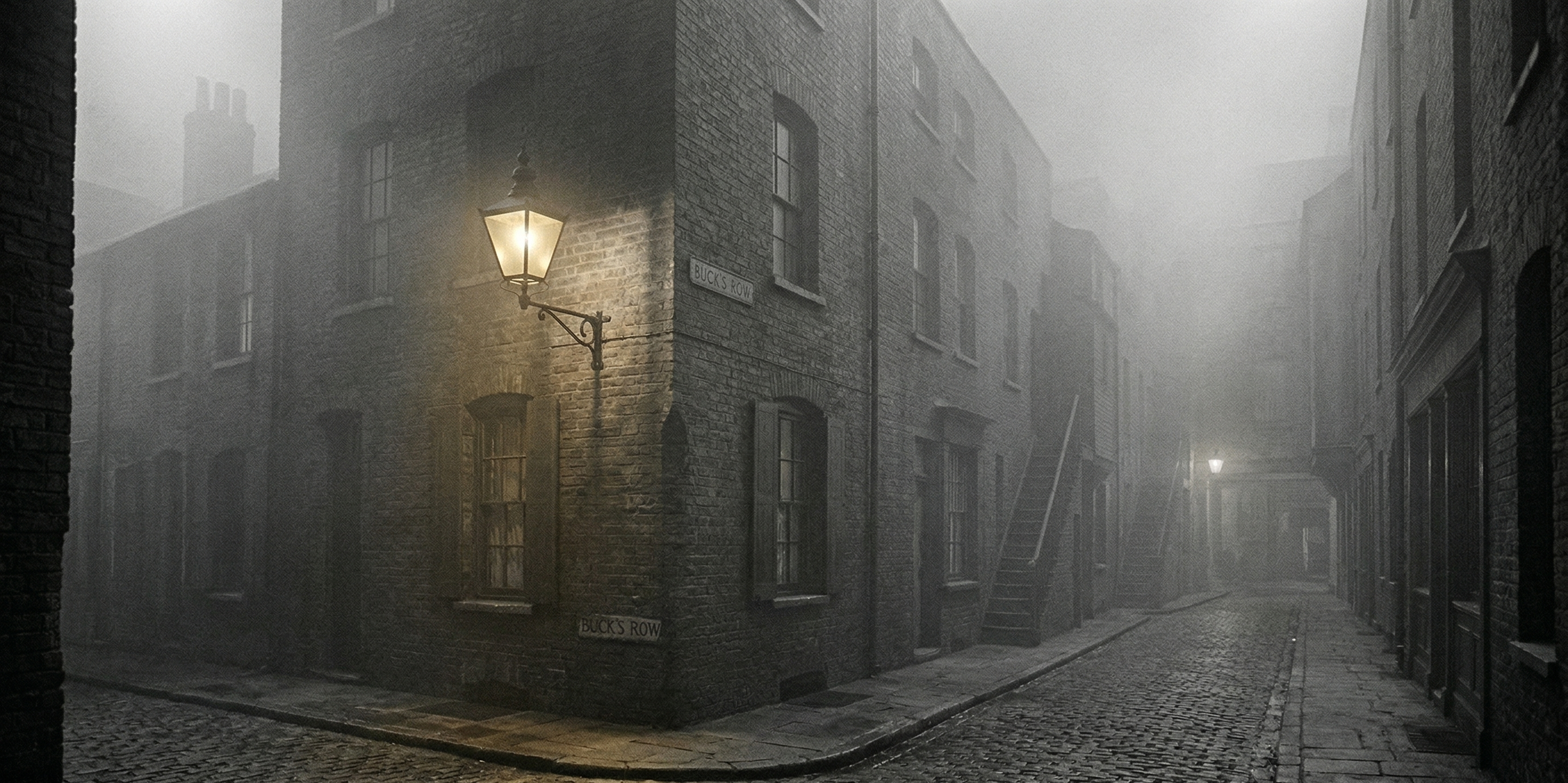
A pervasive sense of fear quickly spread throughout London. The press heightened public anxiety by publishing sensational accounts that depicted the perpetrator as a monstrous figure. As a result, the city’s streets were largely deserted at night, with only police patrols remaining visible. Despite the risks, impoverished women continued to seek shelter, fully aware of the dangers they faced. The perpetrator intensified the terror by operating in complete darkness, moving through the maze-like alleys of Whitechapel undetected. The public, eager to identify the assailant, began to suspect everyone. Paranoia fostered xenophobia, culminating in the "Leather Apron" scare, during which angry mobs targeted local Jewish tradesmen and threatened to incite anti-Semitic riots. Neighbours viewed each other with suspicion, and innocent men carrying black bags or wearing unusual hats were pursued by frightened crowds convinced they had encountered the killer.
Scotland Yard appeared largely ineffective. Despite deploying additional police officers and conducting extensive house-to-house searches, authorities were unable to apprehend the perpetrator. In response, concerned residents and local businessmen established Vigilance Committees to patrol the streets and protect the community. Whitechapel was no longer viewed solely as a slum; it was now seen as a hunting ground under siege, with the East End transformed into a site of persistent fear.
The Canonical Five
For more than a century, the individual identities and personal histories of the Whitechapel victims have been eclipsed by the continuing mystery surrounding their murderer. Popular fascination with Jack the Ripper’s identity has often diminished these women to mere names in historical records, neglecting their humanity. The "canonical five"—the women whose murders between 31 August and 9 November 1888 are definitively attributed to the same perpetrator—were complex individuals formed by systemic poverty, alcoholism, and personal tragedy. Recognising their experiences is essential to comprehending the broader context and impact of the Whitechapel murders.
The first of the canonical victims was Mary Ann Nichols, widely known and beloved by her friends as "Polly". Born in London in 1845 to a hardworking blacksmith, she eventually married a printer named William Nichols and bore five children before their marriage slowly disintegrated in 1880. The collapse of her family life was mainly attributed to her deepening struggles with alcohol addiction, compounded by her husband's alleged infidelities. Severed from her children and her home, she drifted aimlessly through workhouses and the bleak common lodging houses of Spitalfields. Despite her incredibly grim circumstances, her companions remembered her as a remarkably kind, religious woman who carried a prayer book with her and loved to sing. On the early morning of 31 August, lacking the mere fourpence required for a bed, she was turned away from her lodging house on Thrawl Street. She cheerfully told the deputy she would soon earn her keep, boasting about a new "jolly bonnet" she was wearing, before walking into the dark streets toward Buck's Row, where her life was brutally and swiftly taken.
Annie Chapman, the second victim, was born in 1841 and had actually experienced a relatively comfortable early life as the daughter of a soldier stationed with the Life Guards. She married John Chapman, a respectable Windsor coachman, but their lives were absolutely devastated by unrelenting illness and the tragic loss of two of their three young children. Overwhelmed by inconsolable grief and a worsening dependency on alcohol, the marriage collapsed entirely, and Annie drifted helplessly into the slums. Nicknamed "Dark Annie," she was a gentle, diminutive woman who desperately tried to support herself by selling flowers and making crochet work rather than immediately resorting to the streets. By September 1888, she was suffering from terribly advanced tuberculosis and was slowly dying of the disease; a bruising physical altercation over a bar of soap marred her final days. On 8 September, feeling extremely unwell though desperate for lodging money, she went out into the morning fog and was subsequently murdered and severely mutilated in the backyard of 29 Hanbury Street.
Elizabeth Stride, known locally as "Long Liz," was born Elisabeth Gustafsdotter in Sweden in 1843. After a highly difficult youth that included surviving the birth of a stillborn child and a period as a registered sex worker in Gothenburg, she courageously immigrated to London in 1866, pursuing a fresh start. She married a ship's carpenter, John Stride, and ran a local coffee shop, but the marriage ultimately failed under the strain of her drinking. Elizabeth had an energetic, highly imaginative spirit, often entertaining her fellow lodgers with fabricated, theatrical tales about her past, including a completely false claim that her family perished in a massive steamboat disaster. Her subsequent life in the East End was intensely chaotic, defined by a turbulent, sometimes violent relationship with a labourer named Michael Kidney. In the early hours of 30 September, she was killed in the darkness of Dutfield's Yard off Berner Street; because her killer was almost certainly interrupted by an arriving cart, she suffered only a severed windpipe without the horrific abdominal mutilations that characterised the other serial crimes.
Less than an hour after Stride’s tragic murder, Catherine Eddowes became the fourth victim in nearby Mitre Square. Born in Wolverhampton in 1842, "Kate" was an intelligent, literate woman recognised for her fiercely independent spirit and occasionally fiery temper. She had three children with a former soldier, Thomas Conway, before his reported physical abuse and her heavy drinking led to their permanent separation in 1880. She subsequently formed a deeply stable bond with John Kelly, a casual labourer, and the two earned their meagre wages through hawking cheap goods and hop-picking in the fields of Kent. On the ill-fated night of 30 September, she had been detained at Bishopsgate Police Station to sleep off her severe intoxication safely. Released shortly before 1:00 a.m., she cheerfully bade the gaoler goodnight, unknowingly walking directly into the path of her assassin, who subjected her to the most incredibly savage facial and abdominal mutilations yet seen, surgically extracting her left Kidney and uterus.
Mary Jane Kelly, the final canonical victim, stood starkly apart from the others in both her relative youth and her tragic circumstances. Born in Ireland around 1863 and raised primarily in Wales, she married a collier who was tragically killed in a horrific mine explosion when she was still just a teenager. Forced to fend for herself completely, she moved to London, initially finding marked financial success as a high-class escort in the affluent West End, even travelling to Paris with wealthy clients, before her fortunes plummeted and she ended up trapped in Whitechapel. Young, exceedingly attractive, and musically inclined, she lived with Joseph Barnett in a cramped, squalid room at 13 Miller's Court. On 9 November, securely behind the closed door of her own rented room, she suffered the absolute zenith of the killer's unfathomable, apocalyptic rage.
A City Under Siege
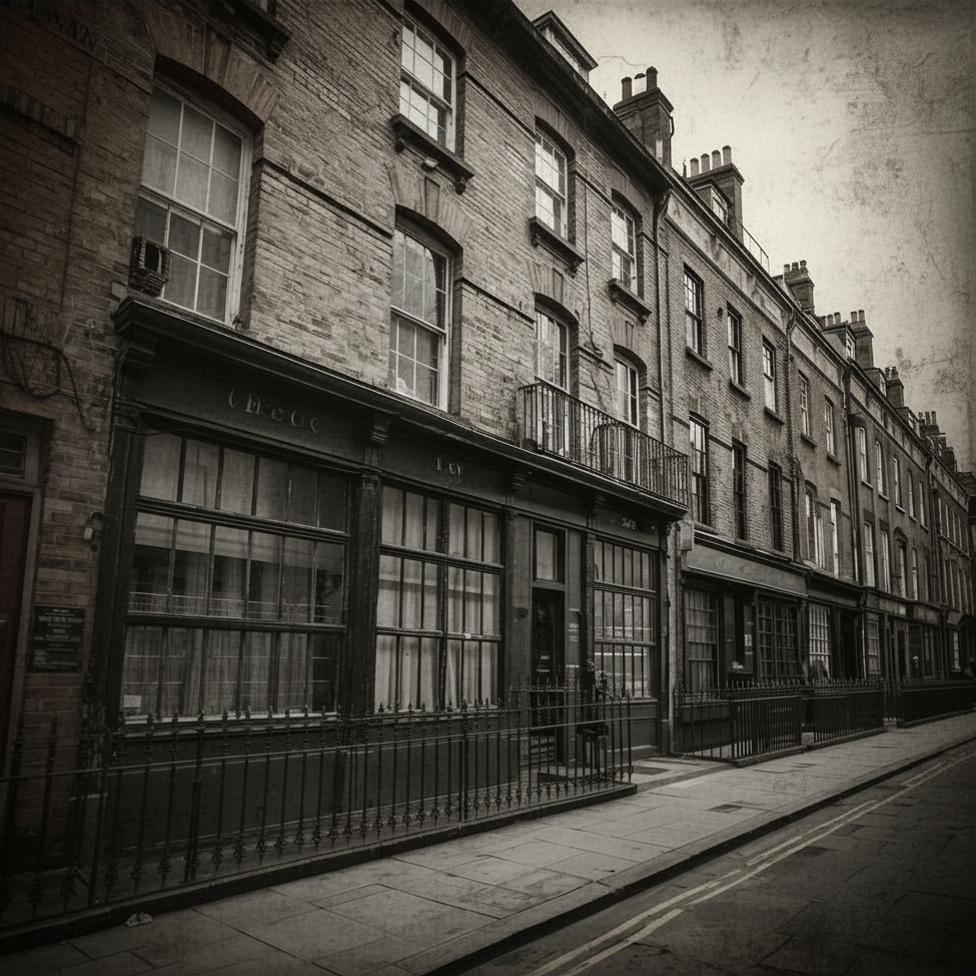
The autumn of 1888 saw London transformed from the proud, gilded capital of a wide empire into a fog-choked urban slaughterhouse gripped by a collective, paralysing panic. As the body count rose, the physical reality of the gruesome murders was entirely eclipsed by a choking psychological terror. Whitechapel became a terrifying network of unlit shadows where neighbours viewed one another with deep-seated suspicion, and every passing stranger was viewed as a potential assassin. The district plummeted into a state of acute, inescapable paranoia. Locksmiths did a roaring trade as frightened residents hastened to unquestioningly fortify their decaying homes, while desperate "unfortunates," driven into the pitch-black streets by the unrelenting threat of starvation, shuddered at each silhouette, terrified that they were walking into a deadly, soundless embrace. It was a large city under siege, not by an invading army, but by a phantom who struck with absolute silence and disappeared without a trace into the pungent smog.
The growing sense of fear was further intensified by the mass media, which recognised the commercial potential of the Whitechapel murders. Newspapers published sensational stories and dramatic headlines, assigning the unknown perpetrator various monstrous epithets. The psychological impact increased with the publication of the "Dear Boss" letter and the "Saucy Jacky" postcard, both signed "Jack the Ripper." Although many historians contend that journalists fabricated these communications to maintain public interest and boost sales, they contributed to the development of a lasting mythology surrounding the killer.
As the unseen predator continued to evade capture, the popular panic mutated into a virulent, dangerous strain of xenophobia. The East End, heavily overcrowded with desperate Jewish refugees and Irish immigrants, became a tinderbox of racial tension. The public, desperate to put a physical face to the monster, latched onto the terrifying "Leather Apron" scare, levelling accusations at a local Jewish boot-finisher named John Pizer. Suspicious men and innocent foreigners were routinely chased through the winding, filthy alleys by maddened, howling mobs screaming for a lynching. The threat of a full-scale anti-Semitic pogrom loomed so heavily that when an ominous message—"The Juwes are the men that Will not be Blamed for nothing"—was found written in chalk above a bloody piece of a victim's apron on Goulston Street, Police Commissioner Sir Charles Warren controversially ordered it washed away before dawn to prevent race riots, obliterating a critical clue in the process.
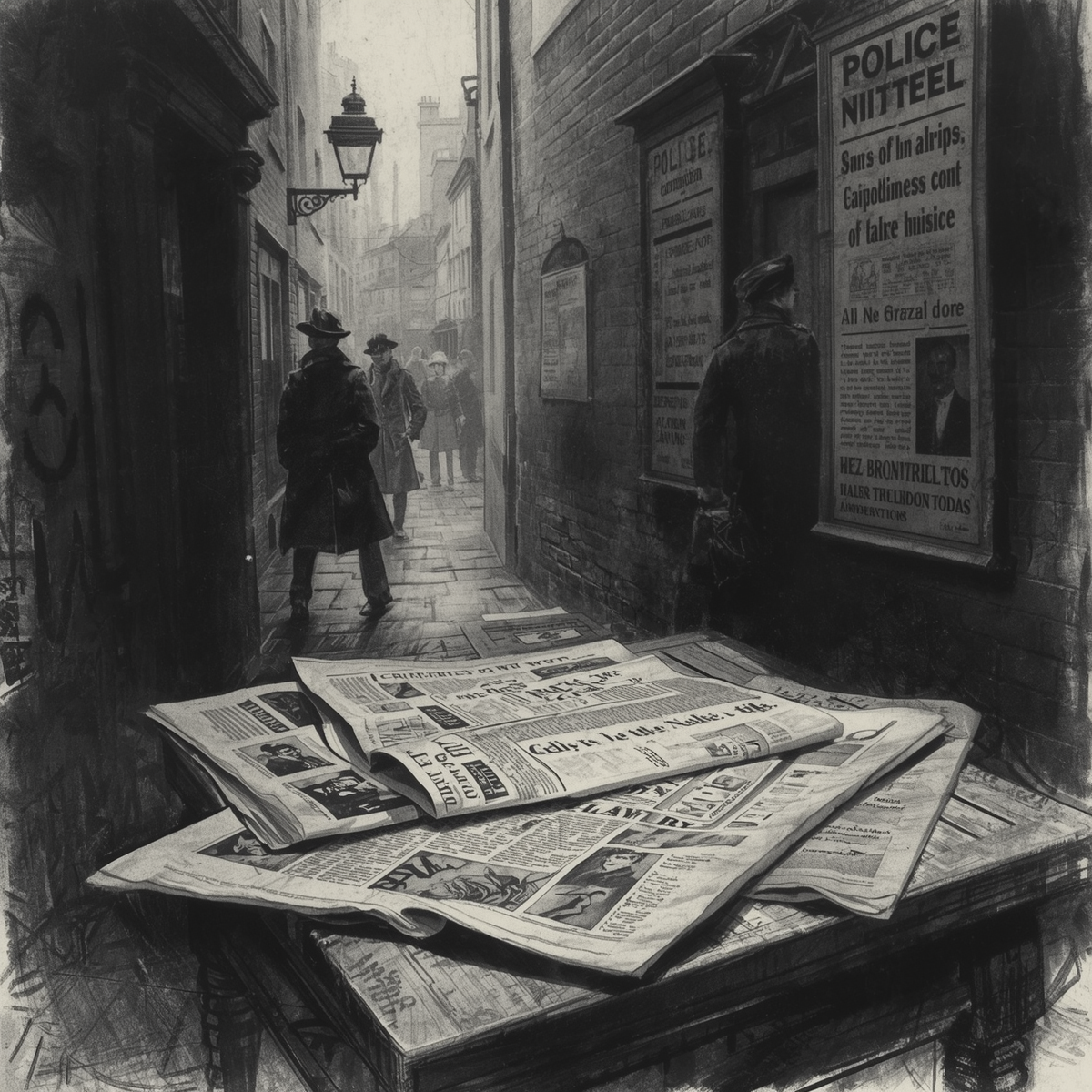
Scotland Yard appeared completely powerless, crippled by a lack of modern forensic science, inter-departmental rivalries, and the sheer scale of the slums. Desperate detectives flooded the streets, some even dressing in women's clothing as decoys, while the public demanded the use of bloodhounds to track the killer's scent. Infuriated by the perceived incompetence of the police and terrified for their own lives, local citizens took the law into their own hands. Led by local builder George Lusk, the Whitechapel Vigilance Committee was formed and hired unemployed men to patrol the dark courts at night, armed with heavy sticks and whistles. The maze-like streets teemed with amateur sleuths; even a director of the Bank of England disguised himself as a common labourer to hunt the beast in the pitch-black alleys. The district became a disorderly, unpredictable arena where police officers, armed vigilantes, and terrified residents collided in the gloom.
The psychological damage inflicted upon the Victorian metropolis was severe and devastating. The Ripper's reign of terror spawned an epidemic of cruel hoaxes and twisted copycats. Drunken men repeatedly leapt from the shadows, flashing knives and screaming, "I am Jack the Ripper," sending vulnerable women into screaming fits of hysteria. One young woman in Ireland was reportedly frightened to death by such a prank. In contrast, other women in London were committed to lunatic asylums, driven mad by the unceasing, suffocating fear that the killer was stalking them. A young butcher in Hoxton even slit his own throat from ear to ear in a paranoid frenzy, terrified that he would be accused of the atrocities. Whitechapel was no longer merely a site of physical slaughter; it had been permanently transfigured into a psychological hellscape, a sphere where fact and nightmare irreparably blurred, and where the terrifying phantom of Jack the Ripper ruled supreme.
Letters Under the Shadows
The Whitechapel murders were not exclusively a series of physical atrocities; they were a serious epistolary phenomenon that profoundly changed the trajectory of modern true crime. During the Autumn of Terror, the Metropolitan Police, local news agencies, and leading community figures were inundated with a staggering deluge of correspondence. Authorities actively investigated upwards of seven hundred letters, postcards, and telegrams, while some historical estimates suggest the total number of missives received may have climbed into the thousands. This massive influx of mail transformed a localised string of brutal homicides into a macabre, interactive performance. The abiding mythology of the Whitechapel murderer was inextricably shaped not just by the blade of a knife, but by the pen, the press, and the beguiling attraction of anonymous menace.
The vast majority of these communications were indisputably cruel hoaxes, penned by a wide array of individuals, ranging from well-intentioned, albeit misguided, citizens to deeply disturbed pranksters seeking to insert themselves into the era’s most sensational narrative. The authors of these fraudulent letters were rarely caught, but those who were exposed revealed a startling cross-section of Victorian society. In one significant instance, a twenty-one-year-old Bradford milliner named Maria Coroner was arrested and prosecuted for writing letters which threatened a local killing spree; she later claimed she had simply done it because she was fascinated by the case and intended it as a joke.
Yet, the most insidious hoaxers were likely not bored citizens, but rather the very individuals tasked with reporting the news. It is now widely suspected by historians and forensic linguists alike that unscrupulous journalists deliberately fabricated the most iconic letters. In an era characterised by fiercely competitive, mass-circulation penny newspapers, the creation of a taunting, articulate villain was a lucrative journalistic windfall. Reporters such as Tom Bulling of the Central News Agency or Fred Best of The Star have long been suspected of forging these early texts to heighten public hysteria and "keep the business alive". This cynical manipulation of the facts gave birth to a mutually beneficial relationship between mass media and serial murder that continues to plague modern society.
Out of the hundreds of letters received, three specific pieces of correspondence rose above the noise to permanently define the killer's legacy. The first and most transformative of these was the "Dear Boss" letter. Dated 25 September 1888, and received by the Central News Agency on 27 September, the document was written in a striking, blood-red ink. The author adopted a mocking, arrogant tone, actively taunting the baffled authorities. "I keep on hearing the police have caught me, but they won’t fix me just yet," the letter began, going on to gleefully dismiss the prevailing police theory regarding a local suspect known as Leather Apron. The writer boasted of his "grand work" and promised, "I am down on whores, and I shan’t quit ripping them till I do get buckled". Crucially, the author made a frightening threat regarding his next crime, stating, "The next job I do I shall clip the lady’s ears off and send them to the police officers just for jolly". Most importantly, the letter concluded with a valediction that would resound through the records of history: "Yours truly, Jack the Ripper. Don’t mind me giving the trade name". With those two words, a nameless, faceless butcher was suddenly christened, evolving instantly into an omnipresent, mythological bogeyman.
Initially, Scotland Yard and the news agency dismissed the "Dear Boss" letter as yet another tasteless prank. That assumption was shattered just days later on the morning of 30 September, when the killer struck twice in under an hour—a tragedy remembered as the "double event". When the body of the second victim, Catherine Eddowes, was examined, police discovered that the killer had cut off a portion of her earlobe. Suddenly, the unfulfilled threat in the "Dear Boss" letter appeared terrifyingly prophetic.
The very next day, 1 October, the Central News Agency received a second communication: the "Saucy Jacky" postcard. Smeared with what appeared to be blood, the postcard's handwriting closely matched that of the "Dear Boss" letter. The author proudly claimed credit for the previous night's carnage, writing: "You'll hear about Saucy Jacky's work tomorrow, double event this time, number one squealed a bit, couldn't finish straight off, had not the time to get ears for police". Modern forensic linguistic analysis has supported the theory that the "Dear Boss" letter and the "Saucy Jacky" postcard were authored by the same individual, highlighting distinctive syntactic structures in common, such as the unusual use of the phrasal verb "to keep back". Desperate for a breakthrough, the police decided to publish facsimiles of the letter and postcard, hoping someone would recognise the handwriting. Instead, the publication poured gasoline on a roaring fire, inciting hundreds of copycats and cementing the Ripper's fame worldwide.
If the first two letters were the work of a theatrical journalist seeking to sell papers, the third prominent communication introduced a visceral, stomach-churning horror that defied simple explanation. On 16 October, George Lusk, the diligent president of the Whitechapel Vigilance Committee, received a small, three-inch-square cardboard box in the mail. Inside the package was half of a human kidney, heavily preserved in "spirits of wine," or ethanol. Accompanying the gruesome specimen was the "From Hell" letter. Riddled with severe spelling and grammatical errors, it was written in a distinctly different hand than the preceding correspondence. Headed with the chilling address "From hell," the letter read: "Sir, I send you half the Kidney I took from one woman, preserved it for you. The other piece I fried and ate was very nice. I may send you the bloody knife that took it out if you only wait a while longer." It was pointedly unsigned by Jack, concluding instead with: "Catch me when you can, Mishter Lusk"
The arrival of the "From Hell" letter caused shockwaves through the community. During her autopsy, it had been noted that Catherine Eddowes' left Kidney had been surgically extracted by her killer. Dr Thomas Openshaw, the pathological curator at the London Hospital, examined the enclosed organ and confirmed that it was indeed a human left kidney. He additionally noted that it showed signs of Bright’s disease, a condition consistent with an alcoholic woman of Eddowes' age. Despite this compelling correlation, medical opinions at the time—and among historians today—remained deeply divided. Many authorities argued that the Kidney and the letter were merely a macabre, highly elaborate practical joke perpetrated by a medical student who had illicitly procured a specimen from a dissection room or hospital morgue.
Regardless of whether the "From Hell" letter was authentic or a hoax, it signified a pivotal moment in the psychological dimension of the Whitechapel murders. The authenticity of the Jack the Ripper letters is still a subject of debate among criminologists, but their cultural impact cannot be denied. By introducing a taunting written voice, these letters shifted public attention from the victims to the perpetrator, establishing the archetype of the elusive serial killer who uses media to communicate with authorities. This legacy has affected subsequent cases, muddying the boundaries between physical violence and psychological intimidation.

The Police, The Press, and the Failure to Catch Him
The failure of the Victorian police to capture Jack the Ripper was not simply a product of widespread incompetence but rather the tragic culmination of a severely limited investigative toolkit, intensely chaotic environmental conditions, and paralysing bureaucratic infighting. In 1888, the very concept of a "serial killer" did not exist, leaving investigators conceptually and procedurally unequipped to hunt a motiveless, opportunistic predator. The men of Scotland Yard and the local H Division were forced to rely almost entirely on catching the criminal in the act, interviewing transient locals, or hoping for a desperate confession.
The most frustrating obstacle for the detectives was the utter lack of modern forensic science. Techniques foundational to modern crime scene investigation were either in their infancy or entirely non-existent. Fingerprinting, which might have swiftly identified the killer, was not adopted by Scotland Yard until 1901. Furthermore, investigators had no method to distinguish human blood from animal blood. This was a catastrophic limitation in Whitechapel, a district teeming with over seventy-six slaughterhouses and butchers; seeing men walking the faintly lighted streets in heavily bloodstained clothing in the early hours of the morning was a completely mundane occurrence that rarely warranted a second glance from beat cops. Additionally, crime scene photography was largely ignored. Officers were so terrified that the mutilated bodies would incite riots among the volatile East End crowds that they prioritised removing the corpses as swiftly as possible. The bodies of victims like Mary Ann Nichols were stripped and washed by workhouse paupers before the police surgeon could even conduct a thorough examination, destroying incalculable amounts of trace evidence. Only the final victim, Mary Jane Kelly, was photographed in situ at the crime scene.
Procedural momentum was also continually derailed by bitter jurisdictional rivalries and a catastrophic leadership vacuum. Internal politics severely crippled the overall direction of the Metropolitan Police. Just as the murders began, the head of the Criminal Investigation Department (CID), James Monro, was forced to resign after clashing with the Metropolitan Police Commissioner, Sir Charles Warren. His replacement, Robert Anderson, promptly went on a two-month sick leave to Switzerland right as the "Autumn of Terror" escalated. The structural chaos reached its peak during the "Double Event" of 30 September, which exposed the bitter friction between the Metropolitan Police and the City of London Police. Because Catherine Eddowes was murdered in Mitre Square, her case fell under City Police jurisdiction. However, a bloody piece of her garment and a chalked anti-Semitic message—"The Juwes are the men that will not be blamed for nothing"—were found in Metropolitan territory on Goulston Street. Fearing an immediate anti-Semitic riot while dawn approached, Commissioner Warren unilaterally ordered the message washed away before City Police could photograph it, obliterating one of the killer's only potential physical clues and infuriating the City detectives.
The physical environment of Whitechapel also conspired against the police. The district was a dark, suffocating network of unlit alleyways, blind courts, and interconnected common lodging houses that provided the killer with endless escape routes. A policeman's heavy, measured tread could be heard passing through the empty streets, serving as an inadvertent warning system for the killer. Furthermore, the witness culture was an investigator’s nightmare. The police conducted over 2,000 interviews and investigated over 300 people, but reliable testimony was virtually impossible to obtain. Witnesses were frequently intoxicated, highly transient, or actively seeking to profit from the tragedy. Some individuals, like greengrocer Matthew Packer, continually changed and embellished their stories for journalists in the hopes of securing reward money, rendering their statements "almost valueless as evidence". The intense anti-police sentiment in the East End meant that many residents viewed the authorities as the enemy, rendering them highly reluctant to cooperate or provide honest testimony.

Exacerbating this administrative crisis was the immense, unprecedented pressure exerted by a frenzied mass media. Newspapers mercilessly mocked the police as "blockheads" and "bunglers," inflaming public alarm to boost circulation. The press also interfered with the investigation by fabricating stories and suspects, most notably sparking the dangerous "Leather Apron" scare that led to the wrongful arrest of John Pizer. The decision to publish the "Dear Boss" letter resulted in a flood of hoax correspondence, overwhelming investigators and consuming resources. The inability to apprehend Jack the Ripper was not due to negligence, but rather the limitations of contemporary policing and the overwhelming influence of the media. The official suspect list eventually swelled to well over a hundred names, generating a chaotic phenomenon that reveals more about the era's fears, prejudices, and anxieties than about the killer's true identity.
The proposed suspects frequently served as dark mirrors, reflecting the specific social panics of the Victorian era. To xenophobic Londoners terrified by the massive influx of Eastern European refugees, the Ripper was instinctively cast as a dark-complexioned, foreign-looking outsider. Quivering fingers were eagerly pointed at destitute Polish Jewish immigrants like Aaron Kosminski, mysterious Russian doctors like Michael Ostrog, or the eccentric American quack Francis Tumblety. Blaming the atrocities on a foreign "Other" was a psychological defence mechanism; it comforted the Victorian public to believe that no true, civilised Englishman could ever be capable of very profound, apocalyptic savagery. Simultaneously, the terrifying suspicion that the killer possessed advanced anatomical skill led to an intense paranoia surrounding the medical profession, with many theorising he was a deranged surgeon or a corrupt pathologist harvesting organs for twisted research.
Conversely, the deep class divisions of late-Victorian society gave rise to the continuing, menacing myth of the aristocratic predator. Although modern criminal profilers suggest the killer was likely a disorganised, local working-class man who blended seamlessly into the filth of the East End slums, the popular imagination vehemently preferred the terrifying image of a wealthy, sinister "toff" in a top hat and billowing opera cloak. This archetype spawned elaborate conspiracy theories involving the highest echelons of the British establishment. Suspects in this vein included the Oxford-educated barrister Montague John Druitt, the eminent royal physician Sir William Gull, and even Queen Victoria’s own grandson, Prince Albert Victor, the Duke of Clarence. In these elaborate fictions, the Ripper became a symbol of a predatory aristocracy, a phantom descending from the opulent West End to literally and figuratively butcher the most vulnerable members of the impoverished lower classes.
As the decades passed, the suspect pool grew only more bizarre, demonstrating how the case had severed its moorings in historical reality, becoming a surreal playground for sensationalism. Theories emerged suggesting the killer was actually a vengeful woman—dubbed "Jill the Ripper"—such as the convicted murderer Mary Pearcey or a disgruntled female abortionist. Others pointed to celebrated creatives such as the post-Impressionist painter Walter Sickert, authors such as Lewis Carroll, and practitioners of black magic who conducted occult rituals across the Whitechapel area.
This relentless quest for the killer's identity spawned an entire subculture and commercial enterprise known as "Ripperology," a term coined by the writer Colin Wilson in the 1970s to describe the relentless study of the case by both professionals and passionate amateurs. A massive cottage industry of books, films, guided tours, and documentaries has flourished, with each new author boldly claiming to have finally unmasked Jack the Ripper's "true" identity. Modern attempts to solve the case have even employed mitochondrial DNA testing on disputed artefacts, like a shawl allegedly belonging to Catherine Eddowes, or relied upon supposedly discovered Victorian diaries claiming to be the bloody confessions of a Liverpool cotton merchant named James Maybrick. Yet, in this eternally repetitious pantomime, investigators frequently fall into the trap of suspect-based research, violently twisting the meagre historical facts and circumstantial evidence to fit their chosen culprit rather than letting the evidence speak for itself.
Over time, "Jack the Ripper" has come to represent more than the historical crimes of 1888. The figure has become a symbol of urban fear and societal anxieties, serving as a recurring motif for various social panics. Rather than being remembered solely as an individual responsible for five murders, Jack the Ripper is now viewed as the archetype of the serial killer and a lasting emblem of the darker aspects of modern society. The ongoing fascination with his identity ensures that the myth endures, even as the true perpetrator remains unidentified.
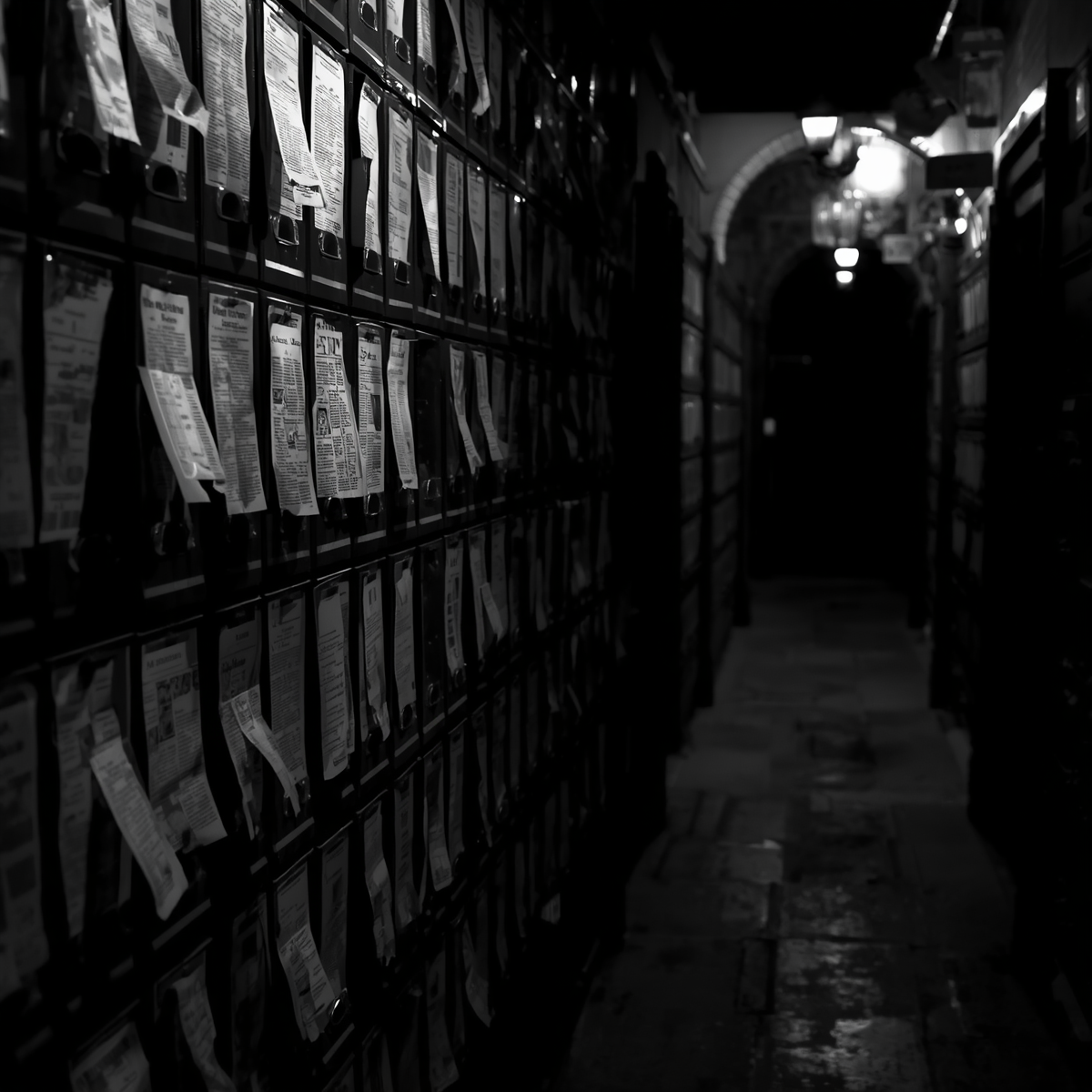
Why Jack The Ripper Still Haunts History
Over a century after the Autumn of Terror, Jack the Ripper remains the most infamous serial killer in human history, not merely because of his gruesome methods, but because the case fundamentally altered the landscape of modern fear. The Whitechapel murders denied Victorian society the traditional comfort of a judicial resolution. Because the killer was never apprehended, tried, or executed, he vanished into the thick London fog, leaving behind a terrifying vacuum. This lack of closure transformed a series of localised, brutal homicides into an enduring mythological phenomenon, making the Ripper a permanent receptacle for societal panics and cultural anxieties. The mystery of his identity ensures that the case survives not just as a historical true-crime puzzle but as a profound philosophical reflection on the dark underbelly of modern civilisation.
The Ripper was, in a grim sense, a direct product of his era, emerging from the profound turmoil and rapid changes of the Industrial Revolution. Urbanisation, severe overcrowding, and rapid social change in the East End led to a widespread sense of anomie, giving rise to the terrifying concept of the alienated urban loner. Whitechapel itself, with its pitch-black, labyrinthine alleyways and unlit courtyards, provided the perfect hunting ground for a predator who could melt seamlessly into the shadows after committing unspeakable acts of violence. The Victorians, raised on clear demarcations between right and wrong, suddenly found themselves confronted by a real-life manifestation of Mr Hyde—a savage predator operating not in the distant jungles of the Empire, but in the very heart of the supposedly civilised metropolis. This shattered the prevailing illusion of urban safety, proving that the modern city could incubate monsters of unprecedented and unpredictable savagery.
Closely linked to this urban terror is the persistent reality of violent misogyny. The Ripper’s victims were impoverished, marginalised women compelled into casual prostitution to survive the severe poverty of the slums. For feminist historians and cultural critics, Jack the Ripper represents not merely a historical curiosity but the ultimate symbol of a predatory patriarchal order, exemplifying an extreme form of "gynocide" or "femicide." His anatomical violations—particularly the targeting and removal of female reproductive organs—reflect a profound hatred and a disturbing urge to annihilate the female form. The continued anonymity of the perpetrator intensifies this fear, as he embodies the faceless, pervasive threat of male violence against women. Additionally, the Victorian press frequently blamed the victims for their own deaths, interpreting their murders as the inevitable consequence of moral failings rather than societal shortcomings. The enduring fascination with these crimes compels society to confront its persistent inability to eliminate violent misogyny, rendering the Ripper a grim symbol of the extreme vulnerability faced by destitute women.
Jack the Ripper also holds the dark distinction of being the world's first true media serial killer, sitting at the precise intersection of physical murder and mass-market journalism. The late nineteenth century saw the rise of the cheap, mass-circulation press, which eagerly seized upon the Whitechapel horrors to boost daily sales through unprecedented sensation-horror reporting. Fleet Street essentially co-authored the Ripper mythos. By publishing the taunting, red-inked "Dear Boss" letter and the "Saucy Jacky" postcard—which many forensic linguists and historians now believe were actually fabricated by unscrupulous journalists seeking to heighten the drama—the press gave the killer a catchy trade name and a terrifying, arrogant persona. This media frenzy created a toxic, symbiotic relationship between the murderer and the press, establishing a dangerous precedent where a killer could achieve international celebrity status and immortality through the headlines.
Ultimately, Jack the Ripper still haunts our history because his absolute anonymity allows him to be constantly reinvented. To the Victorians, he was a phantom representing the "Nemesis of Neglect," an embodiment of the consequences of ignoring the East End's poverty-stricken abyss. Today, he serves as a blank canvas onto which we project our deepest fears about human nature, institutional corruption, and the fragile veneer of civilisation. The endless industry of "Ripperology" has often reduced the tragic, untold lives of the victims to mere footnotes in a morbid parlour game of suspect hunting. He stands at a historical watershed between an age of relative innocence and our modern era of motiveless, violent crime. The Ripper survives as a floating signifier, the immortal bogeyman of the urban nightmare, ensuring that the heavy shadows he cast over Whitechapel will never truly dissipate.
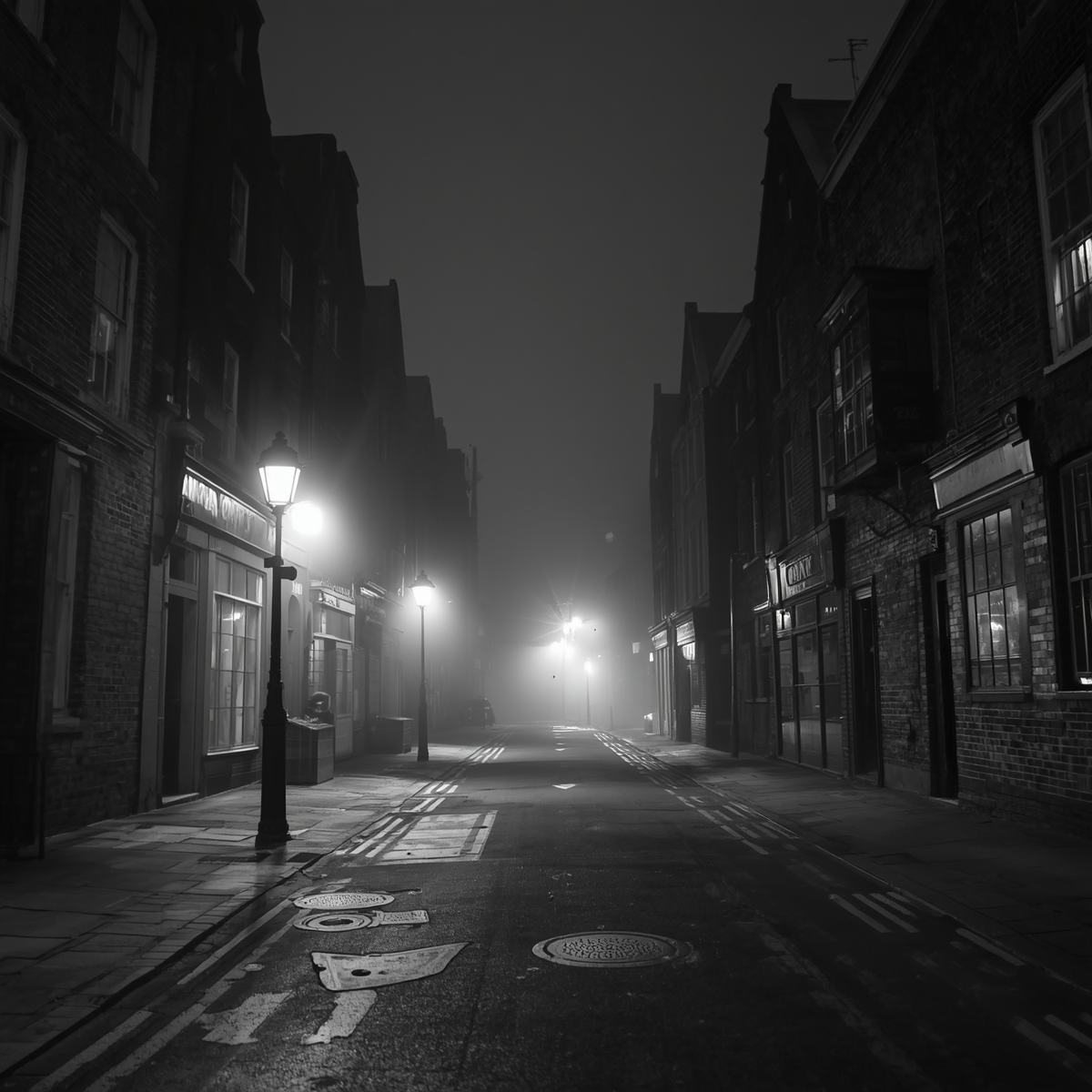
The Shadow That Never Left Whitechapel
The story of Jack the Ripper does not end with the strike of a gavel or the drop of a hangman’s noose. In the annals of criminal history, the most profound and unsettling truth of the Whitechapel murders is that they simply stopped, leaving an eternal, gaping void where justice should have been served. By evading capture, Jack the Ripper denied Victorian society—and all subsequent generations—the essential psychological comfort of judicial closure. Human narratives inherently demand a resolution; we expect the monster to be unmasked, tried, and expunged from the community to restore the moral order. But the Whitechapel murderer vanished as silently as he had arrived, retreating into the sulfurous fogs of London and leaving behind a shattered metropolis. The official case files may have been closed in 1892, but the psychological wound inflicted upon the public consciousness remained permanently open, festering with unanswered questions.
Because the killer was never conclusively identified, he transcended the mundane limitations of a flesh-and-blood criminal to become a terrifying, immortal myth. Had he been caught—had he been revealed as a pathetic, deranged local labourer, a disgruntled butcher, or a diseased physician—he would have been reduced to human proportions, punished, and eventually forgotten. Instead, his absolute anonymity transformed him into an empty vessel, a dark mirror reflecting the deepest hysterias and suppressed anxieties of any given era. To the Victorians, he was the horrifying embodiment of the East End’s poverty, a semi-simian brute bred by the slums, or conversely, the ultimate symbol of a predatory aristocracy descending from the West End to exploit the most vulnerable. He became the eternal bogeyman, a spectral entity whose image effortlessly merged with the gothic horrors of Dracula and Mr Hyde.
He was, in a profoundly tragic sense, the first truly modern monster. Jack the Ripper stands at the bloody crossroads of the Industrial Revolution, where rapid urbanisation, suffocating overcrowding, and the resulting social anomie gave rise to the terrifying archetype of the alienated urban loner. Before 1888, the public conceived of murder primarily as a domestic affair, driven by comprehensible motives like greed, jealousy, or revenge. The Ripper shattered that illusion forever, introducing the world to the random, motiveless, and sadistic serial killer who hunted strangers in the dark. He represented a watershed moment in human history, marking the agonising transition from a perceived age of innocence into our modern era of indiscriminate violence. His crimes laid bare the fragility of the social contract, proving that the heart of the civilised Empire could incubate a predator of unprecedented, apocalyptic savagery.
This enduring mythology was inextricably bound up with the rise of mass media, which acted as a willing accomplice in his immortalisation. By publishing the taunting "Dear Boss" letter and the subsequent "Saucy Jacky" postcard—documents highly likely to have been cynical fabrications penned by unscrupulous journalists seeking to boost circulation—the press gave the silent butcher a voice, a personality, and a terrifyingly catchy trade name. The media transformed a brutal string of local homicides into an international spectacle, establishing a toxic, symbiotic relationship between the serial killer and the press that continues to plague modern society. The killer was no longer just a man; he was "Jack," a floating signifier of dread whose very name became synonymous with the ultimate violation of the female form.
Today, the relentless industry of "Ripperology" continues to sift through the archival dust, proposing endless theories and even employing modern DNA analysis on questionable artefacts in a desperate, ultimately futile quest for a definitive name. Yet, even if a name were somehow proven beyond a shadow of a doubt, it would change nothing. The physical man has been dead for over a century, but the myth he birthed is completely indestructible. The darkness outlived the man. He survives as a grim monument to the extreme vulnerability of the destitute, a permanent reminder of the systemic misogyny and grinding poverty that allowed him to hunt with such impunity.
In the end, the true tragedy of Jack the Ripper is that his blinding infamy has perpetually eclipsed the humanity of the five women whose lives he so violently extinguished. He remains the ultimate unsolvable enigma, an uncatchable phantom lurking on the periphery of our collective nightmares. The shadow he cast over Whitechapel has never truly lifted; it has merely stretched across the globe and through the decades. We are still chasing a ghost in the smog, forever haunted by the terrifying realisation that the monsters we fear the most are not supernatural demons, but the darkest, most unfathomable reflections of ourselves.
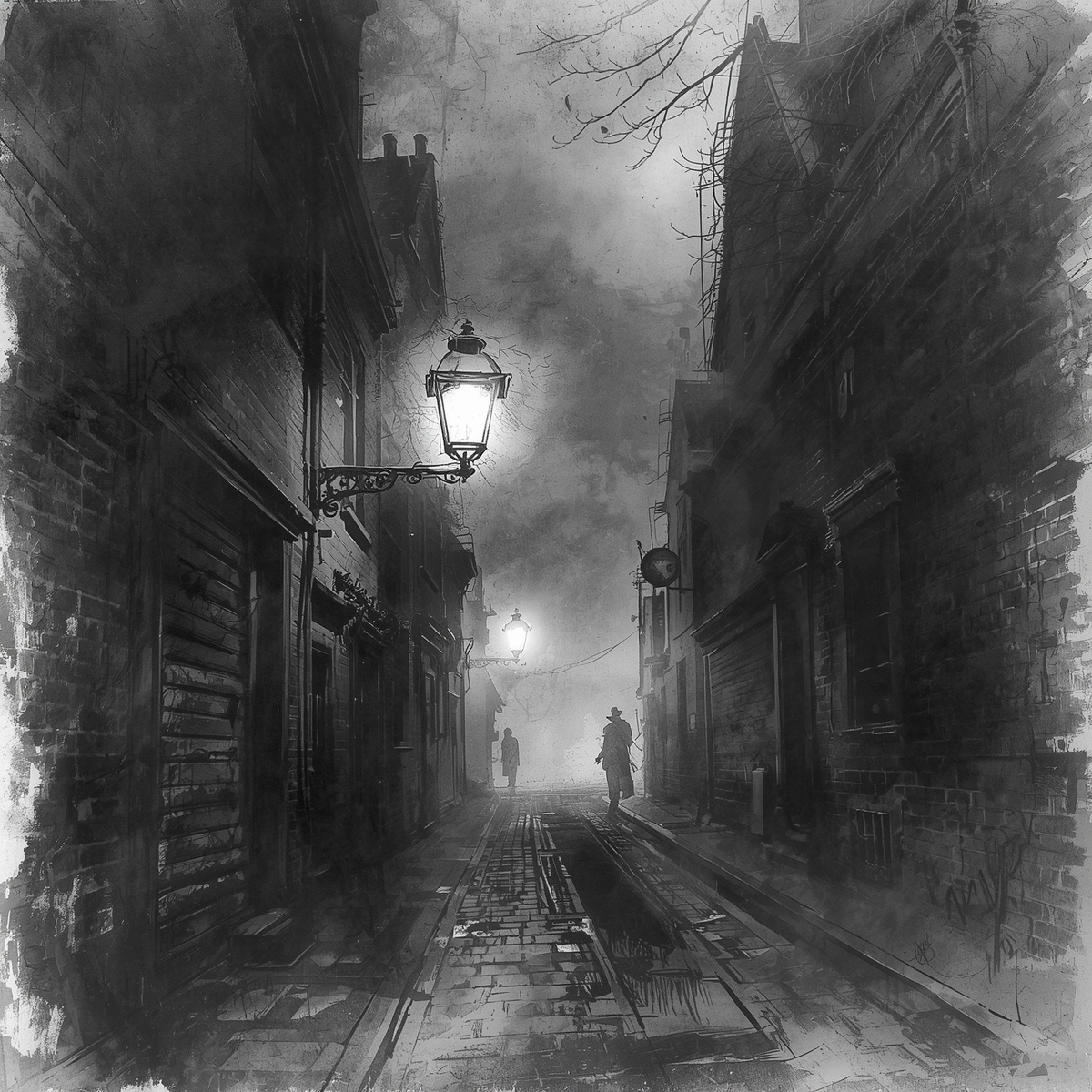
References
Bedford, F. L. (2020). Mitochondrial DNA analysis of forensic evidence: Jack the Ripper or ripoff? [Preprint]. SSRN.
Curtis, L. P., Jr. (2001). Jack the Ripper and the London press. Yale University Press.
Frost, R. (2020). Media and the murderer: Jack the Ripper, Steven Avery and an enduring formula for notoriety. McFarland Inc.
Georgieva, N. (2020). Initiating an investigation for crime of murder. Journal of Process Management, New Technologies, 8(1), 38–46.
Guerrini, C. J., Robinson, J. O., Petersen, D., & McGuire, A. L. (2018). Should police have access to genetic genealogy databases? Capturing the Golden State Killer and other criminals using a controversial new forensic technique. PLoS Biology, 16(10), e2006906. https://doi.org/10.1371/journal.pbio.2006906
Hodder Education. (n.d.). WJEC Eduqas GCSE (9-1) history [Textbook excerpt].
Holmes, J., & Cheprasov, A. (n.d.). Jack the Ripper | Overview, victims & crime scenes. Study.com.
Hough, R. M., & McCorkle, K. D. (2020). American homicide (2nd ed.). SAGE Publications.
Hurren, E. T. (n.d.). Dissecting Jack-the-Ripper: An anatomy of murder in the metropolis.
Igloo Books. (2015). Jack the Ripper: A chilling insight into one of the world's most infamous killers. Igloo Books Ltd.
Jack the Ripper: The serial killer [Unpublished student research paper]. (n.d.).
Jones, R. (n.d.). Jack the Ripper: The London of [E-book]. Rippertour.com.
Jones, R. (2026). Inspector Frederick Abberline - Jack the Ripper detective. Jack the Ripper.
Jones, R. (2026). Police investigative techniques - Fingerprinting and CSI. Jack the Ripper.
Jones, R. (2026). The timeline for the Jack the Ripper murders. Jack the Ripper.
Jones, R. (2026). The victims of Jack the Ripper - The Whitechapel murders. Jack the Ripper.
Keppel, R. D., Weis, J. G., Brown, K. M., & Welch, K. (2005). The Jack the Ripper murders: A modus operandi and signature analysis of the 1888–1891 Whitechapel murders. Journal of Investigative Psychology and Offender Profiling, 2(1), 1–21. https://doi.org/10.1002/jip.22
Knight, A., & Watson, K. D. (2017). Was Jack the Ripper a slaughterman? Human-animal violence and the world's most infamous serial killer. Animals, 7(4), 30. https://doi.org/10.3390/ani7040030
Lally, K. (2020). Attitudes and responses to the influx of ethnic immigrants into the East End of London 1840 to 1905 [Unpublished master's dissertation]. The Open University.
Louhelainen, J., & Miller, D. (2019). Forensic investigation of a shawl linked to the “Jack the Ripper” murders. Journal of Forensic Sciences, 65(1), 295–303.
Nini, A. (2018). An authorship analysis of the Jack the Ripper letters. Digital Scholarship in the Humanities, 33(3), 621–636. https://doi.org/10.1093/llc/fqx065
Ripper records: An archive of Jack the Ripper and the 1888 Whitechapel murders. (n.d.). UMSI580.
Roland, P. (2018). The crimes of Jack the Ripper: The Whitechapel murders re-examined. Arcturus Publishing Limited.
Rossmo, D. K. (n.d.). Jack the Ripper: A wrongful conviction [Commentary]. Criminal Legal News.
Rossmo, D. K. (2025). Geographic profiling (2nd ed.). Routledge.
Ryder, S. P., & Johnno. (1996-2026). Ripper letters. Casebook: Jack the Ripper.
Smithkey, J. (n.d.). So you want to be a Ripperologist? Casebook: Jack the Ripper.
Taylor, A. (n.d.). The Victorians’ criminal: Jack the Ripper [Unpublished manuscript]. Oxford University.
The Whitechapel Society. (2011). Jack the Ripper: The suspects. The History Press.
Thompson, M. K. (2017). The shadow of the Ripper: The evolution of the Ripper mythology [Doctoral dissertation, The Australian National University]. Open Research Repository. http://hdl.handle.net/1885/133659
Whitechapel c.1870-1900 revision guide. (n.d.). William Brookes School.
Wilson, C., & Odell, R. (1987). Jack the Ripper: Summing up and verdict. Bantam Press.