The Axeman: Fear, Music, and Murder in New Orleans.
A series of brutal murders, a letter to the public, and a city that played music out of fear.
New Orleans is renowned for its vibrant celebrations, particularly in the French Quarter, on Bourbon Street, and during Mardi Gras. In 1917, Mardi Gras festivities were notably more intense than in previous years. The Carnival season, spanning from Epiphany to Lent, featured balls, pageants, parades, and widespread exuberance, culminating in two days of heightened revelry before Ash Wednesday. Residents embraced these festivities in anticipation of Lent, perhaps viewing the holiday as necessary preparation for the penitential season.
Each year on the eve of Mardi Gras, Rex—King of Carnival, Monarch of Mirth arrived at noon, steaming up to the landing at the foot of Canal Street in his royal yacht, where thousands of his frolicsome subjects met him. Dressed in white satin and silver cloth, he led his parade through the heart of the city, accompanied by mounted police, artillery battalions, sailors, marines, National Guardsmen, and Boy Scouts. At the city hall, the mayor presented Rex with the keys of the city, inaugurating his merry thirty-six-hour rule.
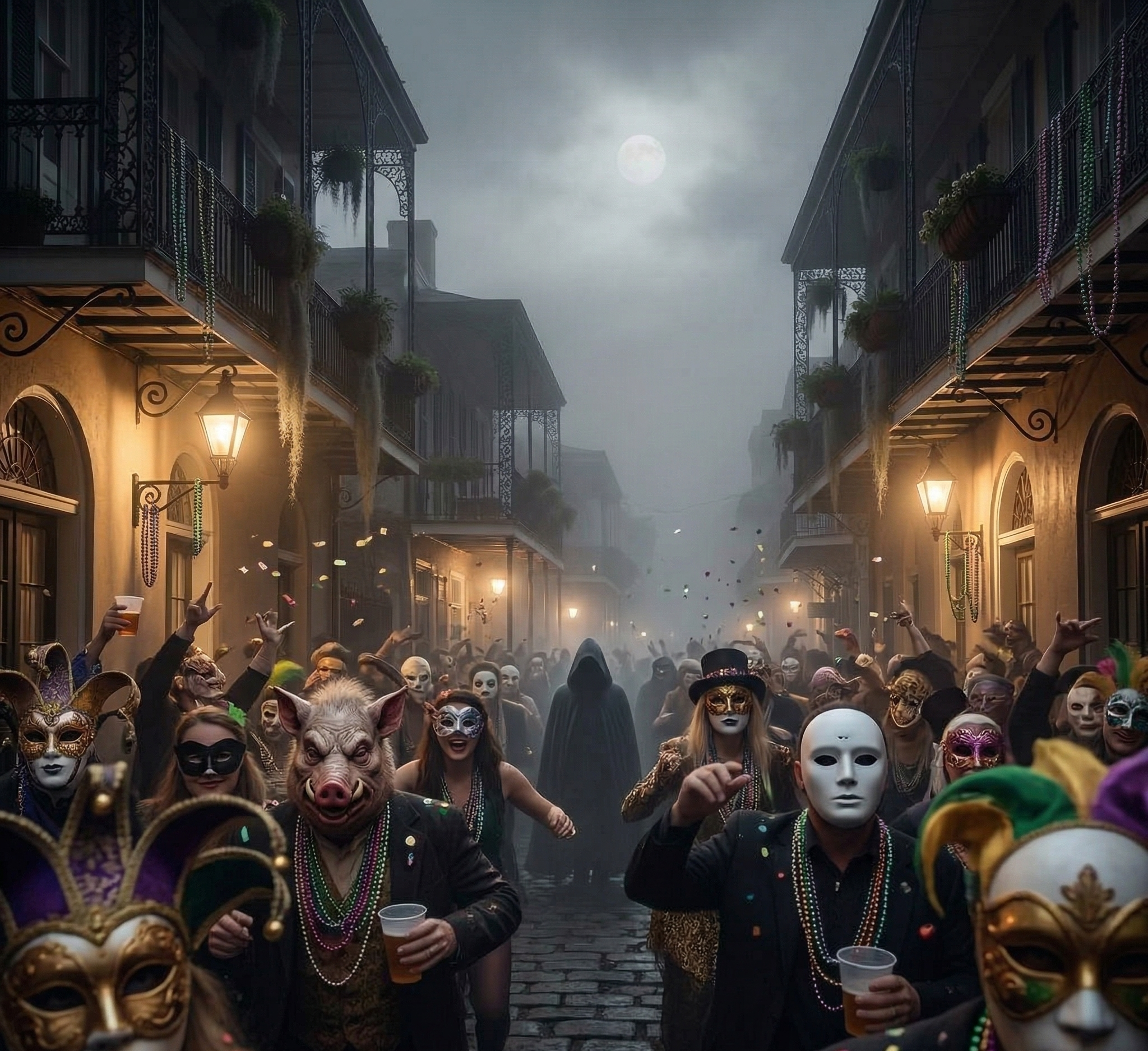
Mardi Gras encompassed more than parades and pageants; the entire population participated by wearing costumes and masks. Clowns, gypsies, elves, and pirates filled Canal Street, dancing to jazz bands stationed on street corners. Red devils and black-faced minstrels contributed to a sense of the grotesque, while children dressed as bumblebees added a comical aspect. The city centre transformed into a space for exuberant behaviour, as concealed identities enabled actions that would not otherwise occur.
However, this atmosphere was soon disrupted, instilling lasting fear among New Orleans residents. Between May and October 1918, a series of home invasions resulted in multiple individuals being terrorised and killed. The perpetrator, later known as the Axeman of New Orleans, used an axe in each attack. He sent a cryptic letter to the city, the meaning of which remains unclear. Despite more than a century passing, the killer's identity has never been established. Although accusations were made, no convictions followed.
A City on Edge
During the Gilded Age, New Orleans, often referred to as the Crescent City, was notable for its acceptance of aliases and unconventional living arrangements, particularly in certain neighbourhoods. Identities were fluid, and names or appearances did not always reliably indicate a person's true background. Men, attired in knee-length frock coats, pinstriped trousers, and felt derbies, strolled the gaslit avenues with young women whose relationships to them were often ambiguous. Department store clerks on Canal Street discreetly inquired of female customers, “And where do we send the bill, madam?” in a confidential tone.
New Orleans was renowned for its jazz culture, vibrant nightlife, and exuberant Mardi Gras celebrations. During Mardi Gras, the city's streets became a spectacle of excess, with parades traversing the French Quarter, masked revellers dancing beneath gaslit balconies, and jazz music permeating every corner. The city's vibrancy blurred individual identities behind costumes, fostering a sense of communal celebration. Beneath the surface, however, unpredictability persisted, creating an environment where chaos and freedom coexisted, and the boundary between joy and danger was notably thin.
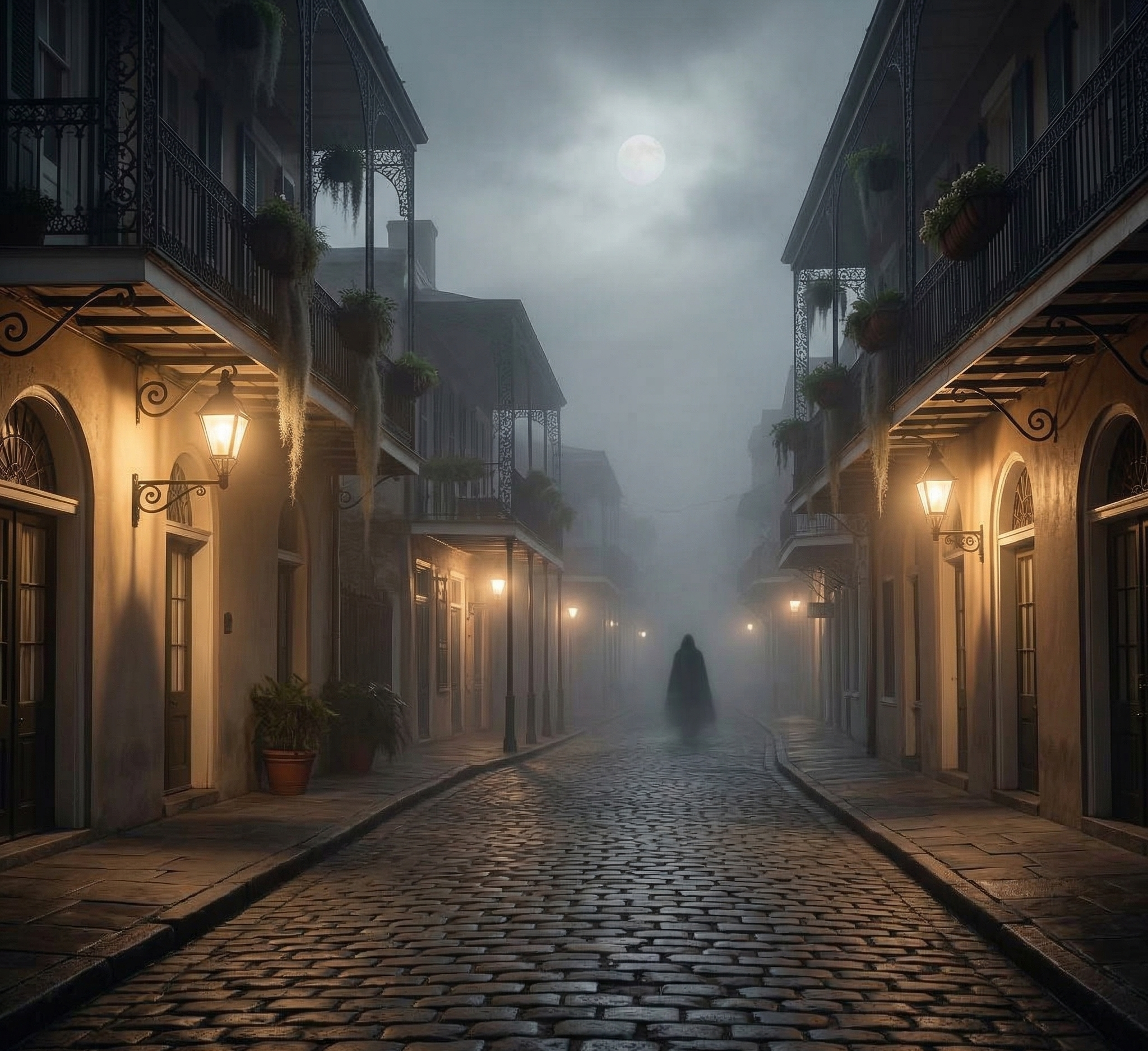
As the celebrations faded into the early morning hours, a more sinister presence emerged. In a city accustomed to constant noise and spectacle, the initial incidents of brutal, methodical violence attracted little immediate attention. Intruders entered homes silently, attacking victims as they slept and leaving behind only an axe—often one belonging to the victims—as a grim signature. The same streets that had been filled with life during Mardi Gras soon became permeated with fear, as New Orleans came under threat from a figure who seemed to arise from the shadows of its most festive nights: the Axeman.
As the killer's pseudonym implies, the victims were attacked with an axe. In some of the crimes, the doors to the victim's homes were first bashed open with the same tool. "The Axeman" was not caught or identified at the time, although his crime spree stopped as mysteriously as it started. The murderer's identity remains unknown to this day, although various possible identifications of varying plausibility have been proposed. Not all the Axeman's victims died, but the savagery and utter randomness of his attacks terrorised much of the population.
The Murders Begin
At 5 A.M. on the sultry morning of May 23, 1918, the bodies of Joseph and Catherine Maggio, Italian immigrants who ran a small grocery store in a remote section of the city, were found lying across the disordered bedroom of the living quarters behind their store. Both had been savagely attacked, apparently while they slept. Joseph Maggio lay face-up on the blood-sodden bed, his skull split by a deep, deep cut several inches long; Catherine Maggio, her own skull nearly hewn in two, was stretched out on the floor beneath him. Each casualty’s throat had been slashed with a sharp instrument. A blood-smeared axe and a shaving razor—obviously the murder weapons—had been found on the floor nearby.
Louis Besumer, a Polish grocer, and Harriet Lowe, the woman who lived with him, were also attacked with an axe and seriously injured. Two pairs of married grocers, two points on a grid that could relate to a straight line of causality. The assault occurred over near Esplanade Ridge, in an established, densely settled part of town; it was more than four miles away from the sparsely populated edge of Uptown, where the Maggios had been killed. The second victim survived the attack but was gravely injured and was hanging on to life in the charity hospital. One of them was expected to recover quickly, but he didn’t due to the extreme trauma of the attack, which had fractured both victims’ skulls and disoriented them fully. They claimed they knew nothing about the attack or remembered any details.
Over the next fourteen months, the killer, nicknamed “the Axeman” by the press, racked up a litany of victims: Mrs. Edward Schneider, August, 5, 1918 (survived); Joseph Romano, August 10, 1918 (died); Charles, Rosie, and Mary Cortimiglia, March 10, 1919 (Mary died); Steve Boca, August 10, 1919 (survived); Sarah Laumann, September 3, 1919 (survived); and
Mike Pepitone, October 27, 1919 (died). In nearly all cases, the modus operandi was consistent: a back door panel was cut out, the victim’s own axe was used, the weapon was abandoned at the scene, and nothing was stolen. The Axeman of New Orleans did not fit the profile of an ordinary killer. Surviving eyewitnesses described a tall, shadowy figure who attacked under the cover of darkness. His exact appearance remains as mysterious as his motive. His method was both unusual and terrifying. Rather than breaking windows or picking locks, he used a chisel to carve a hole in the doors of his victims’ homes, sliding the panels open silently before striking with an axe he either brought or found at the scene.
A Pattern of Fear
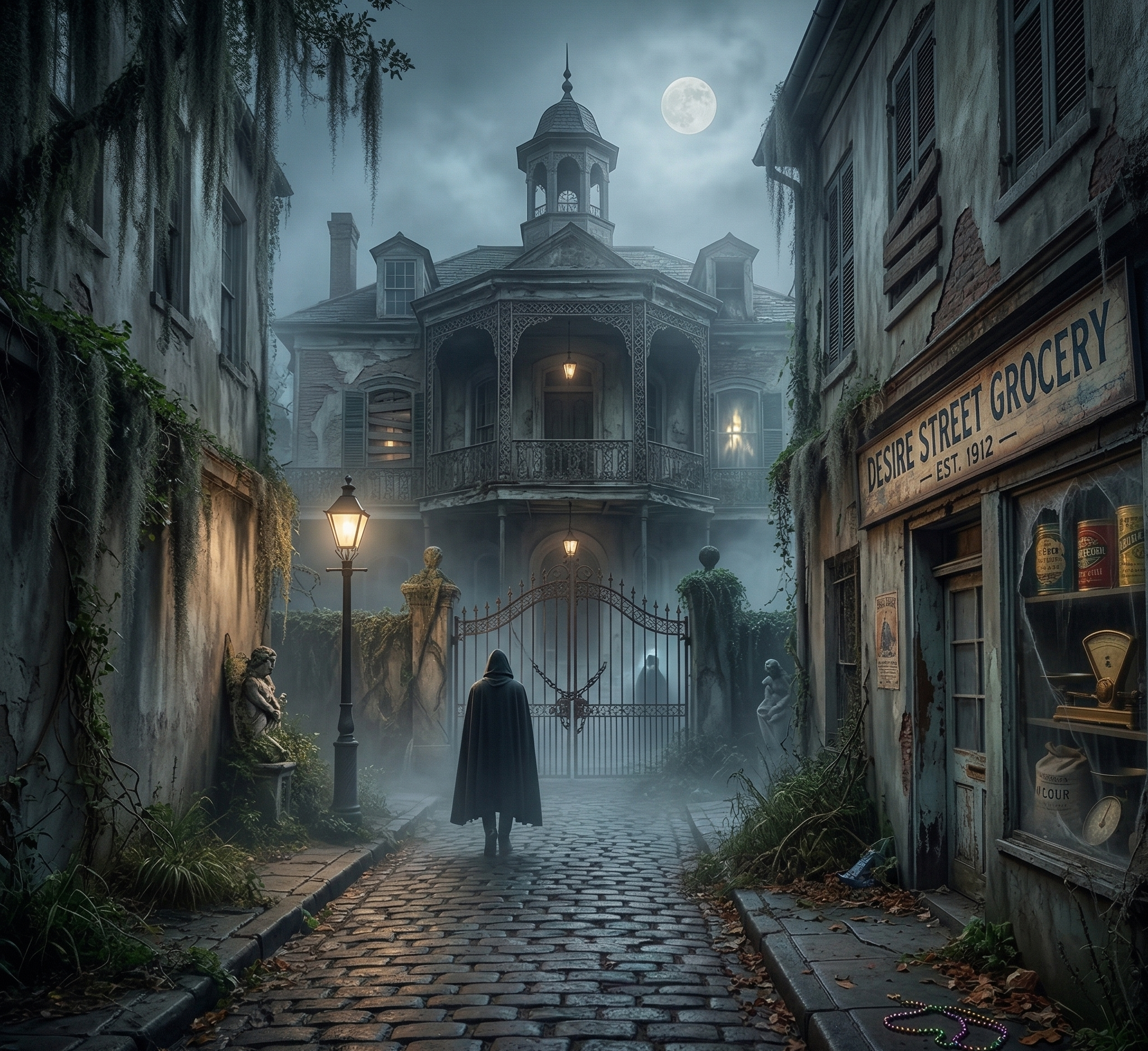
Initially, the attacks appeared to be isolated incidents—tragic, brutal, and seemingly random. However, as additional cases emerged in New Orleans between 1918 and 1919, a disturbing pattern became evident. The victims were frequently Italian immigrants or families associated with small neighbourhood grocery stores, attacked at night while they slept. Entry was seldom forced in the conventional sense; instead, a panel was often chiselled out of a back door, indicating patience, familiarity, and a high degree of precision. Most notably, the weapon was almost always an axe found within the victim’s own home, suggesting the perpetrator sought to leave minimal evidence of his presence.
The pervasive instability intensified the fear. There was no discernible motive, no evidence of robbery, and no personal vendetta linking the victims; instead, a pattern of repeated violence emerged without a clear reason. Newspapers began to draw connections, which the public quickly adopted, extending the threat beyond individual victims to the collective sense of safety within the city. Families remained vigilant through the night, some arming themselves and others leaving lights on to deter the unknown assailant. The Axeman's actions created an environment in which anyone could become a target. In a city characterised by constant activity, the silence that followed nightfall became especially ominous. Doors were left unlocked, valuables remained untouched, and survivors—when present—could offer only fragmented accounts of a silhouette moving through the house. The precision of the attacks suggested planning, yet the randomness of the victims defied any clear profile. Law enforcement struggled to respond effectively, and with each incident, public confidence in their ability to provide protection diminished. The Axeman evolved from a mere criminal into an unsettling, invisible presence capable of entering any home at any hour without warning.
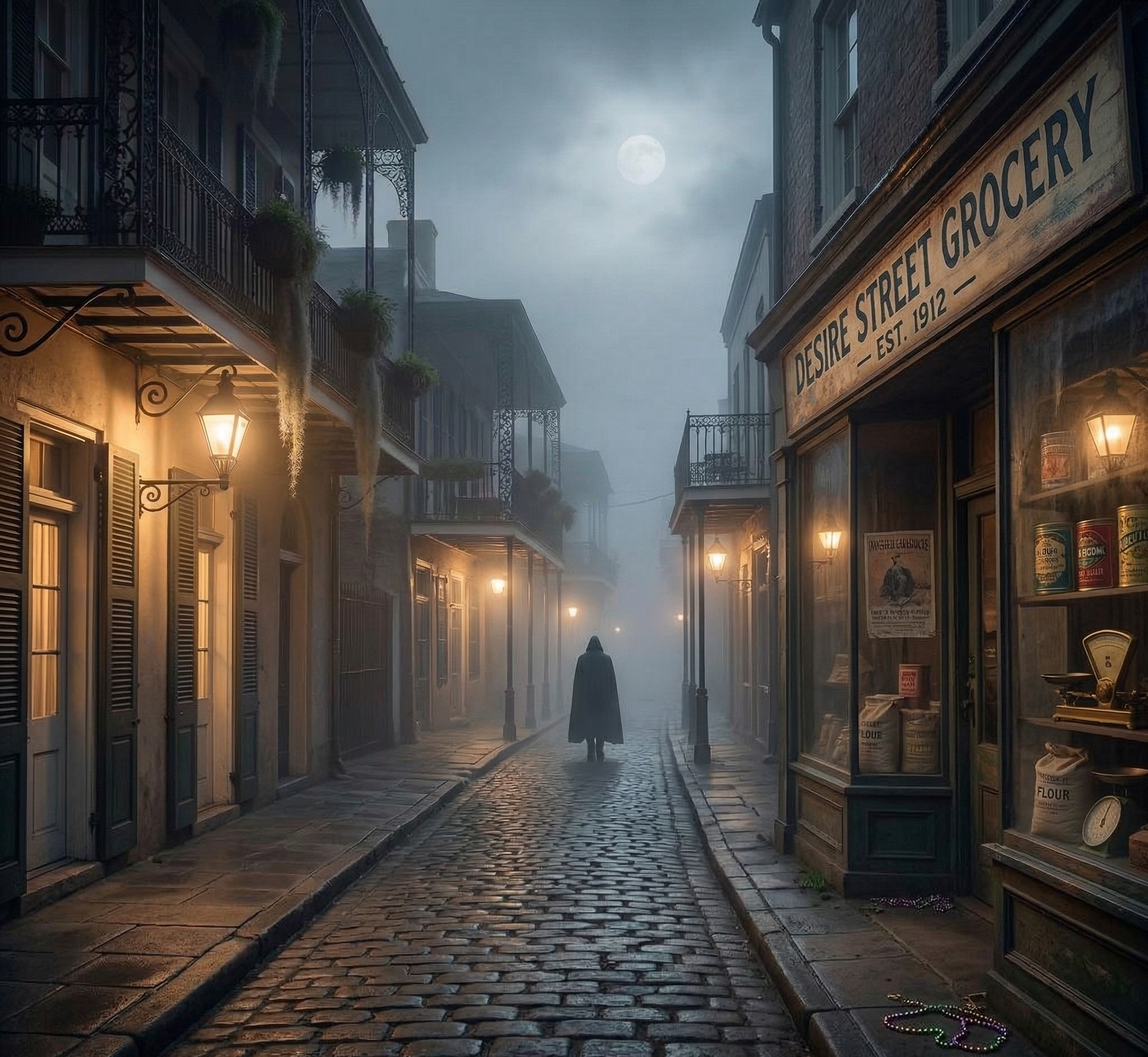
A pivotal moment escalated fear to near hysteria: a letter sent to local newspapers, purportedly from the killer. The letter was taunting, theatrical, and deeply unsettling, asserting that any home playing jazz music on a specified night would be spared. Regardless of whether it was a hoax or a genuine threat, the city reacted. Dance halls filled, bands performed throughout the night, and families who had previously shown little interest in jazz embraced it as a form of protection. For one night, New Orleans chose sound over silence, yet beneath the music and enforced celebration, a collective realisation persisted: the city was dancing out of fear, not joy.
The Letter That Changed Everything
This collective anxiety was the result of a string of brutal attacks by the killer, whose spree of terror had escalated considerably in a span of a few months. The attacker had established a pattern of sneaking into his victims’ bedrooms, under the cover of darkness, and bludgeoning them in the head with a hatchet or axe (usually found on their own property or stolen from somewhere nearby) as they slept. A real-life boogeyman, or something worse, hid in New Orleans—and its citizens were desperate to do anything in their limited power to protect their families. In particular, the nervously raucous night of music was the result of a letter published by The Times-Picayune on Sunday, March 16, 1919, around a week after a notably horrific attack on the Cortimiglia family, which resulted in the death of their two-year-old daughter, Mary. The letter read:
“Hell, March 13, 1919
Editor of The Times-Picayune,
New Orleans:
Esteemed Mortal: They have never caught me, and they never will. They have never seen me, for I am invisible, even as the ether that surrounds your earth. I am not a human being, but a spirit and a fell demon from hottest hell. I am what you, Orleanians and your foolish police, call the axman.
When I see fit, I shall come again and claim other victims. I alone know whom they shall be. I shall leave no clue except my bloody axe, besmeared with the blood and brains of the whom I have sent below to keep me company.
If you wish, you may tell the police to be careful not to rile me. Of course, I am a reasonable spirit. I take no offence at the way in which they have conducted their investigations in the past. In fact, they have been so utterly stupid as to amuse not only me, but His Satanic Majesty, Francis Josef, etc. But tell them to beware. Let them not try to discover what I am, for it were better that they never were born than for them to incur the wrath of the axman. I don’t think there is any need of such a warning, for I feel sure that your police will always dodge me, as they have in the past. They are wise and know how to keep away from all harm.
Undoubtedly, you Orleanians think of me as a most horrible murderer, which I am, but I could be much worse if I wanted to. If I wished to I could pay a visit to your city every night. At will I could slay thousands of your best citizens, for I am in close relationship with the Angel of Death.
Now, to be exact, at 12:15 (earthly time) on next Tuesday night, I am going to pass over New Orleans. In my infinite mercy, I am going to make a little proposition to the people. Here it is: I am very fond of jazz music, and I swear by all the devils in the nether regions that every person shall be spared in whose house a jazz band is in full swing at the time I have just mentioned. Suppose everyone has a jazz band going, well, well then, so much the better for the people. One thing is certain, and that is some of those persons who do not jazz it on Tuesday night (if there be any) will get the axe.
Well, as I am cold and crave the warmth of my native Tartarus, and as it is about time that I have left your homely earth, I will cease my discourse. Hoping that thou wilt publish this, that it may go well with thee. I have been, am and will be the worst spirit that ever existed, either in fact or the realm of fancy.
—The Axman”
Some considered the Axeman's letter to be genuine, while others regarded it as a hoax or a publicity stunt. Local historians have noted, “It’s deliberately theatrical and fully aware of the city's superstitions.” The fear that gripped New Orleans culminated in a city-wide, all-night jazz event on March 19, 1919. Residents filled dance halls and played music at home in response to the threat, which appeared to spare them from violence that night. The murderer did not strike during this period, inadvertently popularising jazz through fear. The public took the threats seriously, transforming the night into a city-wide event, with both professional and amateur jazz musicians performing to protect households.
The Night the City Played Jazz
In March 1919, at the height of the city’s fear, a letter arrived that would transform terror into something nearly surreal. Addressed to the people of New Orleans and published in the newspapers, the Axeman himself allegedly wrote it. The mood was theatrical, nearly mocking—he claimed to be a spirit, not a man, and declared that he would strike again on a specific night. But there was one condition. Any home where jazz music was being played would be spared. It was a bizarre demand, one which obscured the line between menace and performance, but in a city already gripped by fear, it was taken seriously.
The events that followed were unprecedented in the history of New Orleans.
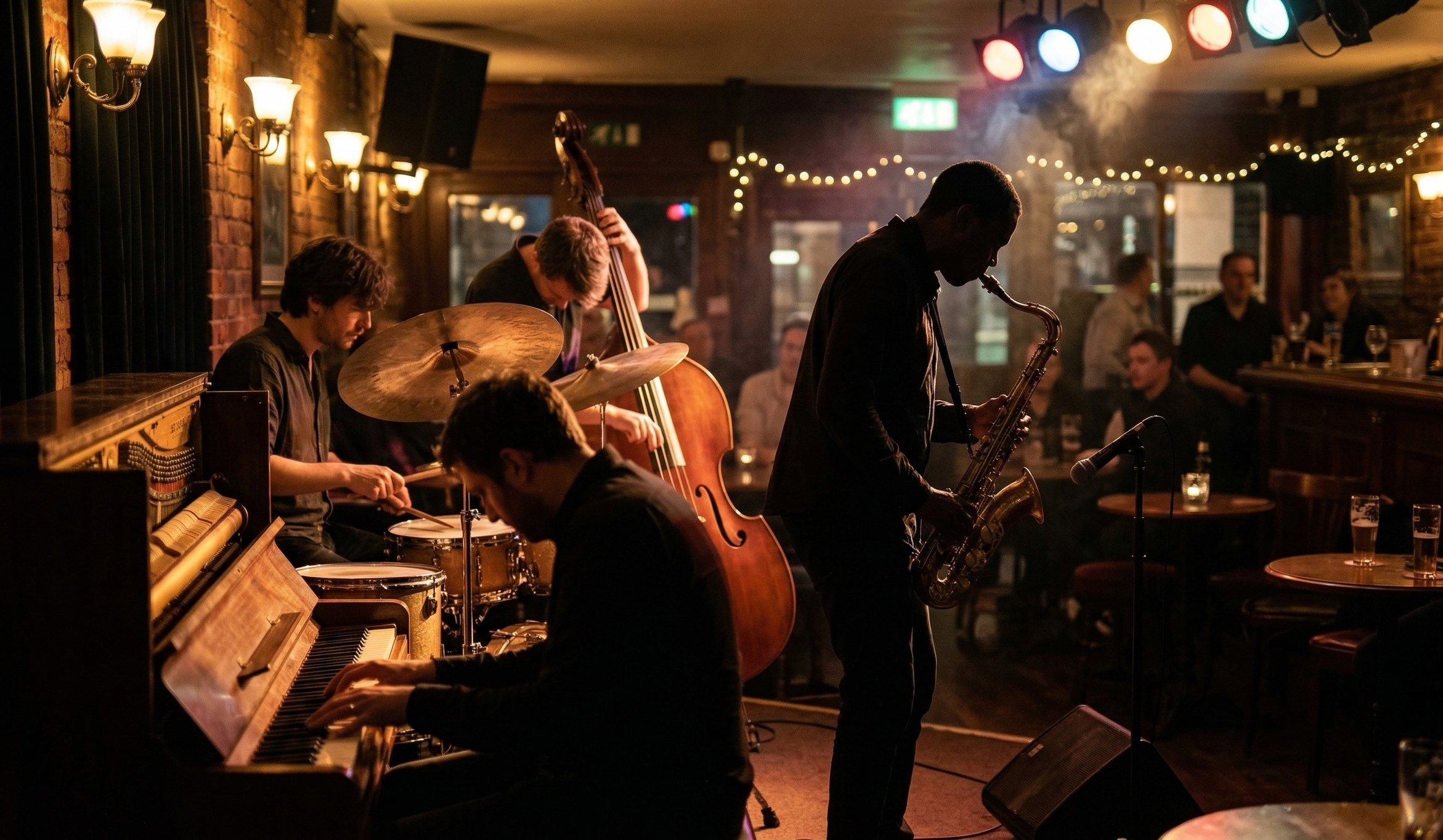
On the night of March 19, 1919, the city refused to be silent. Dance halls filled, bands were hired in homes that had never hosted music before, and the sound of jazz poured into the streets from every direction. Families assembled, some celebrating, others simply trying to drown out their fear with rhythm and noise. It wasn’t simply entertainment—it meant survival. The very thing that distinguished New Orleans culturally became, for one night, its protection against something unseen. Even those who didn’t believe the letter couldn’t ignore the collective anxiety in the air; it was easier to play along than to risk becoming the next victim.
And then… nothing happened.
No murders were reported that night. There were no attacks or sightings; only music resonated throughout the city until morning. Whether this outcome was coincidental, manipulative, or intentional remains uncertain. However, the impact was clear. For a brief period, the Axeman lost control of the narrative, and the residents of New Orleans reclaimed agency through collective sound and unity. Nevertheless, even in this unusual victory, genuine relief was absent. Instead, there was a troubling realisation that survival had required compliance with the demands of a killer.
The Investigation
From the very beginning, the investigation into the Axeman murders was noted for confusion, misdirection, and an overwhelming lack of reliable evidence. The early 20th century lacked the forensic tools modern investigators rely on today—no DNA analysis, limited fingerprint databases, and rudimentary crime scene preservation. As a result, each crime scene became more of a puzzle than a source of answers. By the time authorities arrived, the killer was long gone, leaving behind little more than bloodshed and unanswered questions.
What made matters worse was the nature of the attacks themselves. There were no clear signs of unauthorised entry in the traditional sense, and the weapon used was almost always found within the victim’s own home. This eliminated the possibility of tracing a murder weapon back to the killer. It also suggested a level of planning and patience that deeply unsettled investigators. The Axeman seemed to understand not only how to kill, but how to disappear without leaving a trail. In many cases, even the few clues that existed were either contaminated or overlooked, reflecting the limitations of policing at the time.
Authorities initially focused on the victims’ backgrounds, particularly the pattern involving Italian immigrants and grocers. This led to speculation about organised crime or personal vendettas, especially given the presence of Italian American communities in New Orleans. Several suspects were brought in and questioned, including individuals with purported connections to the Mafia. One man, Joseph Mumfre, was even named by some as a possible perpetrator, but his supposed involvement quickly dissolved into rumour and conflicting accounts. No concrete evidence ever tied him—or anyone else—to the crimes in a definitive way.
As public pressure mounted, law enforcement found itself caught between haste and helplessness. Newspapers played an important role in shaping the investigation, often publishing sensationalised theories that blurred the line between fact and fiction. The infamous letter attributed to the Axeman merely intensified the chaos, diverting attention from methodical police work to speculation. Instead of narrowing the field of suspects, the investigation expanded into a web of possibilities, none of which could be proven.
Perhaps the most damaging aspect of the investigation was its inability to identify a clear motive. Without a motive, the killings felt random; without a suspect, they felt unstoppable. This combination created a sense of fear not just among civilians but also within the police force itself. Every lead seemed to collapse under scrutiny, and every theory opened the door to even more uncertainty.
Ultimately, the investigation failed not due to a single error, but because it was fundamentally outmatched. The Axeman operated during a period when anonymity was more easily preserved, and mechanisms of accountability were still developing. He exploited these systemic gaps with precision, leaving a case unsolved. Over time, the investigation became part of history, serving as a reminder that the truth can sometimes remain elusive.
Suspects and Theories
With no clear perpetrator ever identified, the Axeman case quickly became fertile ground for speculation. In the absence of hard evidence, theories arose from every corner—some grounded in logic, others bordering on myth. One of the earliest and most widely discussed possibilities was that the killings were linked to organised crime. Many of the victims were Italian immigrants or connected to grocery businesses, which led investigators to suspect Mafia involvement. At the time, New Orleans had a well-known criminal network, and it wasn’t unreasonable to consider that these attacks could have been targeted hits disguised as something more chaotic. However, this theory struggled to withstand scrutiny. The brutality and randomness of the attacks did not align with the typically calculated nature of organised crime, where motives are clearer, and messages are intentional.
Another name that surfaced repeatedly was Joseph Mumfre—a man alleged by some to be involved in criminal activity and even identified by one victim’s widow as the attacker. According to her account, Mumfre had broken into their home and assaulted her husband, leading to his death. This seemed like a breakthrough at the time, but the story quickly unravelled. Reports about Mumfre were inconsistent, and some even suggested that he had been killed in Los Angeles before several of the later Axeman attacks occurred. With timelines that didn’t align and no concrete evidence to support the claims, his involvement became uncertain, leaving yet another impasse in the investigation.
Some theories pointed toward a lone serial killer—someone operating independently, driven by psychological impulses rather than external motives. This explanation gained momentum because it accounted for the lack of robbery, the eerie consistency of the method, and the apparent enjoyment of fear reflected in the infamous letter. If true, the Axeman would represent one of the earliest documented cases of a modern-style serial killer in the United States. Yet even this theory encountered limitations. Without a suspect, it remained a system without a face—convincing in structure, but ultimately incomplete.
More unusual interpretations also commenced to circulate over time. Some believed the letter was a hoax, possibly written by a journalist or opportunist seeking attention. Others suggested the killer may have been someone within the community—perhaps even known to the victims—who used familiarity to gain access without raising suspicion. There were even whispers, fuelled by the letter’s strange tone, that the Axeman saw himself as something above human, though such ideas leaned more into legend than fact.
In the end, none of the theories provided closure. Each offered a piece of the puzzle, but never the full picture. And that is what continues to make the Axeman case so compelling. It exists in a space between history and mystery—in which every explanation feels possible, but none feels certain.
The Silence After
In the end, the story of the Axeman is not defined by what we know—but by what we never will. The victims have names. The dates are recorded. The fear that gripped New Orleans can still be traced through old newspaper ink and fading testimonies. But the man behind it all—if he was just a man—remains untouched by history: no face, no final act, no moment of reckoning. Just a presence that appeared, disrupted the natural order of life, and then disappeared without explanation. It questions something fundamental within us: the conviction that every story must eventually resolve that every darkness can be brought into the light.
But some things don’t follow that rule. The Axeman case forces us to face a deeper, more disturbing truth—that upheaval does not always come with meaning. There was no major motive revealed, no ideological purpose, no clear reason behind the violence. Just repetition, silence, and fear. And perhaps that is what makes it so unsettling. It removes the illusion that evil must be understandable. Sometimes, it simply exists—and then it doesn’t. And yet, even in his absence, the Axeman never really left.
The Axeman persists in the unanswered questions, in the subtle unease of an unlocked door, and in the fleeting thoughts that arise during moments of stillness. His terror derived not only from his actions, but from his ability to vanish without a trace. He was neither defeated nor captured, but disappeared, blending seamlessly into his surroundings. The pursuit of closure provides a sense of control—a name, a motive, a conclusion—elements that foster the belief in an ordered and predictable world. The Axeman, however, offers none of these. Instead, he leaves a void where certainty might exist, prompting a persistent and unsettling question:
What if he was never meant to be found?
References
Davis, M. C. (2017). The Axeman of New Orleans: The True Story. Chicago Review Press Incorporated.
Imacolata, 1. (n.d.). Unidentified serial killers.
Krist, G. (2014). Empire of Sin: a story of sex, jazz, murder, and the battle for modern New Orleans [Book]. Crown Publishers.
Louis Armstrong. (1919). The Axeman’s Jazz. In The Times–Picayune.
Newton, M. (1990). HUNTING HUMANS. Loompanics Unlimited.
Shahin, A. K. (2022, September 26). The Axeman of New Orleans. Country Roads Magazine. https://countryroadsmagazine.com/art-and-culture/history/the-axeman-new-orleans/#:~:text=Late%20into%20the%20night%20of,power%20to%20protect%20their%20families.
The Axeman of New Orleans – Crime Library. (n.d.). https://crimelibrary.org/serial_killers/weird/axeman/
The chilling case of the Axeman of New Orleans. (2021). [Article].