The Werewolf Trials Of Early Modern Europe.
When Fear Became Codified in Law
Early modern Europe was characterised by famine, disease, war, and social upheaval. During this period, fear extended beyond private anxieties and became institutionalised in official documents, including court records, interrogations, and execution orders. Individuals were accused not only of theft or murder, but also of violating the boundary between human and animal.
Such accusations did not emerge as isolated fantasies. Instead, during periods of hardship, societies sought explanations and scapegoats for widespread violence. Dominant belief systems provided terminology for threats that appeared otherwise uncontrollable.
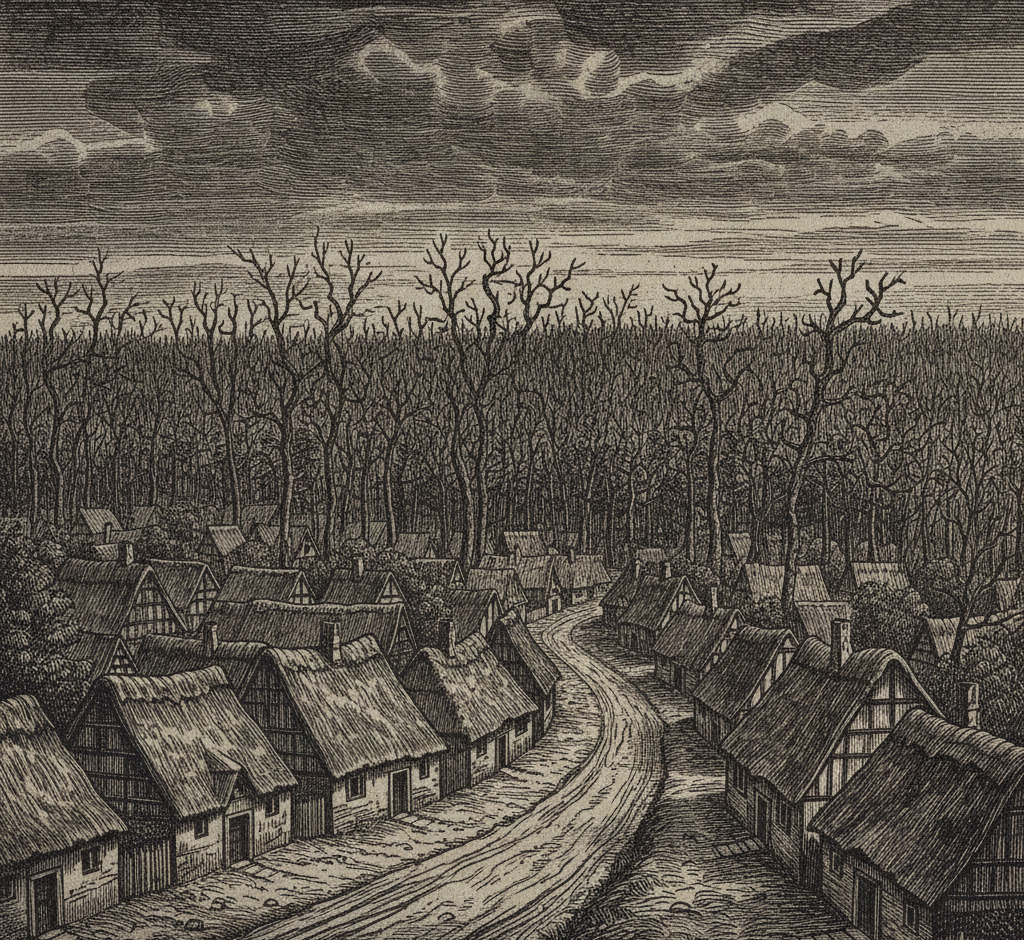
The werewolf trials did not focus on animals roaming the countryside, but on communal efforts to impose order during periods of chaos. These events illustrate how societies under duress construct narratives of evil, identify individuals who embody them, and develop legal and moral frameworks to support such beliefs.
This analysis addresses not only superstition but also the mechanisms by which fear becomes institutionalised and belief, once sanctioned by authority, becomes indistinguishable from reality.
The Logic of Belief and Violence
The werewolf trials originated during a period of social distress, characterised by violence, scarcity, and uncertainty. At that time, belief systems played a central role in shaping societal interpretations of unexplained harm. Incidents such as livestock mutilation, child disappearances, and sudden deaths prompted communities to seek explanations consistent with prevailing moral and cultural frameworks.
Instead of attributing violence to broader social forces, communities increasingly believed that specific individuals possessed hidden or malevolent identities. The werewolf figure offered a compelling explanation: a person who appeared human but secretly embodied savagery. This belief enabled societies to localise danger within specific individuals, thus avoiding direct engagement with broader social instability.
Recognisable patterns emerged as accusations increased. Those targeted were typically socially marginalised, economically vulnerable, and already viewed with suspicion. Confessions were often obtained through coercion. Once a narrative of transformation was established, available evidence was interpreted to fit it, thereby reinforcing it. Legal authorities did not merely tolerate such beliefs; they institutionalised them by embedding supernatural explanations into formal legal procedures.
The werewolf trials thus reveal dynamics that extend beyond folklore. They demonstrate how fear, belief, and authority can converge to create systems in which violence is both justified and perceived as a moral imperative.
How Confession became Evidence
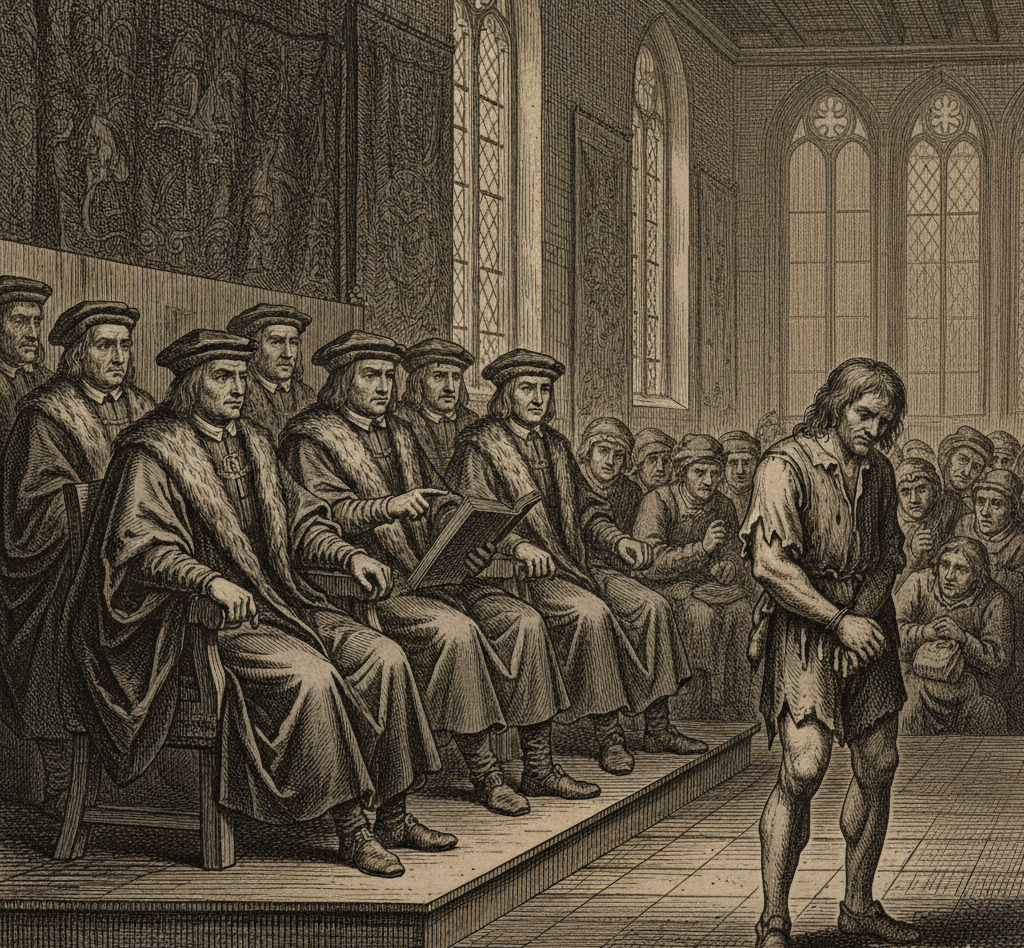
In early modern courts, the primary objective of interrogation was not to determine whether a crime had occurred, but to secure a confession that aligned with legal expectations. Confessions were considered the most reliable form of evidence and frequently took precedence over material evidence or eyewitness testimony.
Once an accusation was made, procedural mechanisms typically reinforced guilt rather than challenged it. Interrogations adhered to established patterns, and accused individuals were expected to provide accounts consistent with recognised forms of criminal behaviour. When confessions exhibited similar details across cases, authorities interpreted this consistency as confirmation of truth, rather than as evidence of standardised interrogation practices.
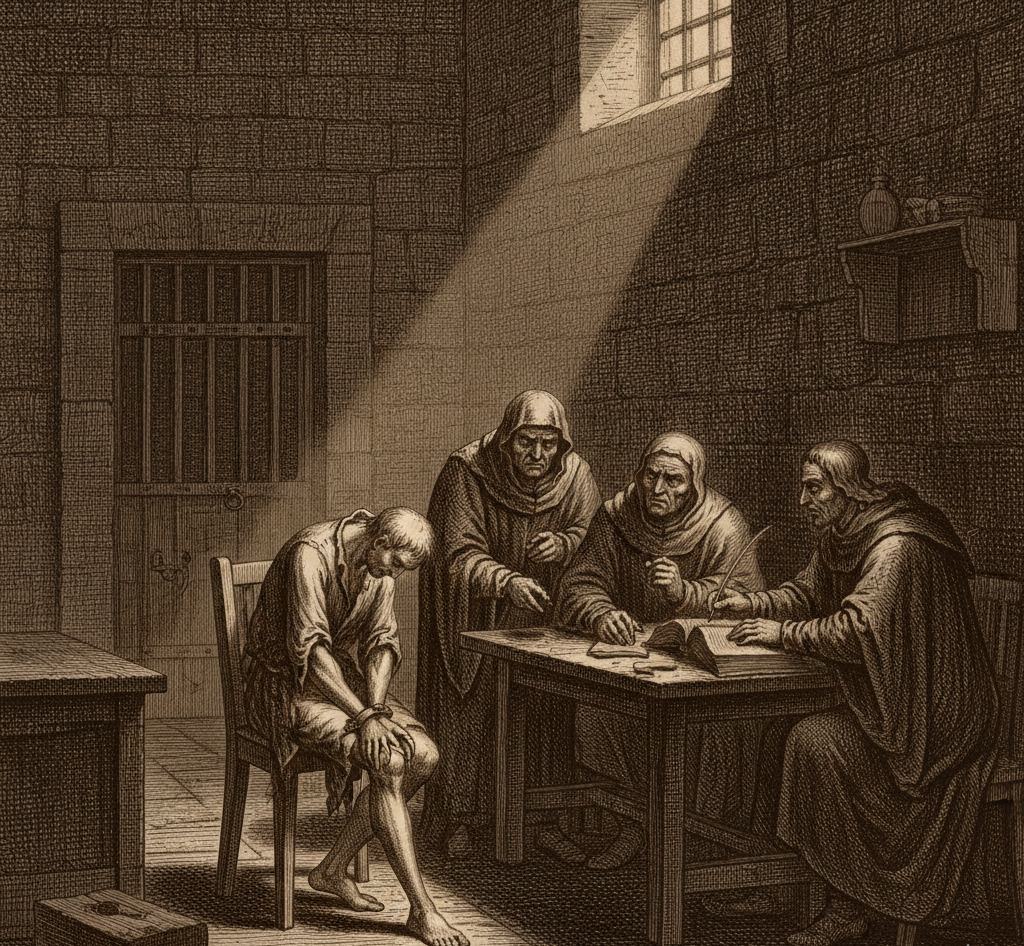
Coercive tactics were employed to limit the range of possible outcomes. Under duress, accused individuals learned which responses would be accepted and which would prolong their suffering. Over time, this process produced remarkably uniform narratives that appeared to validate the original accusations. This dynamic became embedded within legal procedures.
Legal historians have noted that early modern courts placed extraordinary weight on confessions, often treating consistency of testimony as proof, even when obtained under coercive circumstances (Levack, Witch-Hunt in Early Modern Europe).
Trials, Testimony, and the Making of Monsters
In 1589, the outskirts of Cologne experienced a series of predatory killings that traumatised the local population. This case represents an early instance of criminal profiling and forensic linkage rather than a literal hunt for a monster. Over two decades, various atrocities occurred, primarily affecting women and children. The crime scenes were marked by apparent 'surgical' brutality, with throats torn out and bodies partially consumed. Local hunters eventually cornered a large wolf and claimed that, as they closed in, the animal transformed into a man named Peter Stumpp.
David Lederer, a prominent scholar, has argued that this alleged transformation was likely a narrative constructed by the community to rationalise how a neighbour could conceal such predatory behaviour for years. Hunters testified that the wolf lacked a left forepaw, likely because Stumpp was missing his left hand. In the absence of modern forensic methods, this physical trait served as the primary identifier. Stumpp’s confession, probably obtained under duress via the "Strapado," included references to a magical belt. This 'belt' functioned symbolically, enabling the community to process the duality of a serial killer living among them. Stumpp later became known as 'The Bedburg Man-Hunter.'
Between 1572 and 1573, Dole, France, experienced a catastrophic famine accompanied by four gruesome attacks on children, described as cannibalistic. Giles Garnier, a resident, was accused of these crimes. During his trial, a witness testified to seeing a 'large, misshapen creature' in the bush, but the most significant evidence came from a group who claimed to have seen Garnier at the crime scene, covered in blood and in a frenzied state. No witnesses reported seeing a wolf or a transformation; instead, Garnier was labelled a werewolf due to the cannibalistic nature of his attacks.
In the absence of psychiatric terminology, his behaviour was interpreted metaphorically, and he was called 'the beast.' Garnier eventually confessed, claiming to possess an ointment that enabled his 'transformation.' He became known as the 'Hermit of Dole.'
In 1651, Estonia witnessed the case of Hans, an 18-year-old brought before the court not for murder, but for 'running with the wolves.' The investigation focused on a scar Hans claimed was a wolf bite that 'initiated' him. Courts spent considerable time analysing the persistence of his scars and debating whether he had truly transformed after receiving the wound. Hans’s testimony was notably mundane, describing wolf life as a series of hunts for food. Some analysts interpret his narrative as a form of social protest; for an individual from a lower economic background facing chronic hunger, the 'werewolf' identity provided a sense of agency and fulfilment. Hans became known as 'The Wolf of the Courtroom.'
Why the Werewolf?
The prominence of the werewolf in early modern prosecutions was not incidental. Among the many symbolic figures available to explain violence, the werewolf occupied a uniquely powerful position because it embodied contradiction. It represented the collapse of boundaries that structured social life: human and animal, reason and instinct, order and chaos. In societies where moral identity was closely tied to self-control and communal obligation, the figure of the werewolf offered a language through which extreme violence could be rendered. Legal systems did not require literal belief in physical transformation for this symbolism to be effective. Instead, the werewolf functioned as an actionable metaphor. By framing an accused individual as having crossed into animality, courts could explain brutality without questioning the moral foundations of society. Violence was thus attributed not to social failure, economic stress, or institutional weakness, but to an individual who had abandoned humanity entirely.
Anthropological scholarship on boundary violation clarifies this dynamic. Figures that exist between categories often attract disproportionate fear because they threaten classificatory order. The werewolf, as a hybrid entity, exemplified this threat. It suggested that civility was fragile, reversible, and dependent on continual restraint. In legal contexts, this perception translated into a heightened urgency to eliminate the perceived danger before it could spread.
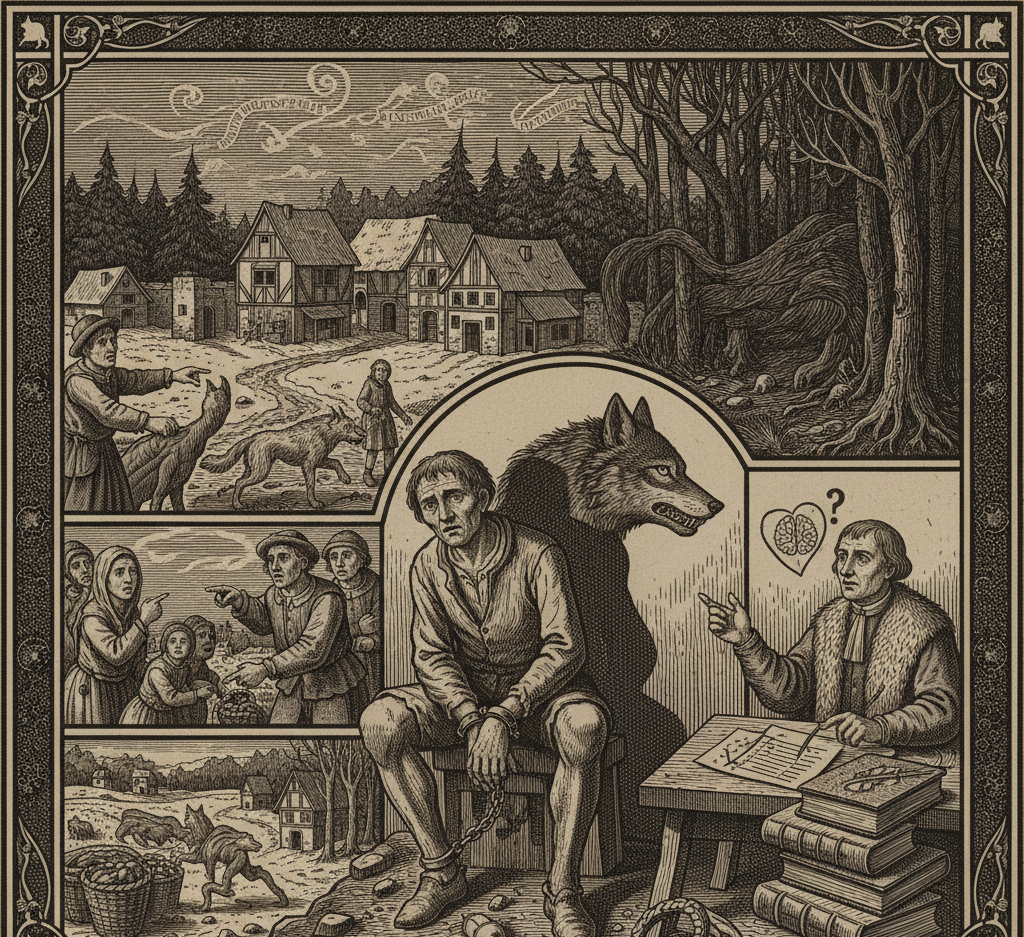
The symbolic utility of the werewolf also resided in its adaptability. Unlike other monstrous figures, it could be mapped onto familiar social types, such as the recluse, the outsider, or the morally suspect neighbour. This flexibility enabled authorities to deploy the accusation across various regions and circumstances while maintaining a consistent narrative structure. The werewolf was not a fixed mythological creature, but a conceptual tool for identifying individuals whose actions appeared to defy moral explanation.
By framing violence as transformation, courts avoided confronting the unsettling possibility that cruelty could originate from ordinary human behaviour. The werewolf accusation thus served a stabilising function, preserving the community’s moral coherence by isolating guilt within a figure deemed no longer fully human.
When Belief Lost Its Authority
Werewolf prosecutions did not result from a sudden disappearance of belief in transformation. Instead, it reflected a gradual shift in how legal systems evaluated evidence, responsibility, and causation. As judicial institutions evolved, the standards required to sustain extraordinary accusations became increasingly challenging to meet. Confession alone was no longer sufficient; corroboration, consistency, and procedural restraint gained prominence.
This transformation was uneven and frequently contested. In some regions, scepticism emerged among legal elites who questioned the reliability of coerced testimony and the moral legitimacy of extreme punishments. In other areas, centralised authorities intervened to curb local excesses, viewing such trials as threats to legal uniformity and state authority rather than as necessary moral defences.
Importantly, this shift did not signify the triumph of rationality over superstition. Instead, it represented a reallocation of authority. Explanations for violence shifted from symbolic transformation to frameworks grounded in intent, motive, and material causation. Acts once interpreted as evidence of monstrosity were increasingly reframed as criminal behaviour subject to conventional legal categories.
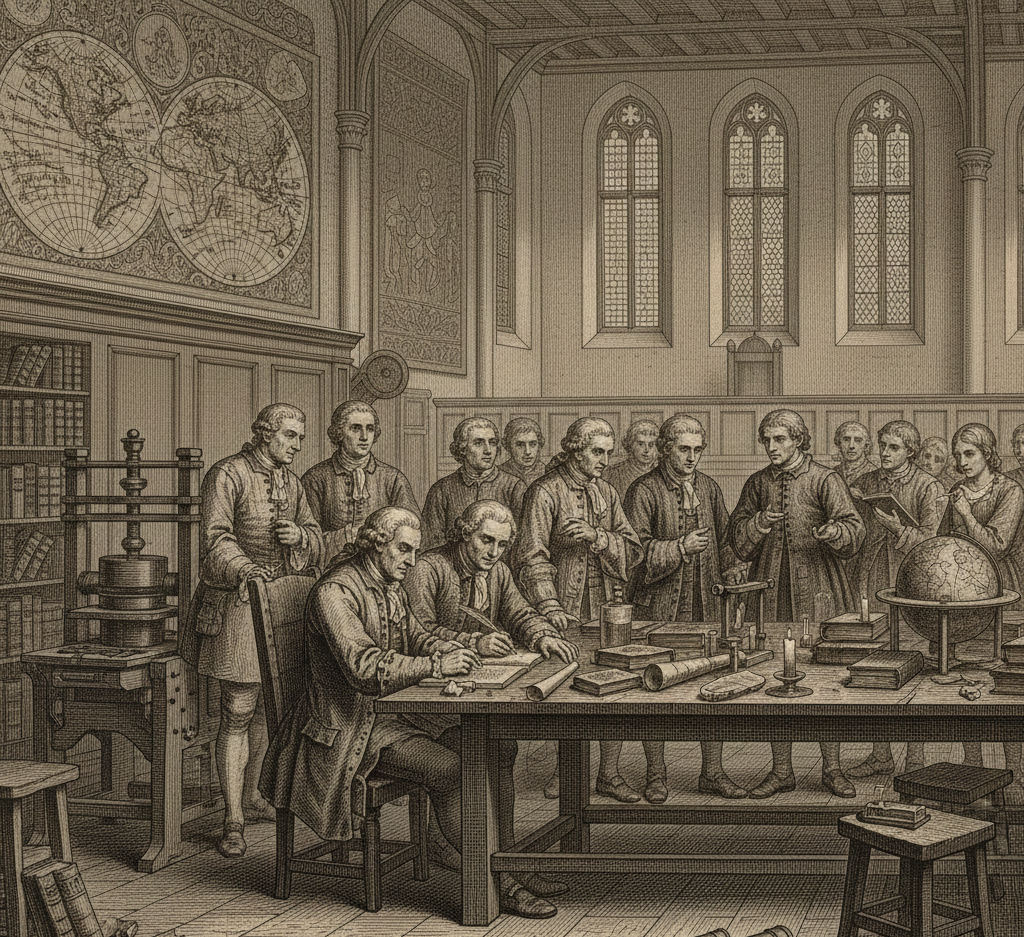
The decline of werewolf trials also coincided with a broader reluctance to legitimise fear-driven prosecutions. As legal systems prioritised predictability and precedent, accusations rooted in moral panic became increasingly destabilising. The flexibility that had once made the werewolf accusation useful now rendered it incompatible with emerging judicial norms. By the early eighteenth century, the werewolf had disappeared mainly from courtrooms, not because societies ceased to fear violence, but because legal institutions no longer sanctioned explanations predicated on the collapse of human identity. Violence persisted, but the monster as a legal category had lost its authority. security.
The end of the trials marks a significant transition, revealing that institutions, rather than belief alone, determine which narratives are permitted to justify punishment. When the law withdrew its support, the werewolf returned to the realm of folklore, not because it was disproven, but because it was no longer legally valid.
Fear, Meaning, and Human Judgment
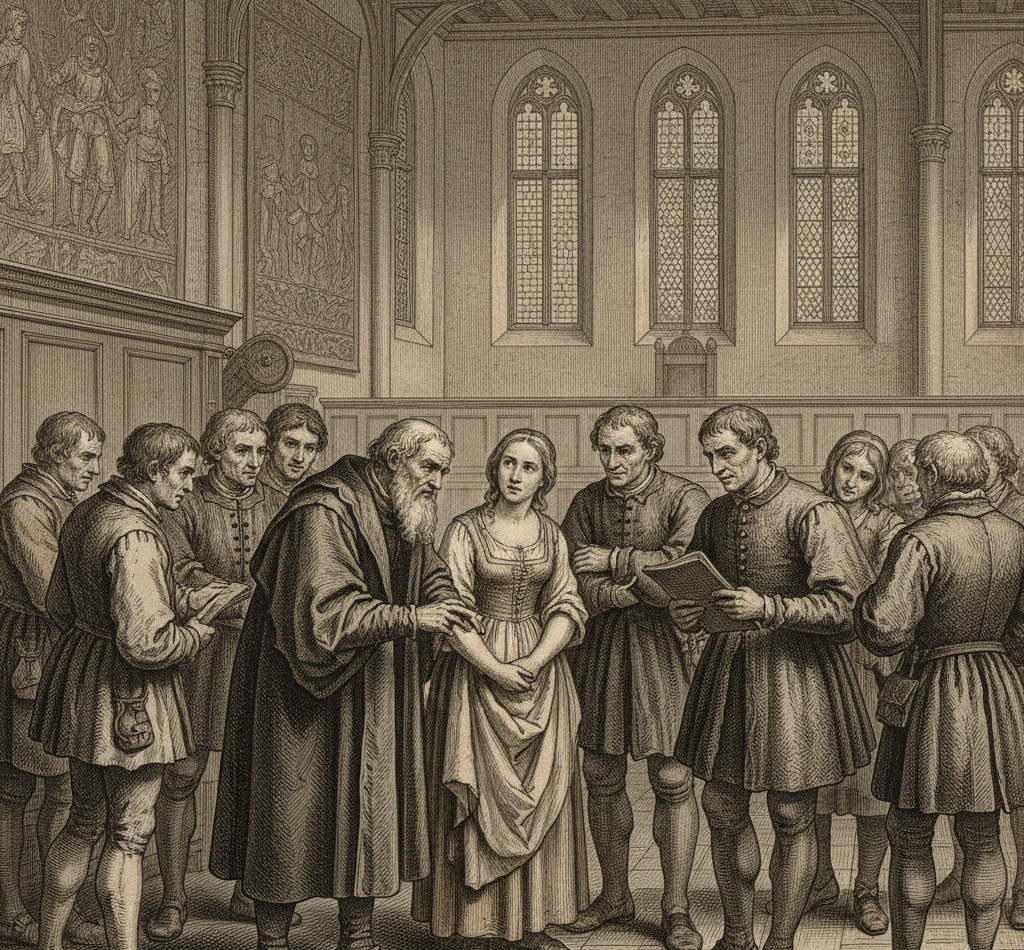
The history of the werewolf trials provides a measured yet unsettling lesson about human judgment under duress. When fear supersedes understanding, societies often adopt explanations that reduce complexity rather than confront it. Superstition, in this context, reflects a broader human tendency to impose meaning on uncertainty, particularly when violence appears senseless or uncontrollable.
If unchecked, such impulses can solidify into conviction and translate into action, with significant consequences for those implicated. The primary danger arises not from belief itself, but from the moment belief acquires institutional authority without restraint.
Historical evidence demonstrates that irrational explanations, when permitted to guide judgment, rarely remain benign, and the resulting harm is frequently borne by the most vulnerable. Recognising this pattern is not about condemning the past, but about remaining vigilant to the ways fear continues to influence moral and legal decisions today.
References-
Carlo Ginzburg, Ecstasies: Deciphering the Witches’ Sabbath (University of Chicago Press, 1991).
Brian P. Levack, The Witch-Hunt in Early Modern Europe (Routledge, 3rd ed., 2006).
Stuart Clark, Thinking with Demons: The Idea of Witchcraft in Early Modern Europe (Oxford University Press, 1997).
Lyndal Roper, Witch Craze: Terror and Fantasy in Baroque Germany (Yale University Press, 2004).
Wolfgang Behringer, Witches and Witch-Hunts: A Global History (Polity Press, 2004).
Rainer Decker, “The Trial of Peter Stumpp (1589) and the End of the Werewolf Trials,” in Witchcraft and Magic in Europe: The Period of the Witch Trials (University of Pennsylvania Press, 2002).
George Lincoln Burr, Narratives of the Witchcraft Cases, 1648–1706 (Charles Scribner’s Sons, 1914).
Johann Weyer, De Praestigiis Daemonum (1563).
Jean Bodin, De la démonomanie des sorciers (1580).
Gábor Klaniczay, The Uses of Supernatural Power (Polity Press, 1990).
Hugh Trevor-Roper, “The European Witch-Craze of the Sixteenth and Seventeenth Centuries,” in The Crisis of the Seventeenth Century (Harper & Row, 1967).
Michel Pastoureau, The Bear: History of a Fallen King (Harvard University Press, 2011).
Sabine Baring-Gould, The Book of Werewolves (1865).
Denis Crouzet, Warriors of God: The Wars of Religion in France (Harvard University Press, 1992).
Daniel Kahneman, Thinking, Fast and Slow (Farrar, Straus and Giroux, 2011).
Yuval Noah Harari, Sapiens: A Brief History of Humankind (Harper, 2014).