The Lighthouse That Went Silent: The Mystery of the Flannan Isles Keepers.
More than twenty miles off the Isle of Lewis in the Outer Hebrides, the Flannan Isles, also known as the Seven Hunters, are a cluster of rocks rising from the North Atlantic. In December 1899, a new 75-foot lighthouse on Eilean Mòr became operational, its 140,000-candlepower beam guiding vessels past dangerous water. Staffed by rotating Northern Lighthouse Board keepers, the Flannan Isles Light was an engineering triumph built in one of Britain's harshest environments. Yet just a year after its first light, Eilean Mòr became the site of a maritime mystery.
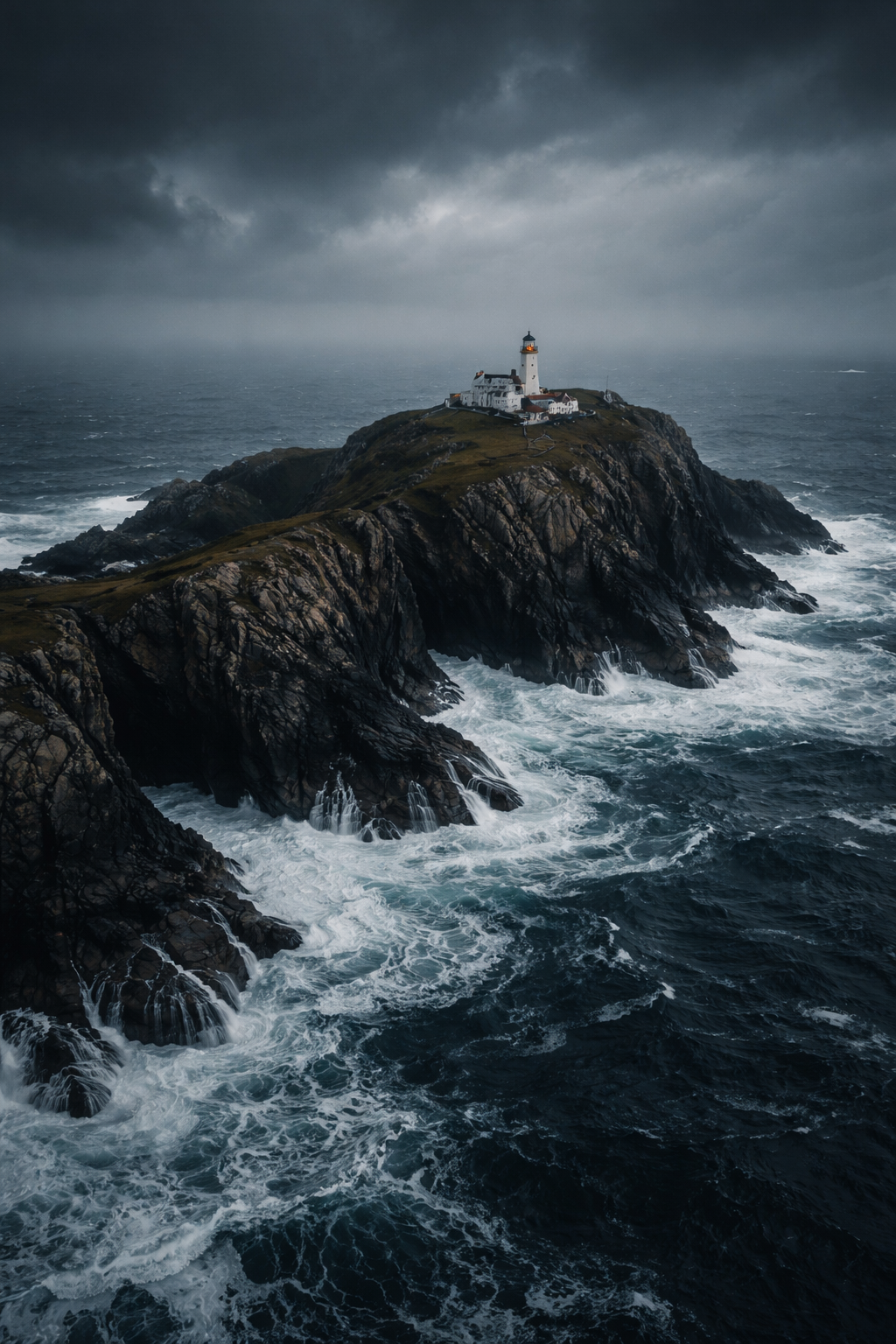
The tragedy began in mid-December 1900, during the watch of Principal Keeper James Ducat, Second Assistant Thomas Marshall, and Occasional Keeper Donald McArthur. The first sign of trouble came around midnight on December 15, when the passing steamer Archtor noticed the beacon was dark, despite severe weather. Though Archtor reported this upon arriving at Leith three days later, administrative errors delayed notification to the Northern Lighthouse Board, leaving the lighthouse dark and silent for over a week.
On Boxing Day, December 26, the relief tender Hesperus finally reached the island after battling rough seas. Captain Jim Harvie and his crew saw no welcome flag or provision boxes and received no response to their signals. Relief keeper Joseph Moore rowed ashore and climbed the stairs, finding closed gates and doors, unmade beds, a cold fire, and stopped clocks. Most unnervingly, the three keepers were missing.
Inside, the lighthouse showed no clear reason for abandonment. The lamp was cleaned and trimmed. The oil fountains were full, and the kitchen was tidy. This showed that the men were doing their morning routines on December 15 before vanishing. Outside, the West Landing bore the marks of storm damage: twisted railings and a displaced stone block. To understand the disappearance, we must examine the physical evidence, the official investigation, and theories ranging from rogue waves to folklore.
The Remote Edge of the Atlantic
The largest of the Flannan Isles, Eilean Mòr, is a 38-acre island with sheer cliffs nearly three hundred feet high. Treeless and windswept, it is exposed to oceanic storms and isolated from civilisation.
For centuries, the perilous rocks of the Flannan Isles posed a deadly threat to passing ships. Many sailors died trying to navigate past the islands. To improve maritime safety, the Board of Trade approved building a lighthouse in 1896. The Northern Lighthouse Board chose David Alan Stevenson, a renowned Scottish lighthouse engineer, to design it.
Building a 75-foot masonry tower on exposed rock was daunting. Contractor George Lawson began in late 1896, without a harbour, materials arrived by boat and up the rock. Builders constructed landings, stairs, and a cable railway to supply the base. Despite danger and rough weather, the lighthouse was finished for £1,899.
On December 7, 1899, the Flannan Isles lighthouse began operating, its 140,000-candlepower beam flashing twenty-four nautical miles out to sea.
The Three Keepers
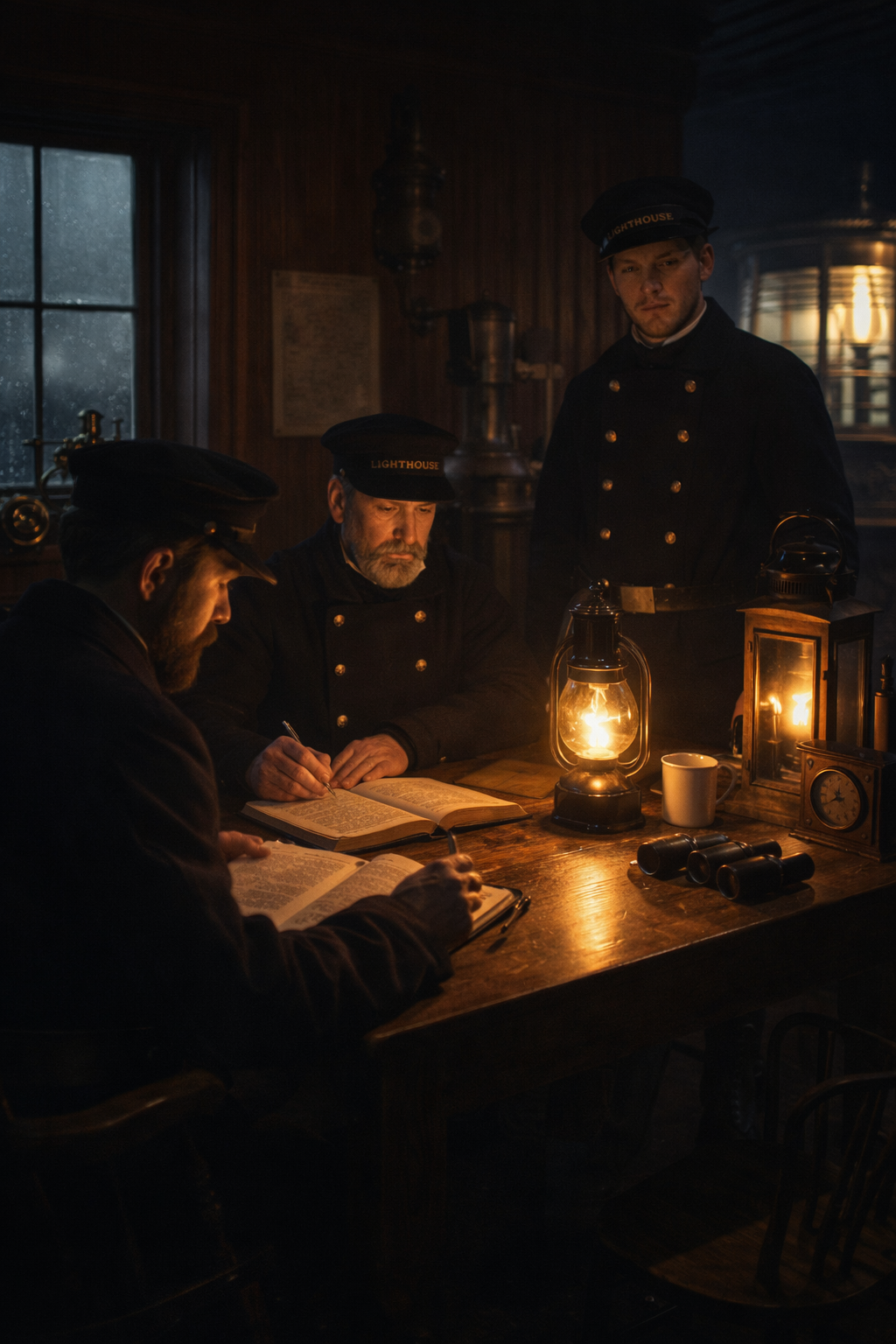
The Northern Lighthouse Board assigned three men to the rock, while a fourth was on shore leave. December 1900's crew included Principal Keeper James Ducat, Second Assistant Thomas Marshall, and Occasional Keeper Donald McArthur. Ducat, forty-four, was a conscientious veteran with twenty-two years of service, concerned about the strain on his family. Marshall, twenty-seven, was a former seaman learning from prior mistakes. McArthur, a rugged mariner, filled in for a sick colleague.
Life inside the tower was defined by routine and discipline. Keepers serviced the 140,000-candlepower optic, trimmed the lamps, and primed the oil. They also cleaned the lenses and maintained the compound. They recorded the weather and hauled fuel and supplies up the tramway. The men endured long stretches of isolation, which fostered tension. Strict protocols dictated that the light never be left unattended. Isolation and relentless conditions tested their mental strength.
The Light Goes Dark
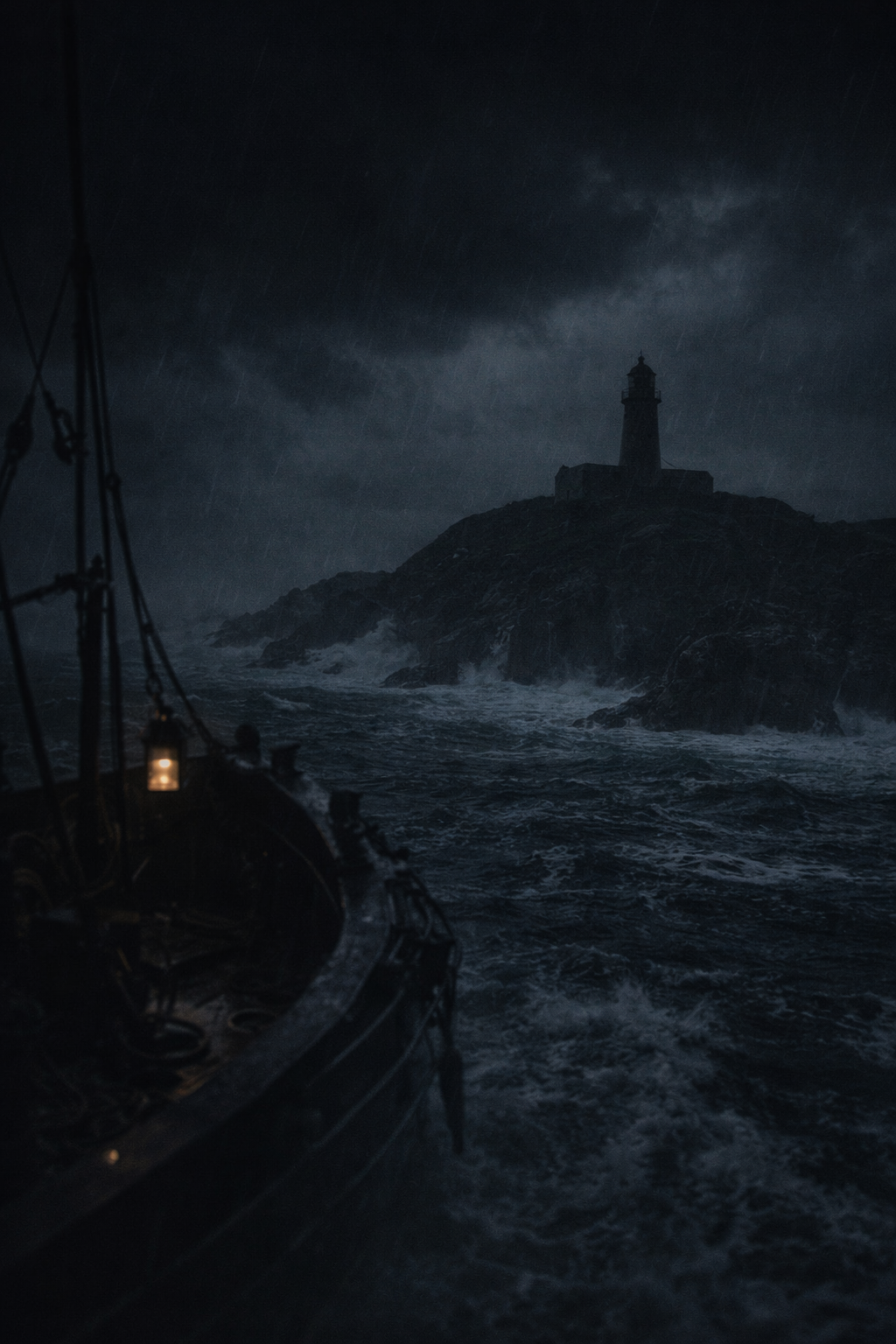
In December 1900, harsh storms hit the Outer Hebrides. By mid-month, a gale battered the Flannan Isles. Around midnight on December 15, the steamer Archtor crossed the tempest toward Leith. The crew expected the double-flash beacon but found only darkness.
Captain Holman reported the outage three days after docking. An administrative failure by the shipping line meant the Northern Lighthouse Board was not notified. The shore watchman on Lewis also failed to raise the alarm. For over a week, the silent tower remained dark. RMS kept the ship in port, delaying action until Boxing Day, December 26, when Hesperus finally approached Eilean Mòr. There was no flag, no empty provision boxes, and no response to the ship's whistle or flare. An unnatural silence prevailed.
The Relief Ship Arrival
The relief tender Hesperus, commanded by Captain Jim Harvie, was scheduled to reach Eilean Mòr on December 20 but was delayed by severe weather. At noon on Boxing Day, December 26, the ship anchored near the island. Joseph Moore went ashore and found the gate and main door closed, the kitchen door open, the flagstaff bare, and the landing deserted. Captain Harvie’s calls and signals were met with silence.
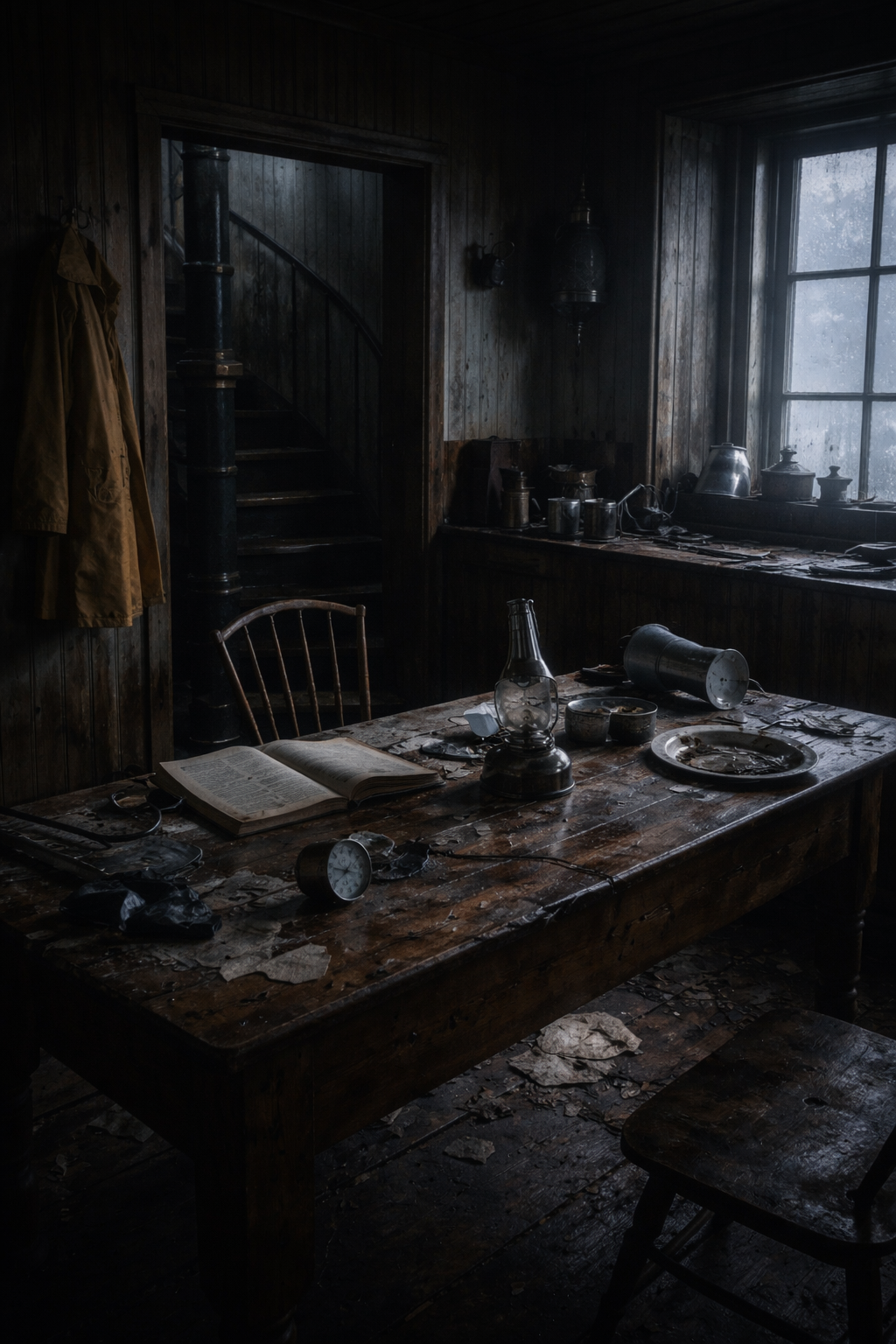
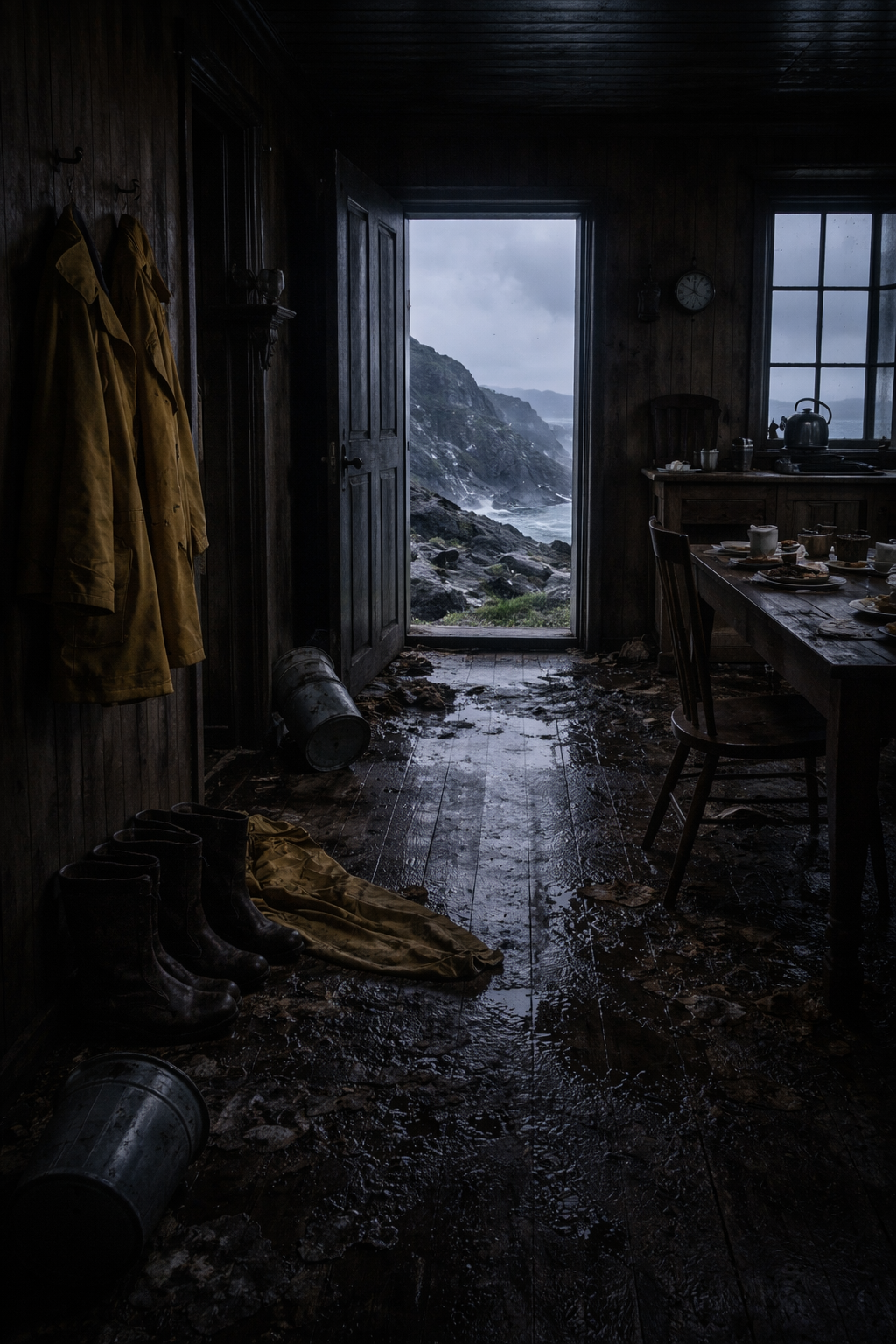
Joseph Moore went ashore and climbed the steep steps, calling for his colleagues, but found only silence. Inside, the beds were unmade, the fireplace was cold with ashes, and the mechanical clock was stopped, suggesting sudden abandonment.
Despite this, morning chores had been completed: lamps cleaned and trimmed, oil fountains full, kitchen tidy. Ducat and Marshall's heavy oilskins and sea boots were gone, but McArthur's outdoor coat remained, suggesting he left in only indoor clothes. Overwhelmed, Moore raced to the Hesperus with the chilling news: the lighthouse was completely abandoned.
Inside The Lighthouse
When Joseph Moore and the Hesperus crew entered, they found evidence of sudden abandonment. Heavy entrance gates and exterior doors were closed, but the men were gone without a trace. The most unsettling clue: two sets of outdoor gear are missing. McArthur’s coat remained, suggesting he left in shirt sleeves.
The state of the kitchen added to the terror. Moore’s report said it was tidy. Soon afterwards, an untouched meal, cold meat, bread, and cheese, was reported on the table. An overturned chair beside it suggested a desperate exit from the tower. According to widely circulated accounts, Marshall wrote on December 12 of "severe winds the likes of which I have never seen before in twenty years." The log allegedly noted that normally steadfast Ducat was "very quiet," while rugged, brawling McArthur inexplicably cried. A later entry claimed the three hardened mariners were reduced to praying together in the eye of a monstrous storm. The final, cryptic entry, purportedly on December 15, read: "Storm ended, sea calm. God is over all."
Later investigations revealed that these dramatic logbook entries and the overturned chair were sensationalised embellishments. Wilfrid Wilson Gibson’s 1912 poem Flannan Isle and lurid magazine articles popularised them. The real closing notes, found on a slate, recorded only mundane barometer readings and wind directions. Truth and myth quickly blurred. A tragic disappearance became a Gothic nightmare. Bert Muirhead arrived on Eilean Mòr to investigate. He surveyed the intact eastern side, then turned to the island's exposed West Landing. There, he found staggering destruction: twisted iron railings, a one-ton block of stone displaced, and a life buoy torn from its mountings. A heavy wooden box, used to store mooring ropes, was situated 110 feet above sea level. It had been washed away entirely. Muirhead concluded that on the afternoon of December 15, the keepers ventured down to this perilous landing during a severe storm to secure equipment. An unexpectedly large roller swept them all into the sea.
The Official Explanation
This official explanation matches the relentless maritime risks of the Outer Hebrides. The North Atlantic can produce rogue waves capable of scaling cliffs and crushing with hydraulic pressure. The island's steep, narrow rock ledges were slick with sea spray. Any equipment-recovery mission was hazardous. Thomas Marshall had been fined five shillings for losing gear in a storm. This gave the men a strong motive to brave the weather to secure the mooring box. The point of contention centres on the strict Northern Lighthouse Board protocol, which mandated that the lighthouse never be left unmanned. If Ducat and Marshall were struggling at the West Landing, it is plausible that Occasional Keeper McArthur saw them from the tower and rushed out in his shirtsleeves to assist them. However, sceptics point out a glaring logical flaw: if McArthur was in a frantic, desperate rush to save his drowning colleagues, why would he take the time to securely close the inner doors, the outer door, and the compound gate behind him? This irreconcilable detail, coupled with later, though historically debunked, rumours of desperate logbook entries recounting weeping and prayers, spawned countless alternative theories. Ranging from a murderous brawl near the cliff edge to madness induced by mercury fumes, these continuing debates have ensured the Flannan Isles incident continues as a lasting enigma.
Theories and Speculations
The ongoing silence surrounding the Flannan Isles disappearance has generated a wide range of theories, from grounded oceanographic explanations to deeply paranormal ones. By analysing the physical evidence and the historical context, investigators have proposed several alternative theories to explain the fate of the three lighthouse keepers.
The most scientifically supported theory puts forward a tragic accident at the island's highly exposed West Landing. Forensic evidence showed that a heavy storage box situated 110 feet above sea level had been washed away, and heavy iron railings were twisted. Historical records reveal that Thomas Marshall had previously been fined five shillings for losing equipment in a storm, giving the men a strong financial and professional motive to brave hazardous conditions to secure their gear. Modern oceanography provides the most likely mechanism for their demise: a giant wave. These freak waves, mathematically proven and confirmed by the 1995 Draupner wave, can result from linear focusing or non-linear effects, creating a sudden, lofty wall of water. Furthermore, the island's narrow gullies, or "geos," could violently compress incoming swells, causing water to explode upward with enough hydraulic pressure to scale the 110-foot cliffs and sweep the men away instantly.
Another hypothesis suggests that the deep isolation of Eilean Mòr worsened interpersonal tensions, resulting in a fatal altercation. Proponents often point to Donald McArthur, known for his volatile nature. It is speculated that a fight broke out near the cliff edge, leading to a murder-suicide or a desperate rescue attempt that pulled all three men into the sea. However, a review of the lighthouse interior, which revealed a cleaned kitchen, a trimmed lamp, and no signs of struggle, contradicts the likelihood of violent chaos.
Psychological Breakdown, Closely related to internal conflict is the theory of sudden psychological collapse. The claustrophobic environment of the lighthouse could have induced "island fever" or madness. Some researchers have hypothesised that toxic mercury fumes, which evaporated from the bath used to float the massive lighthouse lens, could have poisoned the keepers, inducing hallucinations or severe paranoia. In a state of delirium, one man might have fled into the Storm, with the other two perishing in an attempt to save him. Yet again, the highly orderly state of the living quarters suggests the men were operating with expert precision until their sudden exit.
Finally, the mystery has been influenced by the Celtic folklore surrounding the archipelago. Known as the Seven Hunters, the islands were long considered haunted spaces where pilgrims performed protective rituals to appease local spirits—in the absence of bodies, locals and the press speculated about sea serpents, alien abduction, a boat filled with ghosts, or the malevolent "Phantom of the Seven Hunters". While scientifically baseless, these supernatural theories became rooted in the public consciousness, fuelled by sensationalised media and Wilfrid Wilson Gibson’s 1912 poem, ensuring the case remains a lasting maritime legend.
The Silence That Remains
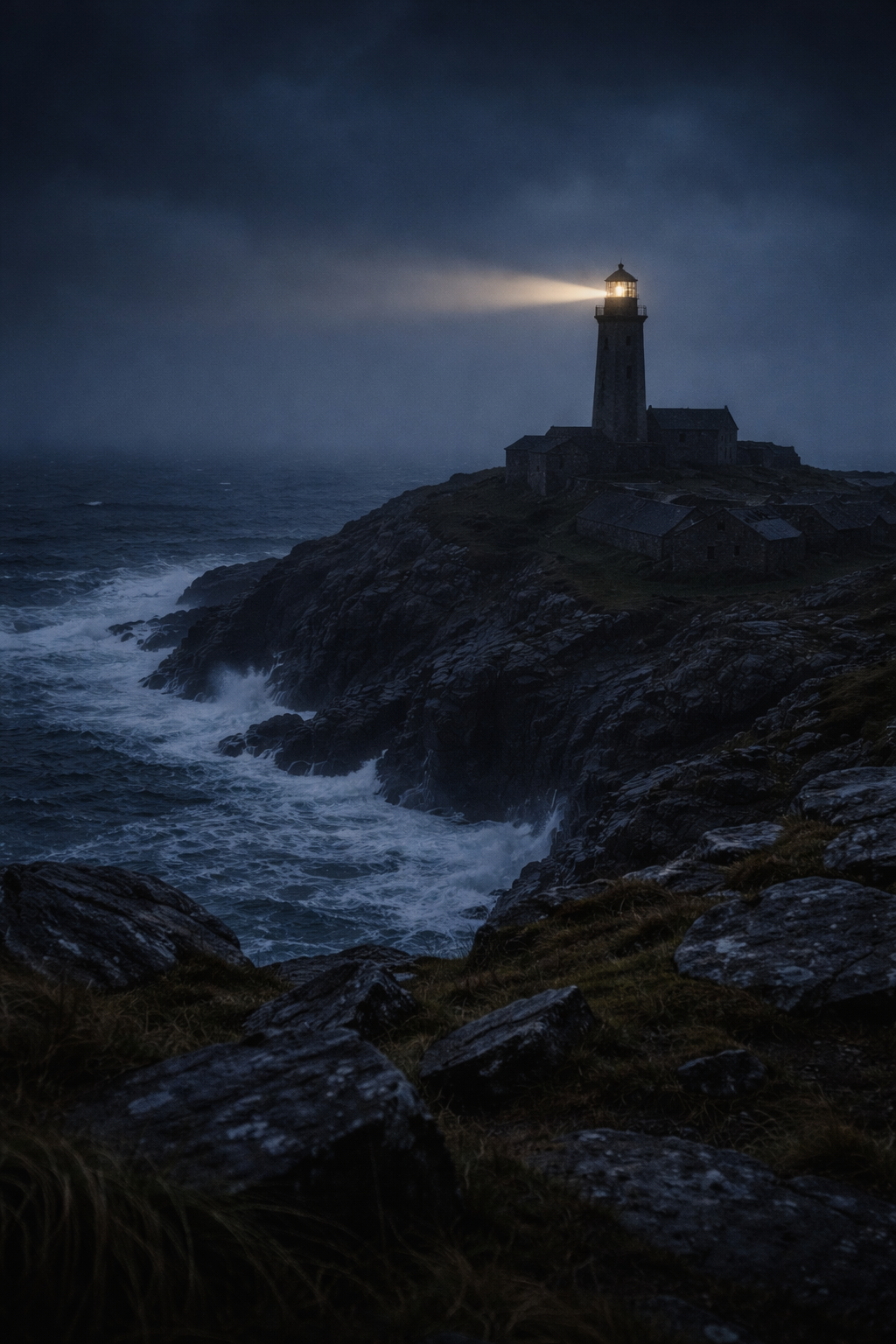
After the initial shock of the discovery, the immediate necessity was to restore the beacon's lifesaving function. Relief keeper Joseph Moore and three volunteers remained on the bleak rock to keep the light burning, a clear reminder that the machinery of maritime safety marches on regardless of human tragedy. The Flannan Isles Lighthouse remained manned by successive rotations of keepers until it was finally automated in 1971. Today, its brilliant beam still sweeps across the dark, churning Atlantic, but the tower itself is entirely devoid of human life and is operated remotely from the mainland.
The legacy of the Flannan Isles is tied to its acute isolation. The psychological strain of living on a wave-battered rock, cut off from the world for weeks, can be heavy on the mind. While official reports point to the force of the ocean, the psychological environment, claustrophobia, the roar of the gales, and deep loneliness are inseparable from the legend. It is a place where the boundary between human routine and natural forces is fragile.
Ultimately, the disappearance of James Ducat, Thomas Marshall, and Donald McArthur remains one of the most baffling sea mysteries in maritime history. While modern science offers a plausible mechanism for a monstrous wave, we cannot reach a definitive conclusion. We will never know for certain what happened on that freezing December day. There are no bodies, no farewell notes, and no witnesses to confirm the official narrative. Instead, there is only a cold, impenetrable silence. We are left to imagine the terror that must have gripped them, forever wondering whether the sea claimed them by accident or whether something more malevolent occurred before the three men vanished into the dark waters.
References
Carlton, G. (2023, July 24). Inside the chilling Flannan Isle mystery of the three lighthouse keepers who suddenly vanished in 1900. All That's Interesting. https://allthatsinteresting.com/flannan-isle-mystery
Eastman, K. (2021, March 5). The Lamplighters by Emma Stonex #BlogTour. Nut Press. https://nutpress.co.uk/2021/03/the-lamplighters-by-emma-stonex-blogtour/
EMR Integrated Solutions. (2024, July 24). Northern Lighthouse Board boosts maritime safety with support from EMR. https://emrsolutions.com/case-studies/nlb
Flannan Isle lighthouse in Outer Hebrides. (n.d.). Atlas Obscura. Retrieved March 17, 2026, from https://www.atlasobscura.com/places/flannan-isle-lighthouse
The Flannan Isle lighthouse. (n.d.). Retrieved March 17, 2026, from http://userhome.brooklyn.cuny.edu/anthro/jbeatty/scotia/issue38/issue38a.html
The Flannan Islands mystery. (n.d.). Spooky Scotland. Retrieved March 17, 2026, from https://spookyscotland.net/the-flannan-islands-mystery/
The Flannan Isles mystery and the three men who vanished. (n.d.). The Isle of Mull Directory. Retrieved March 17, 2026, from https://mulldirectory.co.uk/the-flannan-isles-mystery-and-the-three-men-who-vanished/
Georgia Institute of Technology. (2025, September 8). Scientists finally crack the mystery of rogue waves. ScienceDaily. Retrieved March 16, 2026, from https://www.sciencedaily.com/releases/2025/09/250907172647.htm
Grant, J. (2023, December 8). Flannan Isles lighthouse keepers: The disappearance. Open Book. National Records of Scotland. https://blog.nrscotland.gov.uk/2023/12/12/flannan-isles-lighthouse-keepers-the-disappearance/
Imran, J. (n.d.). Disappearance at Flannan Isle lighthouse [PDF]. Scribd. https://www.scribd.com/document/688809749/Mystery-of-flannen-isle
Knifton, J. (2022b, March 17). The Flannan Isle disappearances (2). John Knifton. https://johnknifton.com/2022/03/17/the-flannan-isle-disappearances-2/
Knifton, J. (2022–2023). Flannan Isle [Blog category]. John Knifton. https://johnknifton.com/tag/flannan-isle/
Lyons, K. (n.d.). Doctor Who: Horror of Fang Rock. BFI Southbank Programme Notes. EOFFTV.com. https://bfidatadigipres.github.io/events/2024/02/04/doctor-who-horror-of-fang-rock/
Mukherjee, M. B. (2017, November 22). Abnormal waves [PDF]. Scribd. https://www.scribd.com/document/365419803/Abnormal-Waves
The mysterious disappearance of the Flannan Islands lighthouse keepers. (2005, July). Lighthouse Digest. https://www.lighthousedigest.com/Digest/StoryPage.cfm?StoryKey=2267
Northern Lighthouse Board. (2024, August 22). IALA takes on new powerful position to develop, harmonize and enhance worldwide safety of navigation, efficiency and protection of the marine environment. https://www.nlb.org.uk/news/iala-takes-on-new-powerful-position-to-develop-harmonize-and-enhance-worldwide-safety-of-navigation-efficiency-and-protection-of-the-marine-environment/
Northern Lighthouse Board. (2025, Summer). Journal. Northern Lighthouse Board Journal, (126). https://www.nlb.org.uk/wp-content/uploads/Summer-Journal-2025-for-web-1.pdf
Northern Lighthouse Board. (n.d.-a). Automation. Retrieved March 17, 2026, from https://www.nlb.org.uk/history/automation/
Northern Lighthouse Board. (n.d.-b). Flannan Isles. Retrieved March 17, 2026, from https://www.nlb.org.uk/history/flannan-isles/
Royal Museums Greenwich. (n.d.). What caused the disappearance of the Flannan Isle lighthouse keepers? Retrieved March 17, 2026, from https://www.rmg.co.uk/stories/maritime-history/what-caused-disappearance-flannan-isle-lighthouse-keepers
Sullivan, S. P. (n.d.). Horror of Fang Rock. A Brief History of Time (Travel). http://www.shannonsullivan.com/drwho/serials/4v.html
Thompson, F. (1970). St. Kilda and other Hebridean outliers. Praeger Publishers. https://www.scribd.com/document/509331132/St-Kilda-and-Other-Hebridean-Outliers-Francis-Thompson
Wills, R. (2017, September 30). Ronan's spooky mysteries: The Flannan Isles lighthouse. Ronan's Internet Content Venue. https://www.ronanwills.com/ronans-blog/2017/9/10/ronan-spooky-mysteries-the-flannan-isles-lighthouse
Word Traveller. (2020, September 27). "The Lamplighters" by Emma Stonex. Ends of the Word. https://endsoftheword.blogspot.com/2020/09/the-lamplighters-by-emma-stonex.html