The Tower’s Darkest Secrets: The Vanishing of Edward V and His Brother.
In the spring of 1483, the sudden death of King Edward IV precipitated a succession crisis. His twelve-year-old son, Edward V, inherited the crown, and both Edward and his nine-year-old brother, Richard, Duke of York, were placed in the Tower of London, which served as a royal residence before coronations. Their uncle, Richard, Duke of Gloucester, intercepted the King's entourage, arrested their maternal guardians, and assumed control. By the end of summer, the coronation was postponed indefinitely, and Parliament declared the children illegitimate. Richard, formerly their protector, was subsequently crowned King Richard III.
The events following their uncle's ascension remain among the most debated enigmas in royal history. After the execution of key political allies, the boys were withdrawn into the "inward apartments" of the Tower, and their appearances behind the barred windows became increasingly rare. By summer's end, they vanished entirely, fueling persistent rumours throughout England and European courts that the children had been "put to silence.”
The investigation into their fate includes the 1674 discovery: workmen demolishing a staircase found the bones of two children in a box. Presumed to be the remains of the missing princes, they were buried in Westminster Abbey. The mystery persisted into Henry VII's reign. Marked by uprisings, this era saw pretenders like Lambert Simnel and Perkin Warbeck claim to be the princes thought dead in the Tower.
A central question persists: why does this historical mystery continue to captivate the collective imagination after more than five centuries? By evaluating principal suspects—including Richard III, Henry VII, ambitious nobles, and lesser-known insiders—and considering theories of secret escape, a complex portrait of fifteenth-century betrayal emerges. Retracing the boys' final known steps highlights an era in which those in power frequently manipulated truth. Although the Tower's walls have witnessed numerous executions and intrigues, the full truth of the events during the summer of 1483 remains unrevealed, suggesting that further secrets may still be concealed.
The Crown Without a King
On 9 April 1483, the sudden death of Edward IV sent shockwaves through England. Although he left the kingdom prosperous, he failed to unify rival factions at court. His heir, Edward V, was only twelve years old. A royal minority in the fifteenth century was fraught with danger. The disastrous reigns of Richard II and Henry VI remained fresh in the minds of the elite, underscoring the power vacuum created by child monarchs. This event constituted not only a family tragedy but also a constitutional crisis threatening the survival of the Yorkist dynasty.
Edward IV tried to prevent chaos by naming his brother Richard, Duke of Gloucester, as Lord Protector. Gloucester, thirty, was a seasoned commander who had ruled northern England for over a decade. This threatened the Woodvilles, Queen Elizabeth's family. Older nobles saw them as ambitious upstarts. Earl Rivers and the Marquess of Dorset, leaders of the Woodville faction, aimed to increase their influence over the young King. Their council in London pressed for an immediate coronation on 4 May to end the protectorate and secure control of government.
Political manoeuvring escalated into open conflict before the young King reached London. Recognising the urgency, Richard of Gloucester rode south. On 30 April at Stony Stratford, he and the Duke of Buckingham intercepted the royal entourage travelling from Ludlow. Gloucester arrested Earl Rivers and other key members of the King's household, sending them to northern strongholds. By taking control of his nephew, Richard dismantled the Woodville power base in a single, bloodless move. However, this action failed to stabilise the kingdom and instead triggered a series of events that led to further controversy and crisis.
Two Boys Enter the Tower
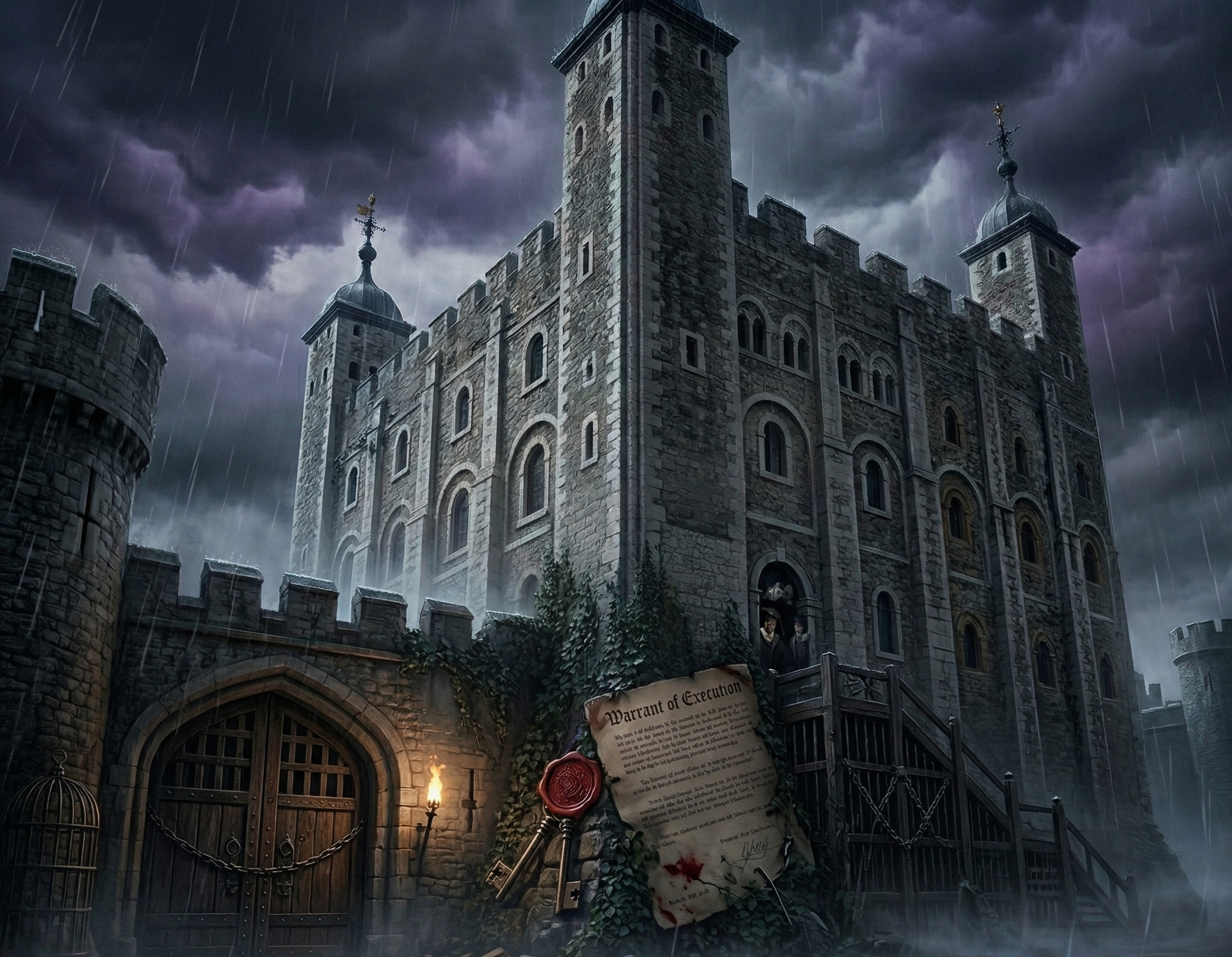
While the Tower of London is now associated with imprisonment and execution, in the late fifteenth century, it also functioned as a royal palace, mint, treasury, and the traditional starting point for coronation processions. Under this constitutional tradition, Edward V entered the Tower in early May 1483. The royal council, following the Duke of Buckingham's advice, selected the Tower as the appropriate residence for the twelve-year-old King as he awaited his coronation. He was placed in the royal apartments facing the Thames, a conventional step for a monarch preparing to assume power.
As politics worsened, the Tower's dual function as palace and prison became clear. Fearful of Richard of Gloucester, Elizabeth Woodville sought safety in Westminster Abbey with her younger son, Richard, Duke of York. On 16 June, a delegation led by the Archbishop of Canterbury, backed by Gloucester's forces, persuaded the Queen to surrender her younger son. Escorted by barge to the Tower, the Duke of York joined his brother, placing both heirs under Gloucester's control.
The royal residency soon turned sinister. After Lord Hastings's execution on 13 June, Edward V's attendants lost access to him. Following this, the brothers were moved into the fortress's inner apartments. For a period, the children were observed playing in the Tower Gardens. As summer progressed and their uncle's position weakened, sightings became increasingly rare. Dominic Mancini, an Italian observer, noted that the boys were seen less frequently behind the barred windows until they disappeared. Deprived of attendants and his crown, Edward V reportedly became melancholy. According to his physician, Dr John Argentine, the boy sought daily confession and behaved "like a victim prepared for sacrifice." The royal residence thus became a gilded prison." The royal residence was a gilded prison.
The Uncle Who Became King
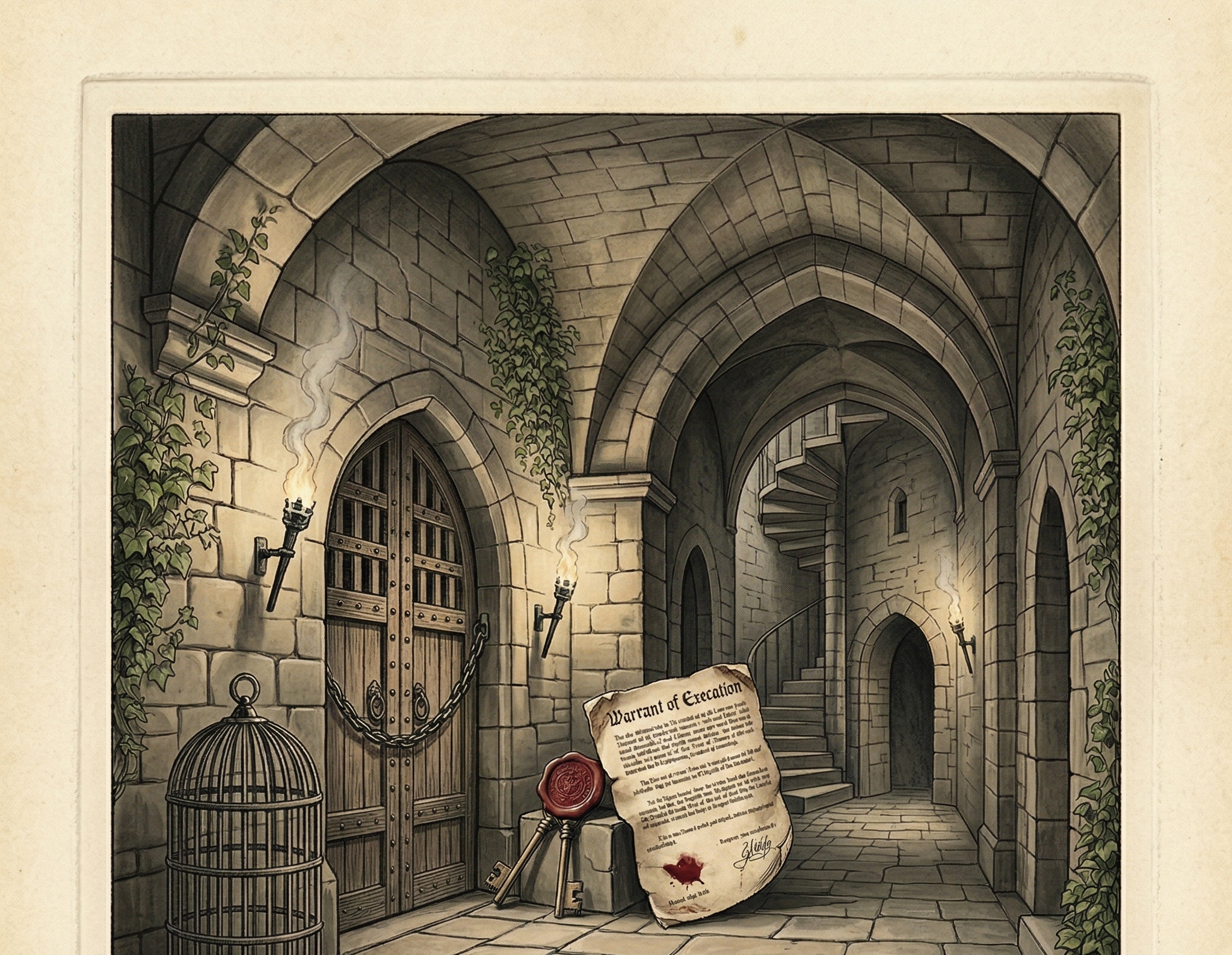
As June progressed, London's political atmosphere shifted from tense unease to orchestrated usurpation. The catalyst was a devastating revelation from Robert Stillington, Bishop of Bath and Wells and former Chancellor. Stillington told the royal council that Edward IV had entered a legally binding marriage "pre-contract" with Lady Eleanor Butler before secretly marrying Elizabeth Woodville. Under fifteenth-century canon law, this prior agreement made the late King’s second marriage bigamous and invalid. Instantly, young Edward V and his brother Richard were declared illegitimate, stripped of royal titles, and deemed unfit to inherit the throne.
Gloucester wasted little time. He launched a public effort to discredit his nephews. On 22 June, the day intended for Edward V’s coronation, theologian Ralph Shaw stood at St Paul’s Cross, denouncing the boys’ legitimacy and championing Richard’s claim as the only true heir of York. Not long after, the Duke of Buckingham addressed London’s mayor and citizens at the Guildhall. He repeated the accusations and called for Richard’s acceptance as King. Four days later, at Baynard’s Castle, a petition from the lords and commons formally requested that Gloucester assume the crown.
Richard's rapid ascent to power was marked by violence. To eliminate opposition, he orchestrated extrajudicial executions. Lord Hastings, a former ally, was seized from a council meeting and executed without trial on 13 June. On 25 June, Earl Rivers, Richard Grey, and Thomas Vaughan were executed at Pontefract Castle. Richard systematically removed individuals who could have defended the princes.
On 26 June 1483, Richard was proclaimed King at Westminster, and he was crowned King Richard III on 6 July. However, the fate of his nephews cast a shadow over his reign. The princes did not merely disappear; their vanishing was central to a violent, orchestrated usurpation. Stripped of titles, protectors, and freedom, the boys were confined within the very fortress intended to safeguard them. This development transformed uncertainty into suspicion and raised the question of the fate of dangerous, disinherited royal children.
Then They Were No Longer Seen
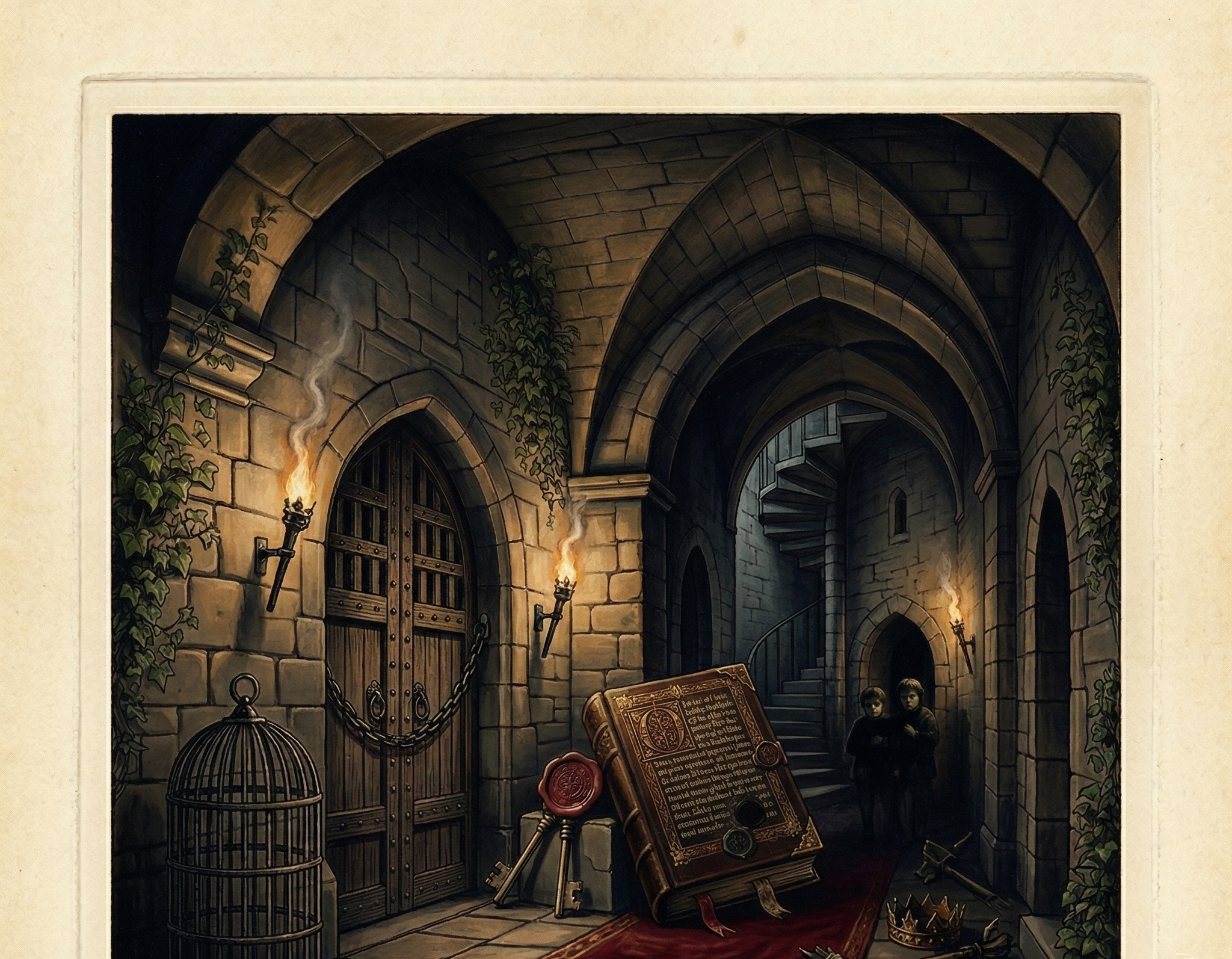
The transition from royal guests to prisoners occurred gradually. Initially, the brothers experienced a degree of normalcy within the Tower. The Great Chronicle records that early in the summer, the boys were "seen shooting and playing in the garden ... by sundry times." However, as political circumstances shifted and their uncle assumed the throne, the fortress became increasingly restrictive. Dominic Mancini, an Italian observer, provided the most chilling account, stating that the boys were moved into the "inner apartments of the Tower proper." From that point, they were seen less frequently behind bars and windows until they disappeared entirely.
The tragedy of the princes lies in the absence of a dramatic conclusion. While the fifteenth century was accustomed to public executions and the fall of kings, the fate of the princes provided no such closure. There was no execution, funeral, or official announcement. The boys disappeared, and this absence instilled dread among the people of London. Mancini documented the public's emotional response, stating, "I have seen many men burst forth into tears and lamentations when mention was made of him after his removal from men's sight". The suspicion that the children had been "done away with" soon permeated the kingdom.
The enduring power of this historical mystery is rooted in its silence. The absence of concrete facts became the narrative, ensuring the princes’ lasting presence in collective memory. Neither Richard III nor Henry VII conducted an official inquiry or issued a definitive statement regarding their fate. The boys were so thoroughly erased that their deaths are absent from governmental records, and "no church records include 'prayers or observances for his soul.'" This void enabled rumours of poison, starvation, and smothering to proliferate among both the public and foreign courts.
The rapid disappearance and profound lack of closure explain why the case remains unresolved. The Tower's walls absorbed the two children and provided only silence in return. This enduring void ensures that the Princes in the Tower are never forgotten.
Murder, Survival, or Political Myth
As the princes' presence diminished, the absence of official information was supplanted by rumour, speculation, and entrenched historical narratives. According to institutions such as Historic Royal Palaces, the mystery remains unresolved and continues to provoke debate among scholars and enthusiasts alike. The search for answers centres on three principal possibilities: assassination, secret survival, or the construction of a political myth by the victors.
The most enduring and traditional theory asserts that Richard III ordered the deaths of his nephews. The analytical basis for this assumption is the classic legal question of who benefits. By eliminating the princes, Richard would permanently remove the most direct and legitimate dynastic threats to his newly acquired crown. Early sources, including the Croyland Chronicle and the accounts of Dominic Mancini, recorded widespread contemporary rumours that the boys had been "put to silence," reflecting the grim reality of an era in which deposed monarchs rarely survived.
Objective assessment of this theory requires scrutiny of the narrative's origins. The portrayal of Richard III as a bloodthirsty child-killer is largely a product of Tudor historiography. Writers such as Sir Thomas More and William Shakespeare, operating under Tudor rule, emphasised Richard's villainy to legitimise the new dynasty. More’s account of the boys' suffocation by assassins is based on a supposed confession by Sir James Tyrell, for which no contemporary record exists. This prompts consideration of how much of the "Wicked Uncle" image is historical fact and how much is political myth. European commentators identified Henry Stafford, Duke of Buckingham, as a potential suspect due to his access to the Tower and possible personal ambitions. An alternative and arguably more persuasive suspect is Henry VII himself. Upon securing the crown at Bosworth in 1485, Henry Tudor married Elizabeth of York, the princes' sister, and ordered the immediate destruction of Titulus Regius, the parliamentary act that had declared Edward IV's children illegitimate. By legally legitimising Elizabeth, he also legitimised her brothers. If the boys were still alive in 1485, they would have possessed a stronger claim to the English throne than Henry, providing the first Tudor king with a compelling motive for their quiet removal.
Some scholars have argued that the boys may have survived their imprisonment. While traditional historians often dismiss this theory, the Richard III Society and certain revisionist scholars have proposed alternative interpretations. Recent arguments, supported by documents in French and Dutch archives, suggest the boys may have been smuggled out of the Tower and exiled in Europe. From this perspective, the uprisings of Lambert Simnel and Perkin Warbeck—often dismissed as impostors—could represent genuine attempts by the princes to reclaim their birthright. However, the absence of contemporaneous evidence leaves the matter unresolved, sustained by political intrigue and incomplete documentation.
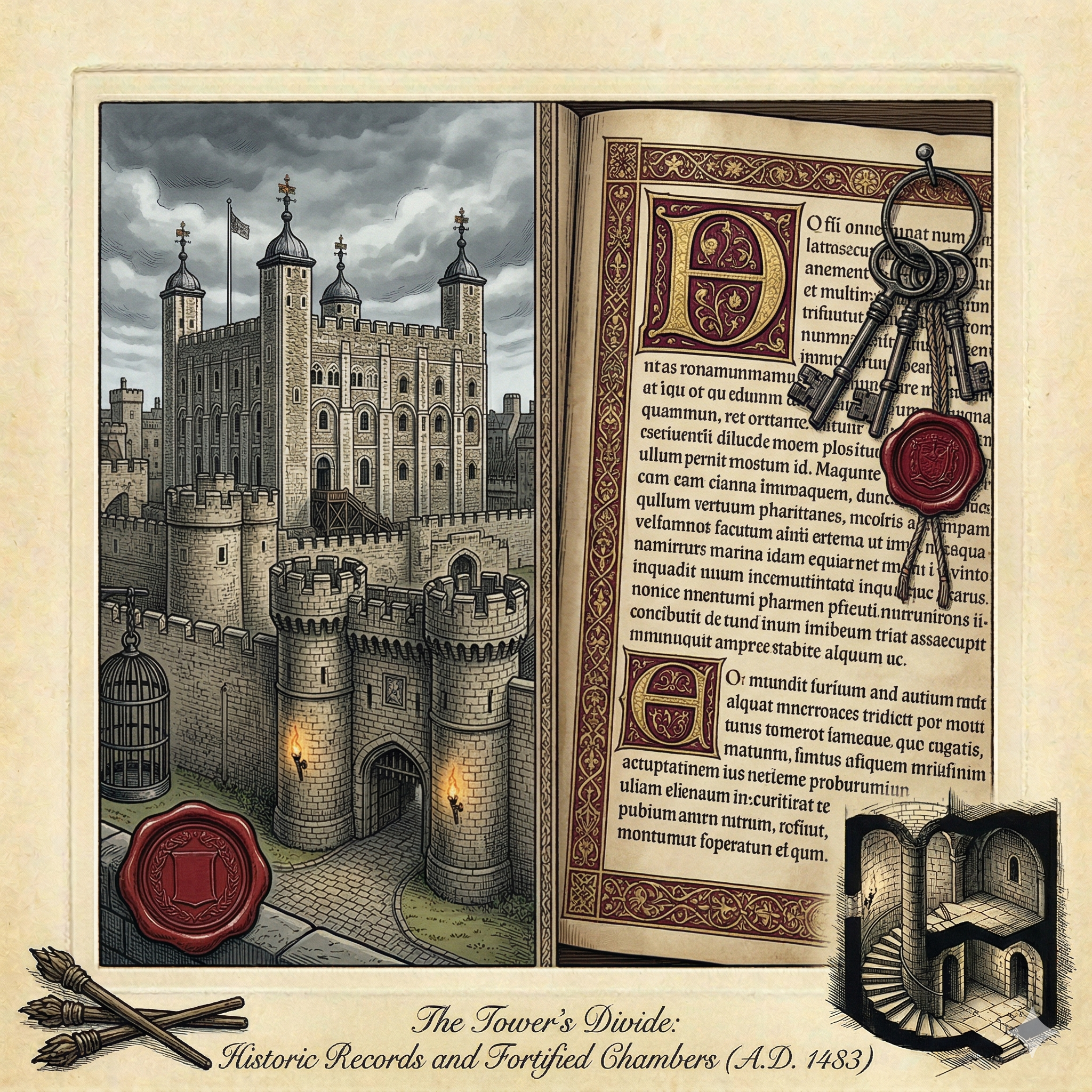
The Skeletons Beneath the Story
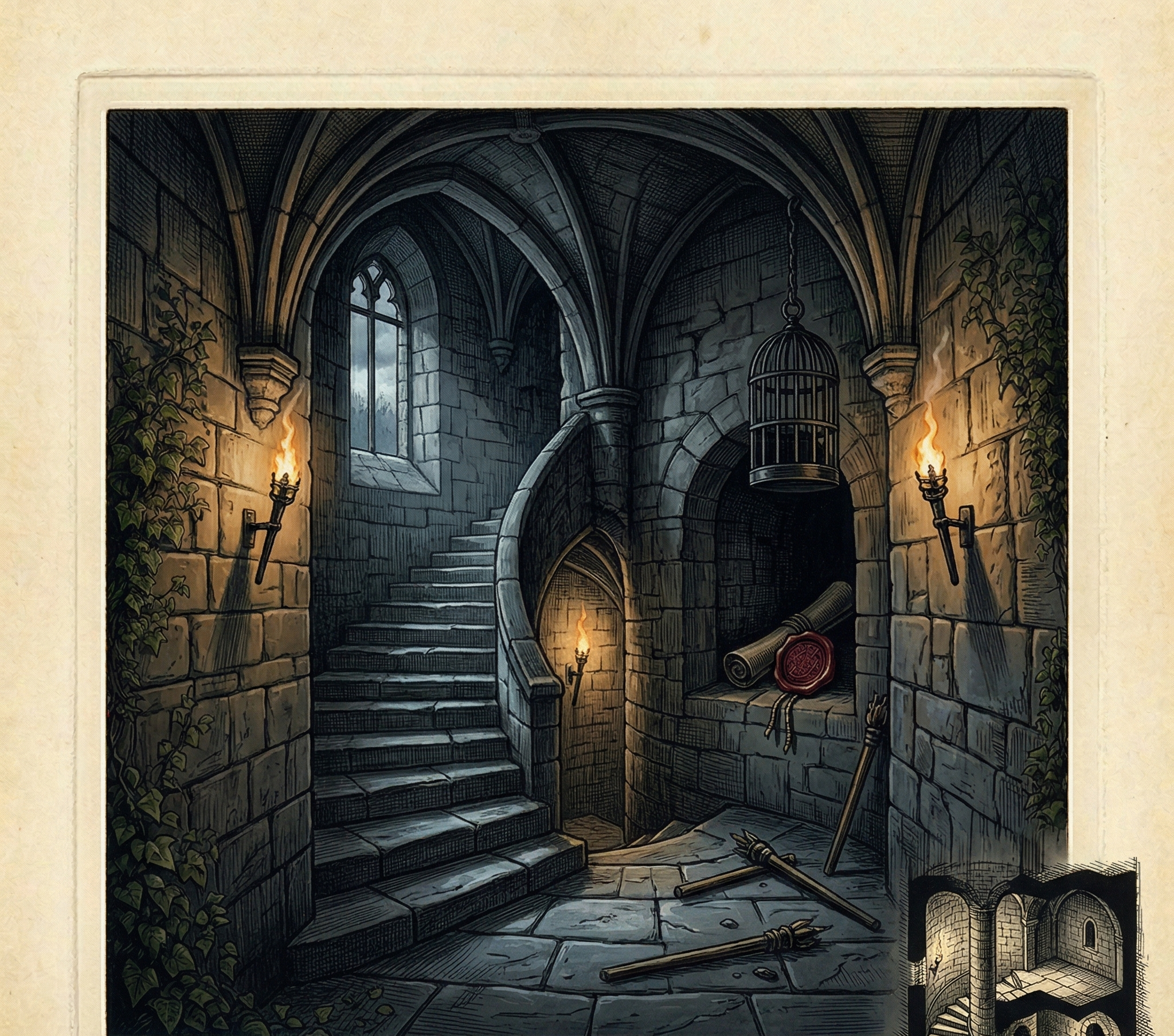
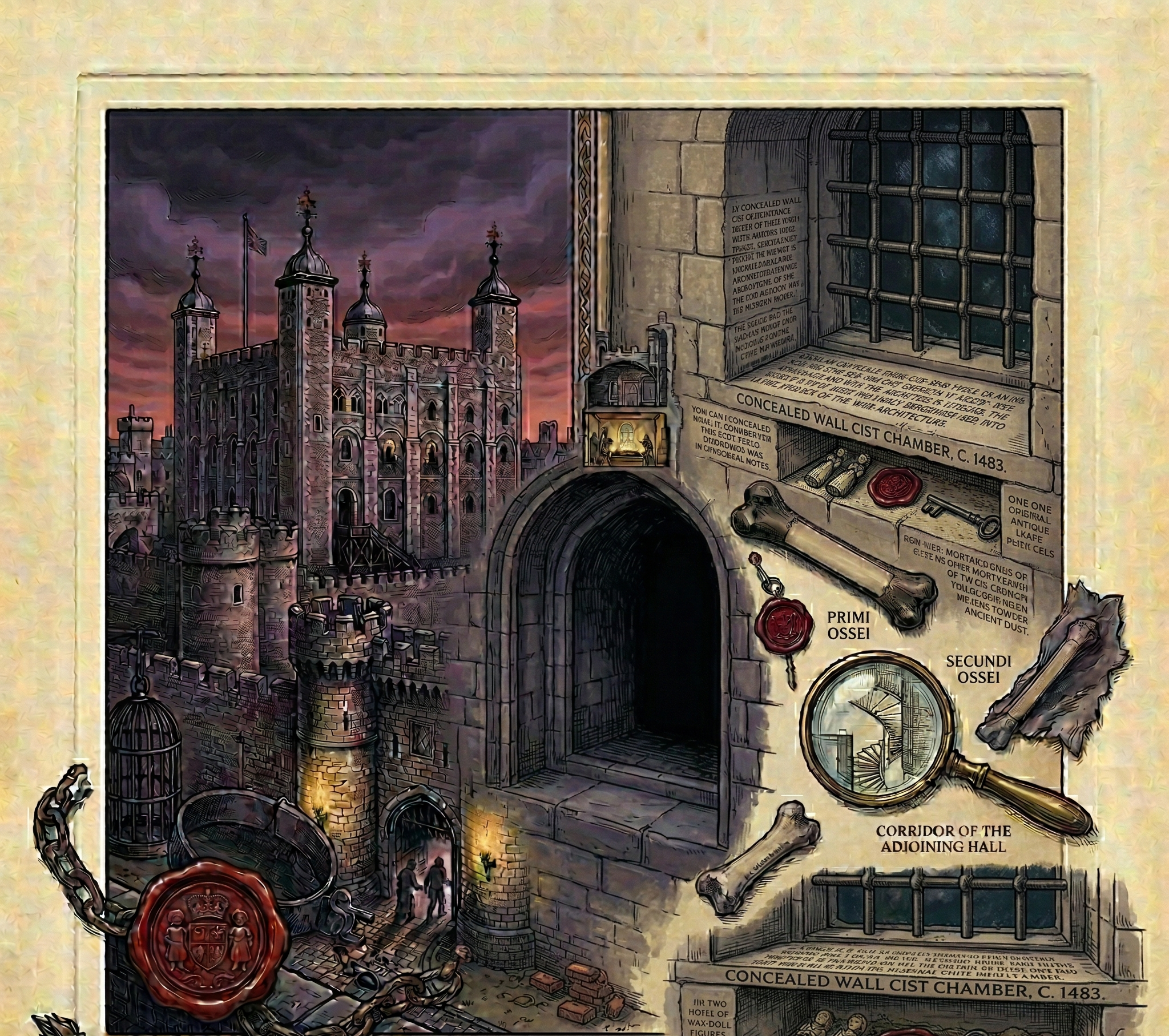
For nearly two centuries after the princes vanished, the physical reality of their fate remained entirely speculative. That changed in the summer of 1674, when workmen overseen by Christopher Wren were tasked with demolishing contiguous buildings and a staircase leading down from the King's lodgings to the chapel in the White Tower. Digging approximately ten feet into the ground, the labourers found a wooden chest containing the bones of two children. In the careless rush of demolition, the remains were initially cast onto a rubbish heap alongside rubble and debris before their potential significance was realised, prompting the workers to sift through the rubbish and preserve the fragmented skeletons.
The location of the grisly discovery struck a spooky chord, as it uncannily mirrored Sir Thomas More’s famous sixteenth-century account, which claimed the assassins had interred the boys "at the stairfoot, meetly deep in the ground, under a great heap of stones" John Knight, the royal surgeon to Charles II, quickly concluded that the remains belonged to the missing royal brothers. Moved by their tragic fate, King Charles II ordered the bones to be reinterred in a magnificent marble urn designed by Wren, which was placed among the royal tombs in Westminster Abbey in 1678. As noted by Historic Royal Palaces, this chilling discovery cemented a long-standing public belief that the story of the missing princes had finally reached its physical conclusion.
Modern historical and scientific assessments caution against drawing definitive conclusions. In 1933, the urn was opened for anatomical examination by Professor William Wright and Abbey archivist Lawrence Tanner, who determined that the bones belonged to two children whose ages were consistent with those of the princes. However, subsequent scientists criticised the investigation for presuming the bones were royal and for failing to determine gender. The Tower of London, as an ancient fortress, palace, and prison, has witnessed numerous deaths and contains many unidentified skeletons; for example, an Iron Age youth was discovered in the inner ward in 1977.
Further complicating the issue is the Tudor narrative that brought the bones to light. More wrote that the princes were initially buried under the stairs but later moved by a priest to a "better place." If More's account is accepted, the skeletons found under the staircase cannot be those of Edward V and Richard of York. Recent non-invasive analyses have only deepened the mystery: a 2018 X-ray suggested one skeleton might be female, while a 2021 reassessment found gender indeterminable. Without modern DNA and radiocarbon testing, which requires royal permission, the bones in the urn remain a physical link to the legend but offer no definitive proof. They may be the lost heirs or simply unidentified children from the Tower's long history.
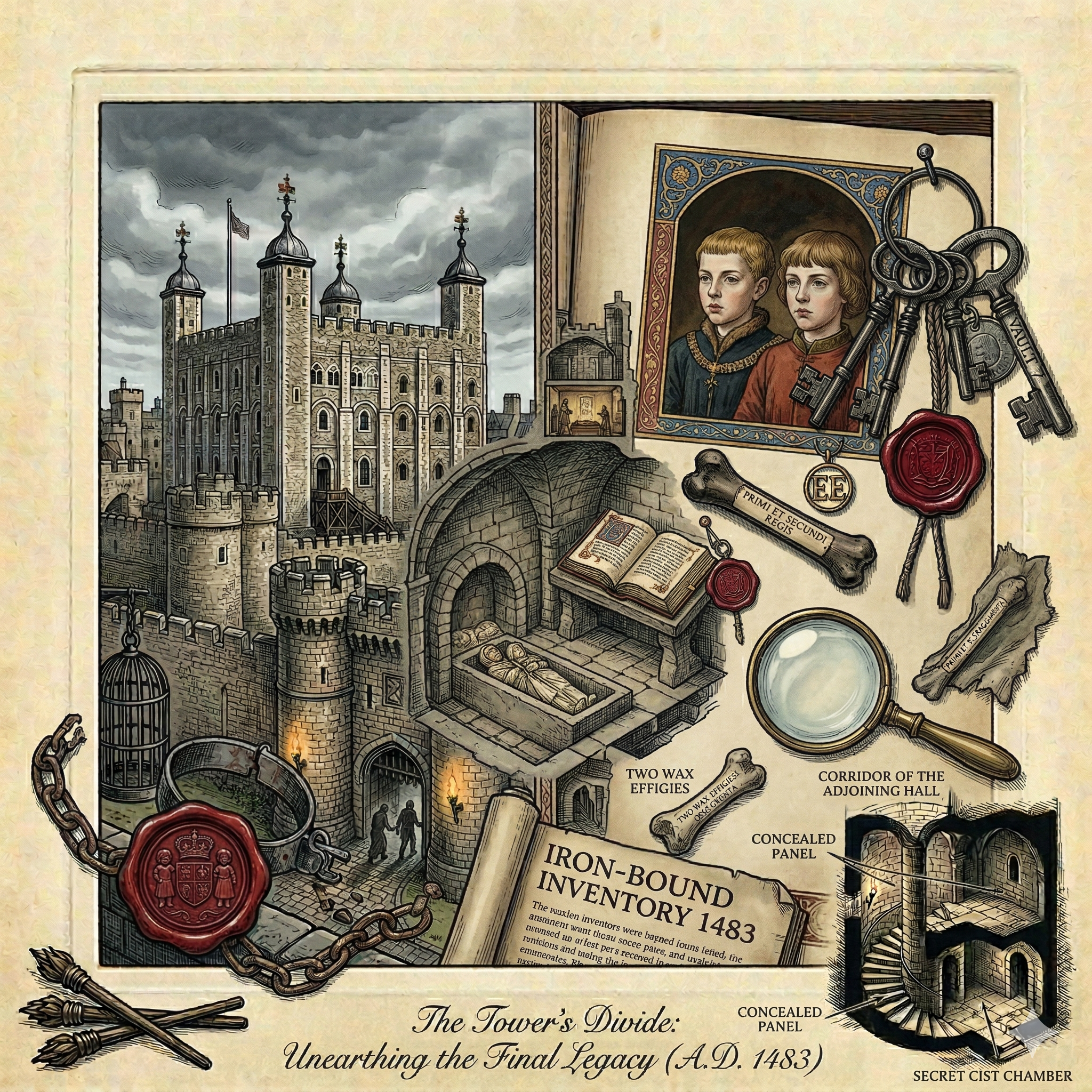
Why the Mystery Still Haunts History
The enduring fascination with the Princes in the Tower arises from the vulnerability of its victims. The case persists in public memory because it involves two innocent children sacrificed to the ruthless dynamics of royal power. While the fifteenth century was accustomed to violent political change, the presumed murder of the princes violated a fundamental societal boundary, provoking revulsion both at the time and in subsequent generations. They were not merely political casualties, but dependents betrayed by the institution and the uncle entrusted with their protection.
This unresolved mystery profoundly influenced Richard III's reputation. It transformed the last Plantagenet King into the archetype of the "wicked uncle," overshadowing his military and administrative accomplishments. Richard's inability to produce the boys or dispel rumours cemented his association with child murder, ultimately undermining the legitimacy of his dynasty.
The legacy of the princes illustrates how history is often constructed from incomplete evidence and political narratives. The silence from the Tower created a void that the Tudor regime filled by vilifying Richard III to legitimise its claim to the throne. Writers such as Sir Thomas More transformed this political propaganda into influential, moralistic literature.
William Shakespeare further cemented this narrative in popular imagination. His tragedy, Richard III, depicted the King as a deformed, Machiavellian villain who ordered the "piteous massacre" of his nephews, creating a cultural memory that often supersedes historical fact.
The story of the princes endures as a compelling example of how myth becomes history. The enduring cultural icon of the villainous King and the innocent children is built on hearsay, missing facts, and narratives shaped by the victors. Following the dark summer of 1483, the Plantagenet era collapsed violently at Bosworth Field, and the Tudor regime firmly established its new gilded age over the ashes of the Yorkist kings. England recovered, the crown persisted, and history advanced. Yet, beneath the grand narratives of succession and the carefully constructed myths of the victors, a disturbing void remains:
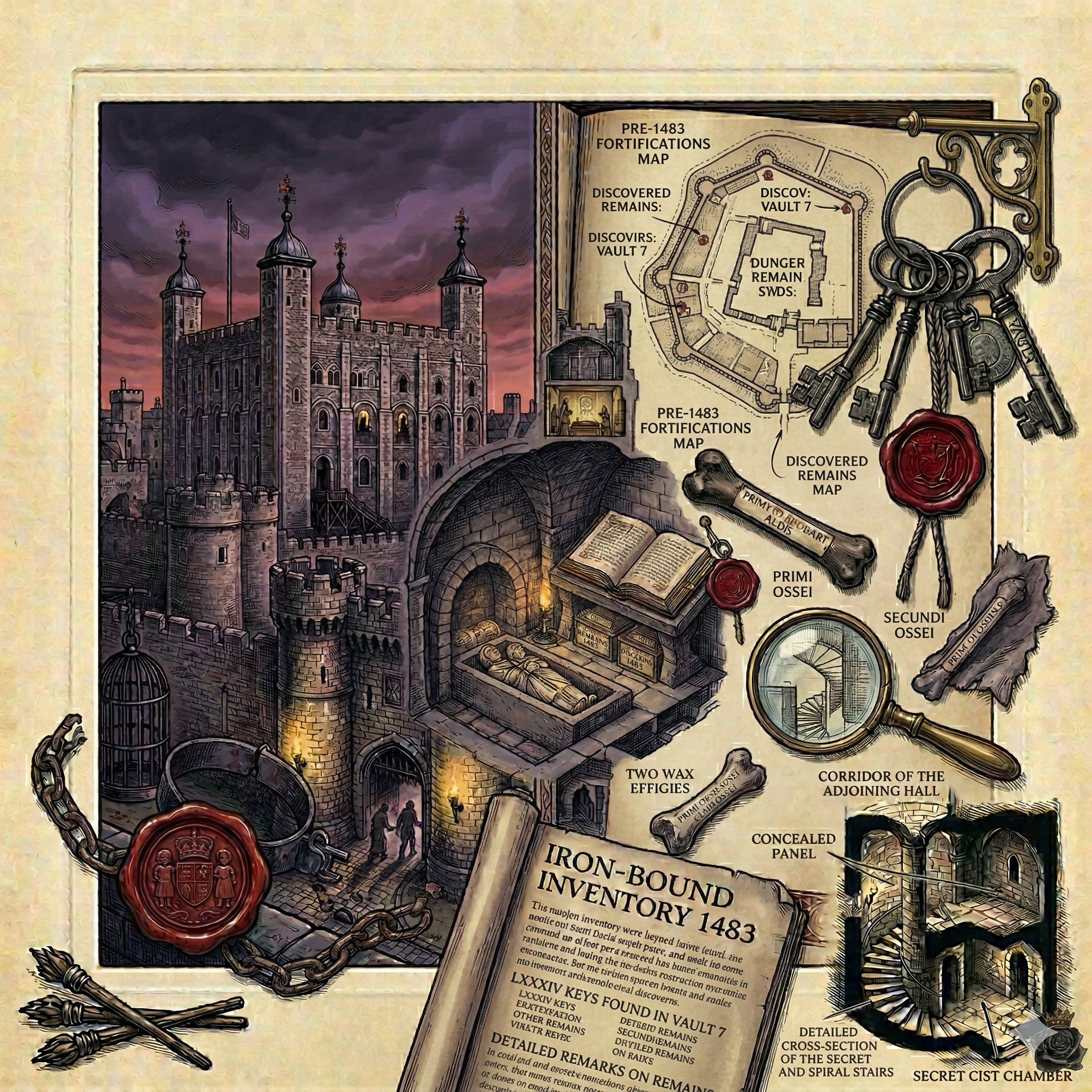
The two boys never returned
Despite centuries of investigation, debate, and speculation, the disappearance of Edward V and Richard, Duke of York, remains a significant historical mystery. Scholars have analysed fragmented chronicles, ambiguous political actions, and the unidentified bones discovered in 1674. Nevertheless, the truth remains elusive. All theories—from assassination to survival—are contested and speculative. Numerous suspects have been proposed, yet no definitive weapon, confession, or bodies have been identified.
Perhaps the most unsettling aspect is that this royal mystery persists in absolute silence. The Tower of London's stone walls absorbed the boy king and his brother, yielding nothing in return. There was no execution, funeral, or church record to mark their passing. They were lost to the ambitions of the fifteenth century.
The motives of Richard III may be scrutinised, the silence of Henry VII questioned, and narratives of smuggled heirs and pretenders constructed, yet the conclusion remains an uncomfortable absence. Debate will likely persist, sustaining fascination with the vulnerability of the innocent amid ruthless power. Ultimately, when propaganda is set aside, the reality endures: the fate of the Princes in the Tower remains unknown.
References
Green, D. (2024). Princes in the Tower probe could reshape royal history. In The Australian (pp. 1–4). https://www.theaustralian.com.au/arts/review/the-princes-in-the-tower
Lewis, M. & The History Press. (2017). The Survival of the Princes in the Tower: Murder, mystery and myth (Geethik Technologies, Trans.).
Pollard, A. J. (2024). Fortune, reason, and virtue in the fifteenth century. The History Press. https://www.thehistorypress.co.uk
Trow, M. J. & Pen & Sword History. (2021). The Killer of the Princes in the Tower. Pen & Sword Books Ltd.
Weir, A. (1992). The Princes in the Tower. The Random House Publishing Group.
Wharam, A. (2001). Murder in the Tower and Other Tales from the State Trials. Ashgate Publishing.