The Bomb and The Paradox: Destruction, Deterrence, and Structure of Nuclear Peace.
The Nuclear Paradox
Since their first use in 1945, nuclear weapons have occupied a unique position in international politics. They are simultaneously the most destructive instruments ever created and the central pillars of modern strategic stability. No other weapon system has possessed the capacity to annihilate entire cities in moments, yet none has been associated with such prolonged periods of direct peace between major powers.
This twofold character constitutes what may be described as the nuclear paradox. Nuclear weapons threaten unprecedented devastation, yet their existence has coincided with the absence of large-scale war among nuclear-armed states. They were created in the context of total war, yet they turned into instruments of restraint. They were designed for use, yet their primary function has become non-use.
Nuclear weapons embody a paradox; they are perceived both as instruments of peace and as threats to humanity's existence. The Nuclear Paradox is closely related to the stability-instability paradox developed by Glenn Snyder, which posits that mutually assured destruction (MAD) compels nuclear-armed states to maintain arsenals, expecting that direct war with adversaries will be avoided. Instead, states may engage in smaller-scale conflicts and lower-level confrontations. Some scholars, notably Kenneth Waltz, contend that nuclear weapons stabilise international relations by deterring conflict through the fear of retaliation, thereby producing a form of "negative peace."
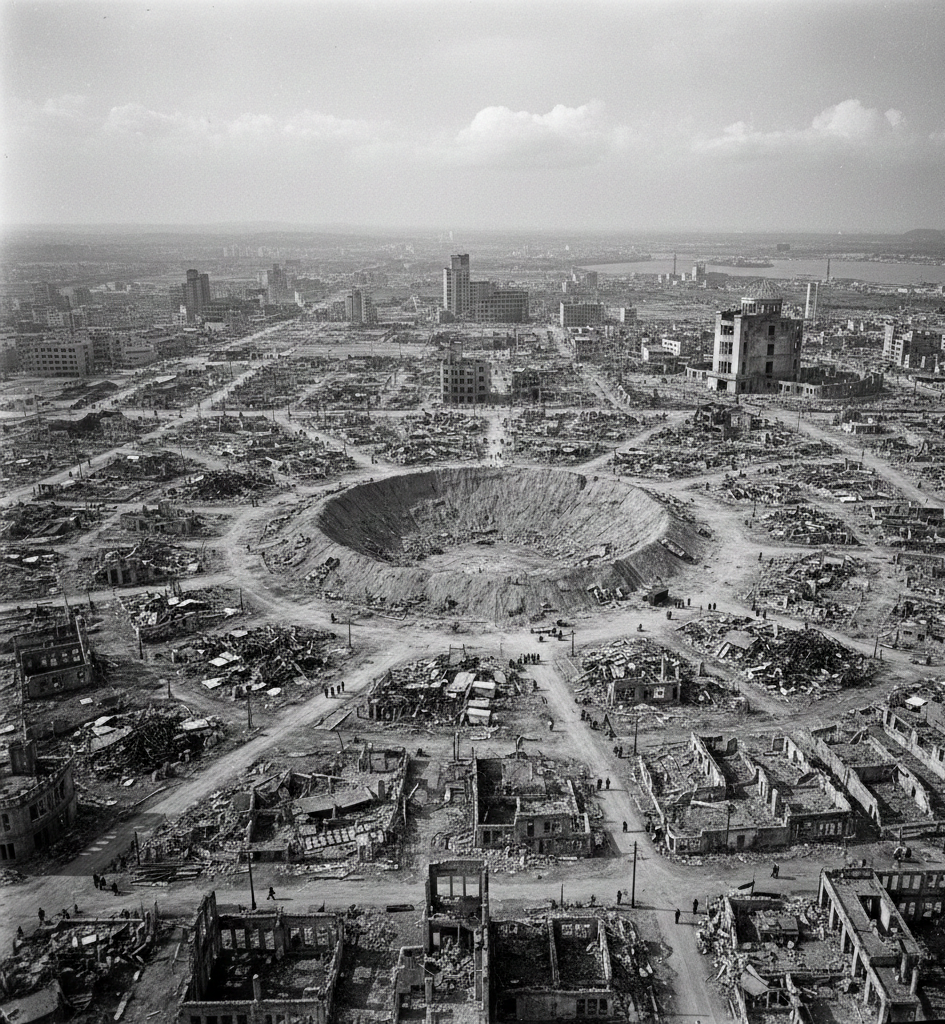
Unlike conventional weapons, nuclear arms do not simply alter military balances. They transform the logic of conflict itself. Their destructive potential renders traditional concepts of victory, proportionality, and escalation increasingly incoherent. War between nuclear-armed states risks transcending political objectives and becoming an existential catastrophe.
This article examines the emergence of the nuclear paradox and its ongoing influence on global security. It traces the historical development of nuclear weapons from instruments of wartime necessity to tools of deterrence, analyses the ethical contradictions inherent in nuclear strategy, and evaluates the stability and instability of nuclear peace. By integrating historical and philosophical perspectives, the analysis aims to determine whether nuclear weapons are best understood as instruments of war or as political mechanisms that have redefined the boundaries of conflict.
The Weapon Before the Doctrine: Origins of the Atomic Bomb
World War II began on September 1, 1939, when Germany invaded Poland, prompting France and Great Britain to declare war on Germany. Germany initiated Blitzkrieg tactics in Western Europe and later launched Operation Barbarossa against the Soviet Union. The United States did not enter the conflict until December 7, 1941, following Japan's surprise attack on Pearl Harbour, a naval base in Hawaii, which resulted in the deaths of nearly 2,400 Americans. This event led the United States to join the war, allying with the United Kingdom and the Soviet Union against Germany and its partners.
During the war, scientists worldwide sought a means to decisively end the conflict. In December 1938, German scientists Otto Hahn and Fritz Strassmann discovered nuclear fission by bombarding atoms with neutrons. This unprecedented breakthrough enabled the conceptualisation of the atomic bomb, a weapon capable of releasing the energy equivalent of thousands of tons of TNT. Following this discovery, American scientists initiated the Manhattan Project, led by J. Robert Oppenheimer, to develop their own atomic bomb.
The Manhattan Project spanned three years, cost approximately two billion dollars (equivalent to 28–37 billion dollars today), and employed up to 130,000 workers at its peak. The first successful test, known as 'Trinity,' was conducted at Los Alamos. After Germany's surrender, Japan continued to resist. In an effort to force Japan's surrender and end the war, the United States dropped two atomic bombs, 'Little Boy' and 'Fat Man,' on Hiroshima and Nagasaki, respectively. These bombings resulted in Japan's surrender and the conclusion of World War II.

A few years after the end of World War II, the Soviet Union tested its first atomic bomb, codenamed 'First Lightning,' at the Semipalatinsk Test Site in Kazakhstan. This device was a plutonium implosion bomb closely modelled after the United States' Fat Man.' The Soviets acquired critical nuclear secrets through KGB espionage within the Manhattan Project, obtaining the necessary blueprints to construct a bomb of similar magnitude.
During World War II, the alliance between the United States and the Soviet Union was marked by significant economic and ideological differences. After the war, this alliance collapsed, initiating a competition for global supremacy. This rivalry extended beyond economic power to include the accumulation of weapons of mass destruction (WMDs). The resulting Cold War saw the two superpowers avoid direct conflict, instead engaging in proxy wars, ideological competition, and technological rivalry.
The lack of established doctrine in the immediate postwar period created significant uncertainty. Military institutions faced challenges in integrating nuclear weapons into force planning, while political leaders lacked clear guidelines for their use. The bomb's existence preceded the development of the theoretical frameworks that would later define its role.
The Construction of Deterrence: From Shock to Strategy
The immediate aftermath of Hiroshima and Nagasaki did not produce a coherent doctrine of atomic stability. Instead, it generated strategic shock. Policymakers and military theorists were confronted not simply with a new weapon, but with a transformation in the scale and speed of destruction. Customary assumptions about warfare—attrition, mobilisation, territorial occupation—were destabilised by the possibility of instantaneous devastation.
In the late 1940s, early strategic thinkers began dealing with the implications of this technical rupture. Among the most influential was Bernard Brodie, who argued that the advent of nuclear weapons radically changed the purpose of military power. Whereas armed forces had historically existed to win wars, the main objective in a nuclear age, he suggested, must be to prevent them. This was not a rhetorical shift but a structural one. If war between nuclear-armed states could lead to reciprocal destruction, then victory in any meaningful sense became incoherent.
Deterrence theory emerged gradually from this realisation. Its core premise was deceptively simple: a state could prevent aggression by credibly threatening unacceptable retaliation. The effectiveness of this threat depended not on actual use, but on the adversary’s faith in its plausibility. Nuclear weapons thus acquired a paradoxical utility—their value lay in their non-use, yet their non-use depended on the credible possibility of use.
The development of second-strike capability became fundamental to this logic. If one state could survive a first strike and retain the capacity to retaliate decisively, then any attempt at nuclear aggression would be self-defeating. This condition gave rise to what later became known as Mutually Assured Destruction (MAD). Under MAD, stability is derived not from trust or cooperation, but from vulnerability. Each side’s ability to destroy the other ensured that no one could rationally initiate war.
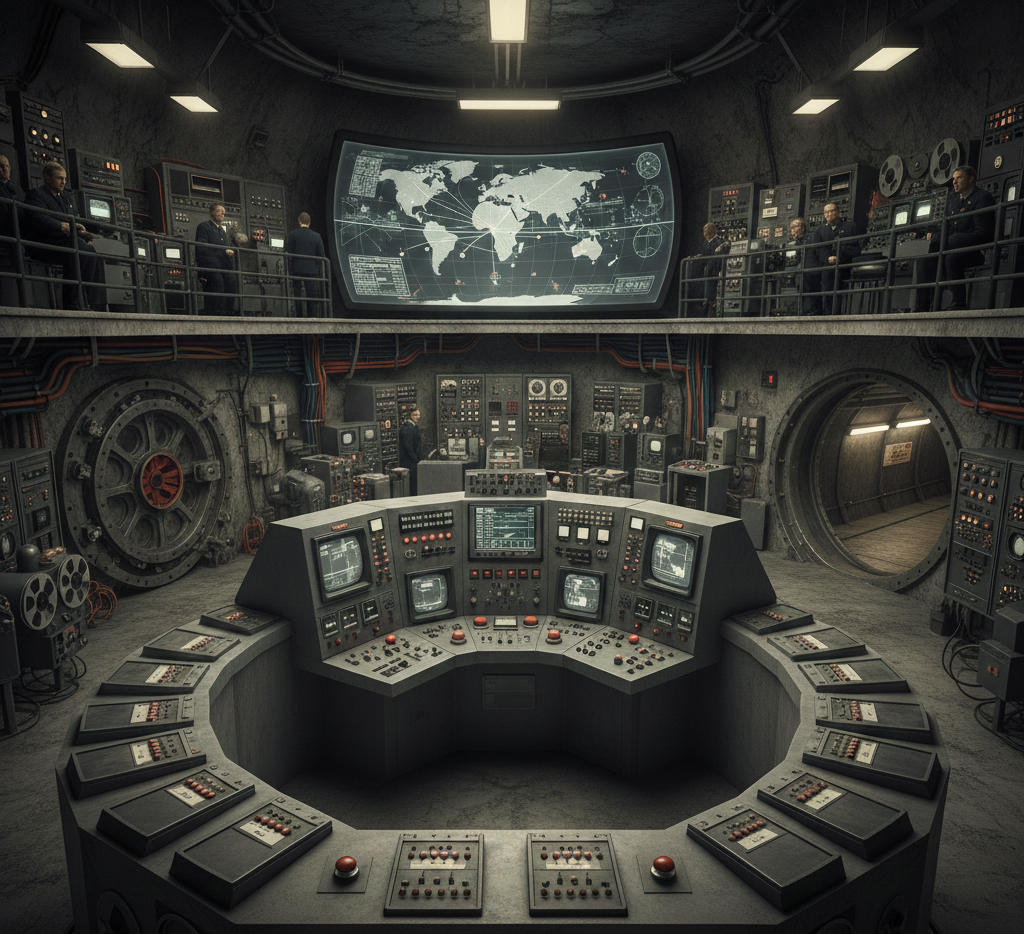
Thomas Schelling further refined this system by stressing the communicative dimension of nuclear threats. In his analysis, nuclear weapons were instruments of bargaining as much as instruments of force. Violence, or the threat thereof, functioned as a signal. The purpose of possessing nuclear weapons was not necessarily to employ them, but to shape the adversary’s expectations and calculations. Deterrence, therefore, depended on lucidity, credibility, and controlled risk-taking rather than battlefield superiority.
By the mid-Cold War period, deterrence had evolved into a systematic strategic doctrine supported by delivery systems, hardened silos, submarine-based platforms, and early warning networks. The bomb had moved from a wartime instrument to a political mechanism embedded within international relations. Its primary function was no longer destruction in combat, but the maintenance of equilibrium.
This transformation represented a major power shift. Nuclear weapons did not merely enhance military capability; they redefined the logic of conflict itself. War between major powers was no longer a contest of endurance or resources, but a potential act of mutual suicide. Stability did not emerge from moral restraint alone, but from tactical necessity.
In this sense, deterrence was not the primary purpose of nuclear weapons, but rather a theoretical response to their existence. Shock yielded to structure; destruction gave way to doctrine. The birth of deterrence was less an act of design than a response to an irreversible technological reality.
The Moral Architecture of Deterrence
Deterrence is ethically paradoxical. It seeks to prevent violence by threatening unprecedented violence. It preserves peace by relying on the willingness to inflict mass civilian casualties.
Traditional Just War theory emphasises proportionality, discrimination, and necessity. Nuclear weapons challenge all three principles. Their destructive radius undermines meaningful discrimination between combatants and civilians. Their scale complicates proportionality. Their calamitous results raise questions about moral necessity.
From a utilitarian perspective, deterrence may appear defensible. If nuclear threats prevent war, then their moral cost may be outweighed by the peace they sustain. This reasoning treats deterrence as a tragic but necessary instrument.
From a deontological perspective, however, threatening mass destruction violates fundamental moral constraints. It involves an implicit willingness to target innocent populations. Even if never carried out, such threats remain ethically problematic.

The concept of the “nuclear taboo” spotlights the emergence of normative restraints against use. Over time, nuclear weapons acquired a moral stigma different from conventional arms. Non-use became not simply strategic, but ethical.
Yet this taboo remains inseparable from the logic of deterrence. The norm against use exists partly because actual use would undermine stability. Moral restraint and strategic calculation reinforce each other.
Deterrence, therefore, operates within a fragile moral equilibrium. It prevents catastrophe while simultaneously normalising the threat of such an event. This approach institutionalises restraint without resolving the underlying ethical contradictions.
Probability and Near-Catastrophe: How Close Did We Come?
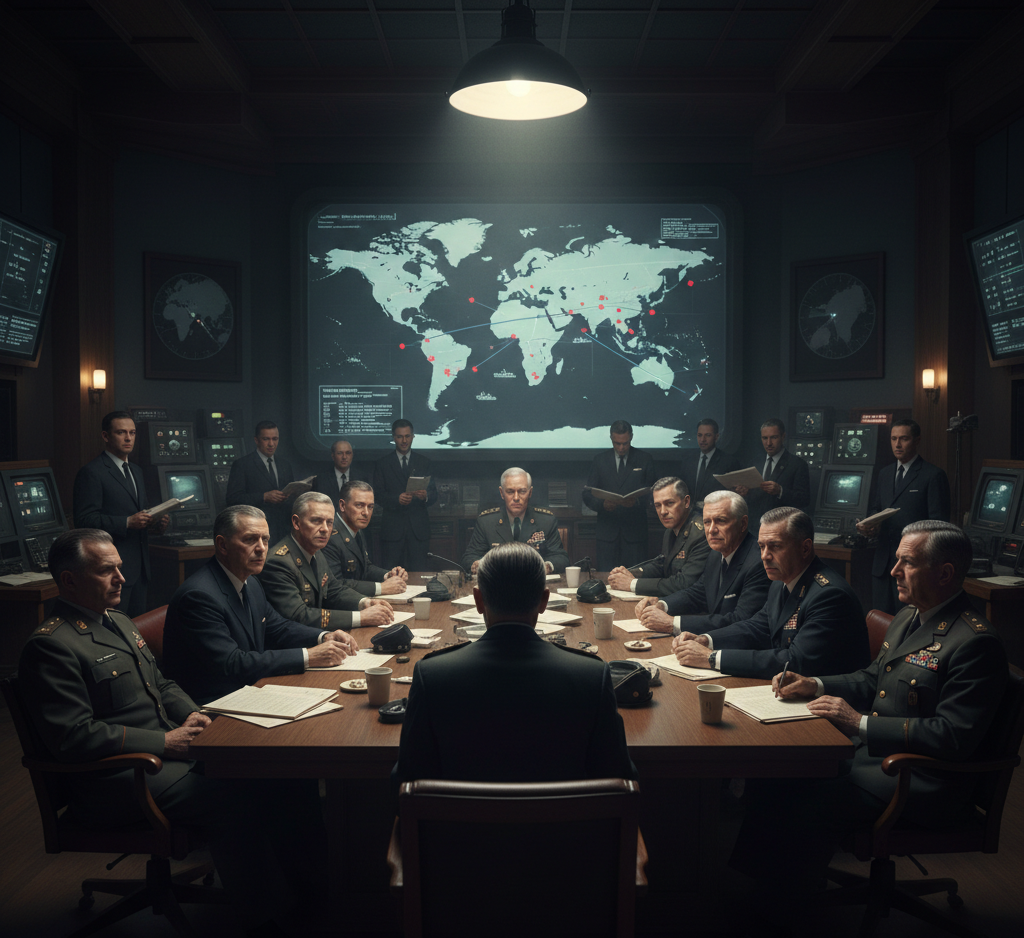
Nuclear peace has been contingent rather than automatic. Historical evidence indicates that stability has often relied on individual judgment and institutional resilience, rather than on systemic perfection.
The Cuban Missile Crisis of 1962 remains the most prominent example. Misperceptions, incomplete information, and rigid military planning brought rival powers to the brink of war. Resolution depended on restraint, negotiation, and luck.
Subsequent incidents reinforced this fragility. False alarms triggered by technical faults nearly halted launch preparations. Communication failures and procedural rigidity amplified risks. In several cases, individual officers chose not to follow automated warning protocols.
Organisational complexity further augmented vulnerability. Large bureaucracies are prone to miscommunication, standardisation errors, and fragmented responsibility. Scott Sagan’s work on organisational failure highlights how safety systems can generate new risks.
Command-and-control systems were designed to ensure rapid retaliation, but speed itself became a liability. Compressed decision times increased the probability of miscalculation. Leaders encountered pressure to act under extreme uncertainty.
These near-misses demonstrate that deterrence functioned not as a perfectly stable equilibrium, but as a fluctuating system constantly exposed to disruption. Nuclear peace depended on fallible human decision operating under extraordinary stress.
Weapons of War or Instruments Against War?
Over time, nuclear weapons underwent a functional transformation. They ceased to be primarily instruments of war and turned into instruments against war. Unlike conventional arms, nuclear weapons proved unsuitable for tactical employment. Their use would likely escalate uncontrollably. Battlefield utility was eclipsed because of strategic risk.
Robert Jervis argued that nuclear weapons created a “security regime” in which offence and defence lost traditional meaning. The ability to destroy outweighed the ability to conquer. Military superiority became less relevant than survivability.
As a result, nuclear weapons increasingly served political rather than military purposes. They deterred invasion, constrained escalation, and shaped alliance commitments. They functioned as tools of influence rather than tools of conquest.
This transformation did not eliminate conflict. It redirected it. Proxy wars, limited interventions, and indirect competition replaced confrontation.
Nuclear weapons did not abolish war. They reorganised its boundaries.
The Stability of Fear
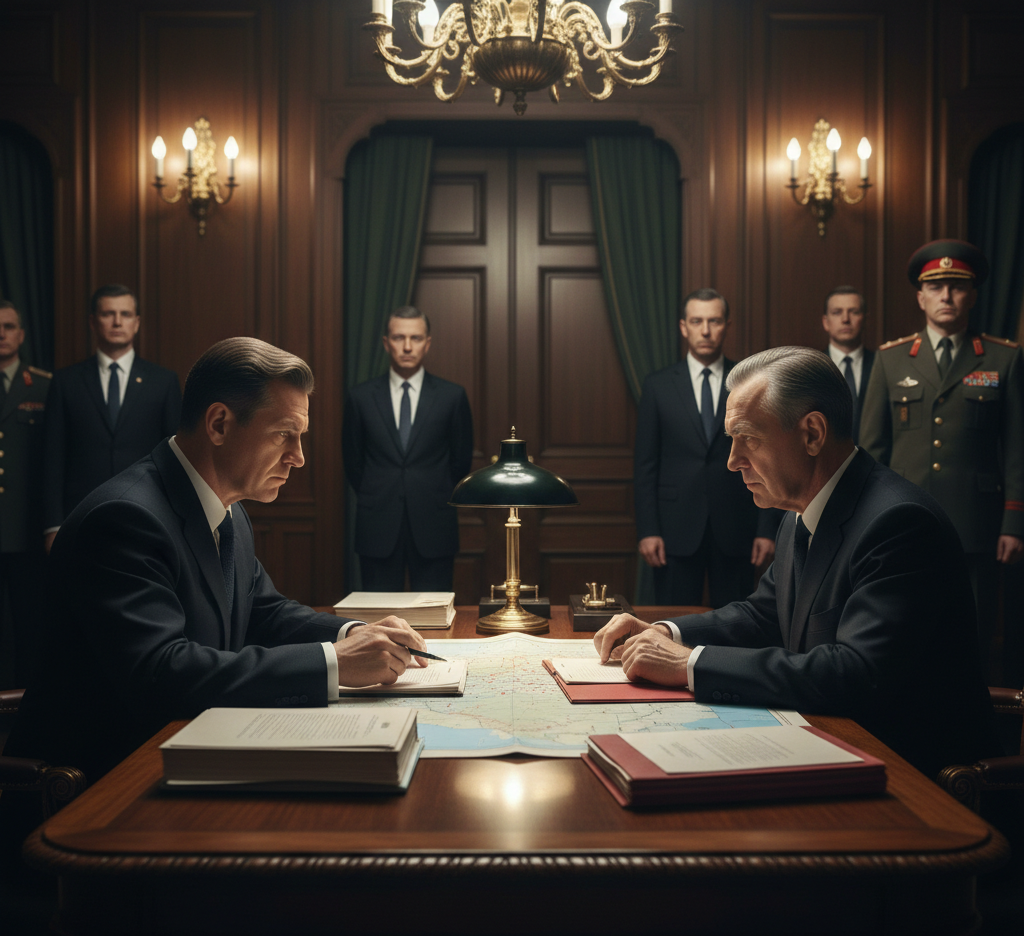
Nuclear weapons were created as instruments of destruction. They evolved into devices of restraint. Their continued existence reflects tactical adaptation rather than moral resolution.
The nuclear paradox endures. Peace is maintained through the threat of catastrophe. Stability is produced by vulnerability. Security depends on mutual fear.
Deterrence has succeeded in preventing major-power war, but only imperfectly and contingently. It relies on institutional competence, political restraint, and ethical hesitation. None of these can be guaranteed.
Nuclear weapons did not eliminate conflict. They reshaped its limits. They imposed a ceiling on violence while embedding existential risk within international politics.
The permanence of this paradox suggests that nuclear peace is neither a triumph nor a failure. It is a fragile achievement sustained by caution, calculation, and historical memory. Its survival depends not on technological advantage, but on continued recognition of the costs of its collapse.

References-
Box62, P. The Manhattan Project: Making the Atomic Bomb USDOE Assistant Secretary for Human Resources and Administration, Washington, DC (United States) Reproduced And. Distributed By: U.S. DEPARTMENT of ENERGY off Ice of Scientific and Technical Information. 1994.
Brodie, Bernard, et al. The Absolute Weapon. New York, Harcourt, Brace And Company, 1946.
Curtice, Scott. WHY DO STATES BUILD NUCLEAR WEAPONS? Proliferation Models as Concurrent Pressures on a State.
Freedman, Lawrence. The Evolution of Nuclear Strategy. London, Palgrave Macmillan, 2019.
Jervis, Robert. Meaning of the Nuclear Revolution - Statecraft and the Prospect of Armagedd. Cornell University Press, 1989.
Rayhan, Abu. The Nuclear Paradox: Power, Peace, and the Perils of Proliferation.
Sagan, Scott. Why Do States Build Nuclear Weapons?. 1996.
Sagan, Scott D. The Limits of Safety : Organizations, Accidents, and Nuclear Weapons. Editorial: Princteton (Nj), Princeton University Press, 1995.
Schelling, Thomas C. The Strategy of Conflict. Whitefish, Montana, Literary Licensing, 2011.
Schlosser, Eric. Command and Control. 2013.
Tannenwald, Nina. The Nuclear Taboo the United States and the Non-Use of Nuclear Weapons since 1945.
Waltz, Kenneth. The Spread of Nuclear Weapons: More May Better. 1981.