Narco-Politics and Shadow Empires: Blood and Power
Contemporary political discourse often frames large-scale drug trafficking primarily in terms of criminality, law enforcement, and social disorder. Cartels, smugglers, and traffickers are typically depicted as peripheral actors, positioned in opposition to state authority and disconnected from legitimate economic structures. However, this perspective oversimplifies a more complex reality. Historical and regional evidence demonstrates that narcotics markets have consistently integrated into formal institutions, financial systems, political networks, and global supply chains. Illicit drug economies frequently operate within the sphere of state power, exploiting regulatory and institutional weaknesses as well as calculated compromises. Limiting the framing of drug trafficking to a criminal issue restricts a comprehensive understanding of its enduring influence and resilience.
Narcotics trafficking is not an isolated underground activity but constitutes a structural feature of the modern global order. From colonial opium monopolies to contemporary financial laundering networks, drug economies have evolved alongside systems of governance, commerce, and security. These economies have financed insurgencies, destabilised governments, reshaped border politics, and embedded themselves within legitimate markets. In doing so, they expose fundamental tensions between economic integration, political authority, and legal enforcement. The historical foundations, institutional enablers, and international consequences of narco-economics have produced a form of shadow power that imitates, manipulates, and at times rivals formal state authority.
Illicit Trade & Architecture of Power
The United Nations Office on Drugs and Crime (UNODC) highlights that illicit trade and the architecture of power are especially pronounced in remote regions with multiple borders and limited governance. Tri-border areas, such as the Triple Frontier in South America and the Golden Triangle in Southeast Asia, exhibit comparable patterns, with diverse illicit economies emerging in these regions. Both regions are characterised by pervasive drug trafficking, where criminal organisations frequently collaborate with armed groups to pursue strategic political or financial objectives.
In the Triple Frontier region of Argentina, Brazil, and Paraguay, drug trafficking organisations exploit porous borders to conduct money laundering and smuggle drugs and counterfeit goods. Similarly, the Golden Triangle, which includes the Lao People's Democratic Republic, Myanmar, and Thailand, functions as a hub for opium and synthetic drug production, as well as emerging activities such as wildlife trafficking and illicit resource extraction.
Illegal opium production in the Golden Triangle has historically flourished due to the region’s favourable climate and geography. However, opium’s dominance as the primary source of illicit revenue has diminished over the past three decades, primarily due to internal conflicts and a shift toward synthetic drugs such as methamphetamine. Seizure data indicate that methamphetamine is now the predominant drug, with seizures increasing fourfold. Methamphetamine produced in the Golden Triangle is distributed throughout the region and to markets in Asia and Oceania. Criminal groups, having profited from the trade in opium and methamphetamine, have diversified into additional illicit activities, including online scams, wildlife trafficking, and money laundering. These operations are often concealed through casinos and special economic zones. Persistent political instability and corruption, particularly in Myanmar’s Shan State, further undermine governance, security, and environmental stability.
Criminal organisations and armed groups in the Golden Triangle frequently collaborate, aligning political and economic objectives with the illicit economy. The diversification of illegal activities in the region has been enabled by expanded cross-border markets and limited governance. The proliferation of major casinos in remote border towns exemplifies this nexus, connecting powerful armed groups in Myanmar to drug trafficking, illegal resource extraction, money laundering, and bribery. Wildlife trafficking has become increasingly attractive as a diversification strategy, given law enforcement’s focus on drugs and sustained demand for wildlife products within the region and neighbouring countries.
Although overall seizure levels in South America have stabilised, countries in the Southern Cone, as well as Colombia, Ecuador, and Peru, reported higher seizure levels in 2022 than in 2021. The escalation of cocaine trafficking has had a pronounced impact in Ecuador, which has experienced a surge in lethal violence linked to both local and transnational crime groups, particularly those from Mexico and the Balkan countries. Cocaine seizures and homicide rates in Ecuador increased fivefold between 2019 and 2022, with the highest rates observed in coastal areas used for trafficking to major markets in North America and Europe.
Drug use has risen over the past decade. Recent data estimates that 292 million people worldwide used a drug in the past year, representing 5.6 per cent of the population aged 15 to 64 in 2022. This figure is 20 per cent higher than a decade earlier, a trend partly attributable to population growth.
In 2022, cannabis was the most widely used drug globally, with an estimated 228 milIion 2022, cannabis was the most widely used drug globally, with an estimated 228 million users in the past year. Opioids followed with 60 million users, amphetamine-type stimulants with 30 million, cocaine with 23 million, and “ecstasy” with 20 million, with highly complex patterns of use and making polydrug consumption a common feature in most drug markets. Drug use is associated with multiple harmful consequences. Opioids continue to account for the largest global burden of disease, with usage rates remaining stable globally since 2019. However, opioid-related deaths have continued to rise in certain regions.
A World Bank report indicates that trafficking thrives in environments characterised by weak regulatory capacity. Over the past three decades, violent conflicts have reached unprecedented levels, resulting in widespread disability globally. These conditions have led to large-scale displacement, increased inequality, limited opportunities, discrimination, and exclusion. Such exclusions fuel grievances and perceptions of injustice, while also creating opportunities for institutions to exploit and engage in illegal activities. Additional factors, including climate change, demographic shifts, and migration, further influence these dynamics.
Many countries also experience chronic poor governance, which heightens vulnerability to shocks and crises and can generate regional and global spillover effects. These conditions may have devastating impacts, particularly for women, children, youth,h and people with disabilities, with consequences that can persist across generations. Without rapid and effective action, the risks associated with fragility, conflict, and violence (FCV) could erode progress in poverty reduction and undermine prospects for further development.
Illicit trafficking and criminal networks have benefited from increased mobility and connectivity, which in many contexts exacerbates challenges related to fragility, conflict, and violence (FCV). Elite capture, poverty, and inequality are associated with increases in various illicit activities, including trafficking, corruption, and illicit financial flows. The shadow economy is inherently difficult to measure, as participants seek to remain undetected. Interest in understanding the extent and evolution of the shadow economy is driven by its significant political and economic relevance.
Comprehensive measurement of total economic activity, encompassing both official and unofficial production of goods and services, is essential for designing effective economic policies that respond to changes over time and across regions. The size of the shadow economy is a key factor in estimating tax evasion and informing decisions regarding its control. The shadow economy is also referred to as the hidden economy, grey economy, black economy, cash economy, or informal economy. All these terms describe various forms of shadow economic activity.
The definition of the shadow economy by the IMF Working Paper is “The shadow economy includes all economic activities which are hidden from official authorities for monetary, regulatory, and institutional reasons”. Monetary reasons include avoiding taxes and social security contributions; regulatory reasons include avoiding government bureaucracy or the burden of the regulatory framework; and institutional reasons include corruption, the quality of political institutions, and a weak rule of law.
Unlike tax avoidance and capital flight, which usually involve the transfer of legitimately earned funds across borders, capital movements relating to money laundering – or trade-based money laundering – involve the proceeds of crime, which are more difficult to track. Trade-based money laundering is the process of disguising the proceeds of crime and moving value through trade transactions to legitimise their illicit origin. In practice, this can be achieved by misrepresenting the price, quantity, or quality of imports or exports.
Trade-Based Money Laundering (TBML) was recognised by the Financial Action Task Force (FATF) in its landmark 2006 study as one of the three main methods by which criminal organisations and terrorist financiers move money to disguise its origins and reintegrate it into the formal economy. This method of money laundering (ML) is based on abuse of trade transactions and their financing. The 2006 FATF Study noted the increasing attractiveness of TBML as a method for laundering funds, as controls on laundering through the misuse of the financial system (both formal and alternative) and through the physical movement of cash (cash smuggling) tighten.
In many cases, this can also involve abuse of the financial system through fraudulent transactions involving a range of money transmission instruments, such as wire transfers. The basics of money laundering include over- and under-invoicing of goods and services, multiple invoicing of goods and services, over- and under-shipping of goods and services and falsely described goods and services. All these techniques are subjective and not used in every country.
Historical research complicates the assumption that narcotics trafficking exists entirely outside political systems. In The Politics of Heroin, historian Alfred W. McCoy demonstrates that in certain geostrategic contexts, trafficking networks have operated within permissive or strategically tolerated environments. During periods of proxy conflict and regional unrest, alliances between state actors and local intermediaries sometimes produced unplanned economic ecosystems in which narcotics production and transit were indirectly protected.
McCoy’s work does not suggest uniform state sponsorship, but rather illustrates how safety priorities, counterinsurgency strategies, and geopolitical rivalries can distort enforcement incentives. Where political objectives dominate policy decisions, illicit economies may be deprioritised, selectively enforced, or institutionally overlooked. The result is not necessarily overt complicity, but a layered structure of strategic ambiguity in which trafficking networks adapt to and sometimes benefit from state-centred power struggles.
Collectively, global market data, governance analyses, financial typologies, and historical research reveal a consistent pattern: narcotics markets persist not solely because of criminal innovation, but also because they are structurally embedded within political and economic systems. Weak institutions create opportunities for illicit activity; integrated financial systems facilitate the circulation of proceeds; global commerce infrastructure provides logistical pathways; and political considerations can influence enforcement priorities.
The architecture of illicit trade closely mirrors that of legitimate power, utilising the same borders, banks, supply chains, and regulatory systems. Understanding narco-politics necessitates moving beyond the perception of clandestine actors operating in isolation and instead recognising how shadow economies intersect with formal authority. This structural embedding accounts for both the resilience of global drug markets and the persistent challenges associated with dismantling them through enforcement alone.
Historical Foundations: Empire, Commerce, and Narcotics
Current narratives of drugs and development tend to view the latter as new and even immediately contemporary innovations for dealing with the outcomes of drug use economies and drug policies. Alternative development is regarded as a logical evolution of the United Nations (UN) drug control system, rather than a phenomenon whose doctrines long predated the modern control system. Moreover, attempts to link contemporary illicit economies and their management to the Sustainable Development Goals (SDGs) again view this as a fresh framework whose tenets policymakers have historically shunned.
In both cases, the historical reality was considerably more complex. Opium and the licit–illicit economy divide were always a fundamental issue of political economy and economic development. Moreover, it was treated as such by local elites and European colonial elites. Its reduction to a simple dichotomy between eradication and development, as often encapsulated in one-dimensional views of ‘alternative development’, misses the larger historical story. Drugs and development were fundamental historical processes of state regulation and control, and of the settlement of geographic boundaries, both economically and physically. This chapter attempts to tell this story through the long history of drugs as development and the history of drug policy as development within the Asian region up to the period of decolonisation.
The issue of drugs and development has always been fundamentally linked, spanning the globalisation of trade, mercantilist imperial policies, state formation, the limits of governance, the distribution of economic gains, and political economy outcomes that stretch from the local to the global. Drugs, licit and illicit, have therefore always been an issue of economic development. Policymakers have long recognised and developed state responses based on the above reality. While not under the official title of ‘alternative development’, many of its principles have been ingrained in policy responses and limitations over the past several centuries. British administrators sought to manage the political economy of the Indian opium trade.
In 1833, the East India Company discussed its future, and James Silk Buckingham directed everyone’s attention to the Company’s lucrative opium production and sales in India. He did so to problematise what he believed was true: that Indians had benefited from Company Rule. The truth was quite the opposite, but he insisted it was true and looking towards the opium monopoly was proof for them.
As the opium monopoly exposed “the evils of having a mercantile body to govern a great country,” it would be by far the best arrangement for the Crown itself to govern India. Buckingham, however, conceded that this reform seemed too ambitious – even at the height of the age of reform. But he would not be alone in looking to the opium monopoly to identify fundamental problems with Company rule and to imagine radical solutions. The India–China opium trade developed through symbiotic relationships amongst labourers, state officials, private traders and consumers.
In a highly exploitative and labour-intensive process, peasant cultivators made rational albeit highly constrained choices to produce opium for the Company. After cultivators delivered their product to the nearest government factory, the Company employed wage labourers to pack opium for shipment to Calcutta, where it was auctioned to private trading firms for profit, with the proceeds categorised as public revenue. The Company’s second-largest source of funds, opium, provided an average of 14.5 per cent of its total revenue throughout the nineteenth century.
The firms to which the Company auctioned its opium competed for shares of a trade propelled by Chinese consumers’ demand. To meet this demand, Chinese clans and lineage groups organised sophisticated transhipment networks, thereby deepening inland distribution, and often collaborated with Qing officials.
By the early 19th century, an increasing number of Chinese were smoking British opium as a recreational drug. But for many, what started as recreation soon became a punishing addiction: many people who stopped ingesting opium suffered chills, nausea, and cramps, and sometimes died from withdrawal. Once addicted, people would often do almost anything to continue to get access to the drug.
The Chinese government recognised that opium was becoming a serious social problem and, in the year 1800, it banned both the production and the importation of opium. In 1813, it went a step further by outlawing the smoking of opium and imposing a punishment of beating offenders 100 times.
In response, the British East India Company hired private British and American traders to transport the drug to China. Chinese smugglers bought the opium from British and American ships anchored off the Guangzhou coast and distributed it within China through a network of Chinese intermediaries. By 1830, there were more than 100 Chinese smugglers’ boats working the opium trade. This reached a crisis point when, in 1834, the British East India Company lost its monopoly over British opium. To compete for customers, dealers lowered their selling price, which made it easier for more people in China to buy opium, thus spreading further use and addiction.
In less than 30 years, from 1810 to 1838, opium imports to China increased from 4,500 chests (the large containers used to ship the drug) to 40,000. As the Chinese consumed more imported opium, the outflow of silver to pay for it increased, from about two million ounces in the early 1820s to over nine million ounces a decade later. In 1831, the Chinese emperor, already angry that opium traders were breaking local laws and increasing addiction and smuggling, discovered that members of his army, government and even Students were engaged in smoking opium.
In 1836, the emperor held a series of Opium Debates between those favouring legalisation and those favouring further suppression of opium. Legalizers claimed the real issues with opium were organised crime and the silver drain that was ruining the economy. They argued that legalising opium and taxing it would generate huge revenues, and they believed that enforcing opium prohibition would be expensive and strengthen the already feared lower bureaucracy in China. The moralists claimed that disregard for the law was no reason to repeal it and that legalisation would result in everyone smoking.
Opium was a major point of foreign contact, so in 1839, the emperor appointed Lin Tseh-Sen as imperial commissioner with the task of eliminating the opium problem in China. Commissioner Lin was already anti-opium, and he immediately used force against the British in Canton, seizing their opium and destroying it without compensation. The British were outraged but did not cease the trade, fighting their way up the river to trading ports and bringing more opium to Canton. The Chinese responded by halting food shipments to British ships and poisoning their water supplies. Drunken British sailors killed a Chinese villager, and Captain Elliot, who was seen as the British civil authority in the area, refused to allow the sailors to be tried under Chinese law.
This sparked the First Opium War between China and Great Britain, which ended in a decisive British victory. Despite being outnumbered, Britain had more battle experience from the Napoleonic Wars, which gave it an advantage. They also utilised bases in India to deploy troops and supply them. There was a naval battle, too, which the British again decisively won. Eventually, after victory, the Treaty of Nanjing was signed, liberalising trade and opening four additional ports. In the years that followed, additional ports were opened and came to be known as treaty ports because they were opened by treaty.
Multiple colonial powers did these kinds of activities, and the use of opium poppy seeds was eventually used to create stronger synthetic drugs, such as Heroin and Morphine. It was initially marketed as a miracle painkiller, and no one was aware of the repercussions of the drug.
Heroin, also known as diacetylmorphine, was not prescribed much before 1900; it had been synthesised by C. R. Wright in 1874 at St. Mary’s Hospital in London. From a medical perspective, interest was not particularly high during the first 20 years. But eventually, once the efficacy was tested, a company named Bayer started marketing the compound named ‘heroin’. Which we now use as the drug’s actual name. The initial remedy received widespread acceptance and praise for its effects. It was starting to be prescribed for every other illness as a pain remedy. It took a really long time for the medical community to realise the potential harm of heroin addiction. Still, it was already too late because the drug was readily available around the world. The USA officially banned the drug for production, consumption and importation in 1924.
By the early twentieth century, mounting public health concerns, moral reform movements, and diplomatic pressures commenced to reshape international attitudes toward narcotics. Through a series of multilateral agreements, including early drug control conventions under the League of Nations, states gradually shifted from regulating narcotics commerce to restricting and criminalising it. This change was driven less by economic transformation than by political and social realignment. Demand for narcotics remained widespread, yet legal production and distribution were dismantled. The resulting gap between persistent consumption and declining legal supply created the structural conditions for the emergence of large-scale black markets.
The transformation of narcotics from state-managed commodities into prohibited substances did not eliminate their economic or political significance. Instead, it transferred control from imperial administrations to clandestine networks that inherited existing routes, commercial practices, and institutional vulnerabilities. Modern drug trafficking organisations did not arise in a historical vacuum; they evolved from systems originally constructed and normalised by state authority. This continuity helps explain why contemporary narco-economies remain deeply embedded within global structures of power and exchange.
The Political Economy of Modern Drug Markets
Modern narcotics markets operate not as fragmented criminal enterprises, but as integrated economic systems determined by incentives, constraints, and institutional environments. At the foundation of this system lies agricultural production in economically marginalised regions. Reports by the UNODC regularly show that coca and opium farming are concentrated in zones characterised by limited state presence, weak infrastructure, and scarce employment opportunities. For many rural communities, narcotics crops function as survival mechanisms rather than criminal choices, offering price stability and access to informal credit. Eradication policies, when implemented without viable alternatives, often intensify economic vulnerability and reinforce dependence on illicit cultivation.
From these production zones, narcotics enter highly organised trafficking networks that resemble commercial logistics systems. Studies by Europol and Interpol show that contemporary trafficking relies on modular structures, containerised shipping, transit hubs, and intermediary brokers. These networks are deliberately fragmented, allowing individual components to operate semi-autonomously while remaining integrated through financial and communication channels. Such organisational designs lower risk, limit exposure to enforcement action, and enable rapid adaptation to changing compliance environments. Trafficking thus functions less as a centralised hierarchy and more as a flexible supply chain optimised for resilience.

At the distribution level, urban drug markets display forms of informal governance. Research by the RAND corporation indicates that criminal organisations frequently regulate territory, control pricing, enforce contracts, and manage competition through coercive mechanisms. Violence operates not simply as intimidation but as an enforcement tool that stabilises market relations. In many contexts, these groups provide rudimentary services and dispute resolution, substituting for absent or distrusted state institutions. Local drug markets, therefore, operate as regulated systems embedded inside broader social environments.
The final stage of the narcotics economy involves the reintegration of profits into legitimate financial circuits. Typology studies by the FATF document how proceeds are laundered through trade-based manipulation, shell companies, real estate investments, and cash-intensive businesses. These mechanisms enable illicit capital to circulate within formal economies, blurring distinctions between legal and illegal accumulation. As a result, drug revenues become structurally embedded within financial systems that are difficult to separate from legitimate commerce.
Taken together, these processes form a vertically integrated political economy spanning cultivation, logistics, retail distribution, and financial reinvestment. Drug markets persist not because of organisational chaos, but because they operate according to economic rationality within institutional constraints. They respond to incentives, exploit legal gaps, and adapt to enforcement pressures. Understanding narcotics trafficking as an industry embedded in global capitalism is therefore essential for explaining its persistence and resilience to suppression.
Mexico and Central America: Cartels as Parallel States
Fragile states are those that lack the capacity, will, or both to provide for the welfare and security of their citizens. In large federal states, there are sometimes highly differentiated political realities, so that subnational fragility becomes the key feature (Examples include Mexico, Mindanao, northeast Nigeria, and FATA in Pakistan).
Common features of a fragile state include extensive violent conflict, significant violations of civil and political rights, or both. Limited capacity or will of governments or nongovernmental institutions to resolve conflicts or prevent violence. Weak capacity among governments at all levels to finance, regulate, or monitor education, making partnerships more difficult. Lack of aid delivery by donors directly to national governments, or active isolation of national governments by donors. And fragmentation of services through multiple providers without effective regulation or oversight, so that some services may be delivered, but without a functioning education system.
Mexico’s transnational criminal organisations (TCOs) significantly dominate the drug trade happening across the world. Organisations are either responsible for making the drugs or creating precursors to make the drugs and ship them worldwide. The USA refers to them as drug cartels and drug trafficking organisations (DTOs). These poly-criminal organisations also participate in extortion, human smuggling, arms trafficking, and oil theft, among other crimes. Homicide rates in Mexico are widely influenced by DTO-related violence, frequently tied to territorial control over drug routes and criminal influence.
The leadership and organisational structures of Mexican DTOs remain in flux. In 2006, four DTOs were dominant: the Tijuana/Arellano Félix Organisation (AFO), the Sinaloa Cartel, the Juárez/Vicente Carillo Fuentes Organisation (CFO), and the Gulf Cartel. Government operations to eliminate cartel leadership increased instability among the groups and sparked greater violence. Over the next dozen years, Mexico’s larger and more stable DTOs fragmented, creating at first seven and then nine major groups.
The evolution of Mexico’s cartels into more influential transnational crime syndicates has produced a higher intensity of violence, a wider range of criminality, and organisational proliferation. While Mexico had comparatively larger and more stable DTOs before 2005, the groups have fragmented into 9 major groups, with potentially hundreds of smaller local crime groups and mafias. Some level of violence is a common feature of how the illicit drug trade operates in Mexico. Traffickers may commit acts of violence to settle disputes and to serve as a credible threat of future violence to coerce cooperation. Such violence may provide an appearance of order with suppliers, creditors, and buyers, and it may intimidate potential rivals and government authorities tasked with combating organised crime and drug trafficking. According to the U.S. State Department’s 2021 annual human rights report, “organised crime groups were implicated in numerous killings, acting with impunity and at times in collusion with corrupt federal, state, local and security officials. “Some observers contend that the scale and magnitude of drug-trafficking-related violence in Mexico are significantly greater than the type and amount of violence experienced in the United States due to TCO operations.
Mexico has had difficulty articulating an integrated national security strategy. This absence of a cohesive security strategy has led to shifting responsibilities, the duplication of services across multiple agencies, and general instability in Mexico’s security structure. These ambiguous, shifting, and overlapping responsibilities have, in turn, led to uncoordinated efforts (and often animosity) across federal, state, and local security forces (particularly among police forces). While trust in Mexican public institutions has historically been low, confidence in the police is particularly low. According to opinion polls, 80 per cent of Mexico’s population considers the police corrupt, while the armed forces are the most highly respected public institution in that country. Given the prevalence of crime and distrust of officials, bribery is part of daily life in Mexico.
The security situation in Mexico began to deteriorate in 2005 and became precipitously worse in 2008, when drug-related killings more than doubled from 2,275 in 2007 to 6,290 in 2008. One of the major drivers of this decline in security is increased violence associated with the drug trade. According to the Mexican daily Reforma, in 2007 and 2008, more than 8,000 people died from drug violence, including more than 500 police officers in 2008 alone. While Mexico has experienced occasional spikes in drug violence over the past two decades, this current increase in violence differs from previous episodes of drug violence.
First, the drug cartels are deliberately targeting high-level police forces in unprecedented numbers because government forces are focusing law enforcement efforts on the cartels like never before. Second, violence is more public than it has been, and citizens are sometimes caught in the crossfire between cartels or between the cartels and the police or military. Third, drug cartels have access to more sophisticated weaponry (mostly smuggled from the United States) and are now enlisting the protection of special operations forces, such as the Zetas (former Mexican military special operations forces) and Kaibiles (former Guatemalan special operations forces). The security situation in Northern Mexico has deteriorated so precipitously that President Felipe Calderón’s government has deployed more than 40,000 troops to fight the drug cartels and bring order to areas that the cartels dominate.
Organised crime has infiltrated all levels of government and the police forces in Mexico. Organised criminal elements are also involved in a variety of illegal activities, including drug trafficking, human smuggling, and arms trafficking. Thousands of citizens have been killed each year, and the targeting of police and military officers has increased.
The Mexican case illustrates how prolonged institutional weakness, territorial contestation, and fragmented security governance can enable criminal organisations to evolve into hybrid political actors. Cartels do not simply exploit state absence; they actively reshape local authority structures by exercising control over financial activity, social behaviour, and political processes. Through parallel governance systems, selective service provision, and coercive regulation, they establish forms of legitimacy that compete with formal institutions. Militarised responses, though intended to restore sovereignty, have often intensified fragmentation and reinforced cartel adaptability. As a result, the boundary between criminal enterprise and political authority becomes progressively blurred. This transformation emphasises that narco-politics is not exclusively a problem of law enforcement, but a manifestation of more profound structural failures in governance, accountability, and institutional capacity.
Afghanistan: Opium, War, and State Collapse
Afghanistan has historically been a violent and unsettled country; some even define it as a borderland, a non-state, which makes it well-suited to produce opium. In 1999, Afghanistan became the world’s largest producer of opium poppies, producing 75% of the global supply of illicit opium, despite an ongoing civil war and political instability. After 20 years of constant war, Afghanistan is still the world’s largest producer of opium.

One possible explanation is that the opium economy is vast and complicated. Set of arrangements in which agents such as farmers, labourers, processors, brokers, warlords, traffickers, and consumers—buy, sell, speculate, trade, oversee, create products, offer services, reinvest, strategise, explore, forecast, compete, learn, innovate, and adapt. In economic terms, the opium market is a massively parallel system of concurrent behaviour. Moreover, from all this synchronised behaviour, markets, prices, trading positions, institutions and industries emerge. Complex patterns form. These complex patterns are cumulative and arise from personal actions; individual deeds, in turn, adapt to these patterns, creating a recursive loop.
Opium poppy has been grown in the Golden Crescent stretching through Iran, Afghanistan, and Pakistan for many decades. Still, Afghanistan has dominated the global illegal cultivation for the past two years, as evident in opium production data. As the country further descended into turbulence and violent conflict after the Soviet withdrawal in 1989, poppy cultivation increased and, by 1999, Afghanistan was the world’s leading illegal supplier of opium by a very large margin.
Afghanistan’s opium economy is firmly entrenched in rural livelihoods determined by poverty, insecurity, and limited state presence. United Nations drug monitoring reports consistently show that poppy cultivation is concentrated in regions lacking infrastructure, access to credit, and alternative employment opportunities. For many farming households, opium functions as a survival crop, offering stable prices, advance payments, and insulation from market variability. These economic incentives are reinforced by debt cycles and weak public services, making eradication efforts socially disruptive and economically counterproductive when not accompanied by sustainable development programs.
Beyond cultivation, narcotics revenues have become central to the financing of armed groups and political survival strategies. Policy research institutions and reconstruction oversight reports indicate that insurgent organisations have systematically taxed production, transport, and trade through informal levies and protection arrangements. These revenues have funded weapons procurement, recruitment, and parallel governance structures, reducing dependence on external support and improving organisational resilience. At the same time, governance studies show how narcotics profits have permeated political and administrative institutions, causing corruption, patronage networks, and weakened regulatory authority.
International intervention has struggled to disrupt this self-reinforcing system. Evaluations by peace research institutions and anti-corruption watchdogs reveal that counternarcotics strategies have often suffered from poor coordination, inconsistent enforcement, and misaligned development priorities. Crop eradication campaigns, security operations, and alternative livelihood programs were rarely integrated into a coherent political economy strategy. As a result, efforts to suppress opium production frequently intensified local grievances and strengthened insurgent influence. Afghanistan’s experience illustrates how narcotics economies, armed conflict, and institutional fragility can become mutually reinforcing, producing a durable system resistant to external intervention and a conventional state-building approach.
Colombia: Cocaine, Insurgency, and Peace
For more than five decades, Colombia’s internal conflict was closely linked with the cocaine economy. Beginning in the late twentieth century, revenues from coca cultivation and cocaine trafficking became a primary source of financing for insurgent and paramilitary organisations. These funds enabled armed groups to acquire weapons, maintain territorial control, and sustain long-term operations. Over time, ideological motivations were increasingly supplemented and, in some cases, replaced by economic incentives linked to narcotics production. Cocaine thus became a balancing force within the conflict, prolonging violence through providing a reliable financial base independent of external sponsors.
Armed actors developed refined systems to govern and regulate drug markets. Insurgent groups taxed coca farmers, protected trafficking routes, and enforced contractual arrangements, while paramilitary organisations established parallel structures for production and export. These arrangements created localised systems of authority in which armed groups functioned as de facto regulators of economic activity. The drug economy was therefore not simply a source of revenue, but a mechanism through which territorial dominance and political influence were exercised. Control over cultivation zones and transit corridors became central to strategic competition among rival organisations.

The 2016 peace agreement between the Colombian government and the FARC strived to dismantle this war economy through demobilisation, crop substitution, and rural development initiatives. While the accord reduced large-scale insurgent violence, it did not eliminate the structural foundations of the cocaine market. Implementation gaps, slow development, and persistent insecurity created opportunities for dissident factions and criminal networks to seize control of former rebel territories. Coca cultivation rebounded in several regions, and competition over trafficking routes intensified. Weak institutional presence limited judicial capacity, and corruption further constrained state authority.
Colombia’s experience demonstrates that peace processes focused primarily on disarmament and political integration are insufficient when foundational economic systems remain intact. Absent a comprehensive transformation of rural economies, governance structures, and financial networks, illicit markets adapt more rapidly than institutions. The persistence of the cocaine economy following formal demobilisation illustrates the limits of negotiated settlements that fail to dismantle the political and economic foundations of narco-power.
West Africa: Transit Routes and Fragile States
Drug trafficking in West Africa continues to be of great concern to the international community. Since 2004, drug trafficking organisations have increasingly used West Africa as a transit hub for smuggling large amounts of cocaine from South America into Europe, Asia and Oceania. The Sahara as a transit route for narcotics, in particular cocaine and cannabis, has heightened insecurity in an already volatile region. Drug trafficking has also generated corruption, which has further weakened the economies of affected countries. An increase in substance use exerted further pressure on already fragile health, economic and security systems, and national authorities often lacked reliable epidemiological data and efficient prevention and treatment programmes to counter this trend.
Many countries suffer the adverse effects of lying between the sites of drug production and the most lucrative consumption markets. For example, Central America and the Caribbean have long suffered from being placed between South America’s cocaine producers and the cocaine users of North America. Similarly, Southeast Europe has been affected by heroin trafficked from Afghanistan to Western Europe via the so-called “Balkan route”. These countries have had to dedicate substantial resources to combating a problem that starts and ends elsewhere.
At first glance, trafficking through West Africa appears to make little market sense. To make use of the region as a way station, traffickers must add kilometres, thereby increasing the risk to their traditional smuggling routes. There must be considerable incentives to make this detour.
Most obviously, there is value in novelty; professional drug traffickers avoid interception by continually shifting operations away from routes known to law enforcement. But there are indications that in some instances, such as Guinea-Bissau, South American traffickers have relocated to the west coast of Africa, an unfamiliar territory for them. The investment they have made suggests this is more than mere fleeting sleight of hand. Trafficking via West Africa apparently offers long-term advantages over more direct routings. These advantages are linked to poverty and political weakness in some countries. Drug trafficking can find a particularly favourable environment in under-governed regions, where the state is either too poor to assert authority or where insurgent groups have assumed some degree of control.
West Africa has experienced several civil conflicts over the past few decades. War and rapid social change have left large populations displaced, and borders blurred. Conflict is still a serious threat in the region. Between 1998 and 2005, 35 armed groups were active in 10 West African countries: Côte d’Ivoire, the Gambia, Guinea, Guinea-Bissau, Liberia, Mali, Niger, Nigeria, Senegal, and Sierra Leone. While many of these groups have demobilised, many could re-emerge if conditions were favourable. Firearms proliferation in the region is very high, despite weapons destruction efforts. Between 1998 and 2004, personnel successfully collected or seized more than 200,000 small arms region-wide, of which at least 70,000 were subsequently destroyed, but this is believed to represent only a small share of the weapons on hand.
Small arms proliferation is an acute problem in Guinea-Bissau, with many veterans of the country’s war of independence against Portugal in the 1970s still holding their AK-47 assault rifles. As many as 10,000 small arms were distributed to civilians during the 1998–99 civil war, primarily Kalashnikov assault rifles of Ukrainian and Bulgarian origin, and handguns. As a result, Guinea-Bissau’s territory has often served as a weapons stockpile for the region, including, for example, for the rebels in Casamance.
Perhaps most importantly, the fact that governments are under-resourced and some are unable to control their institutions seriously limits many states' ability to regulate their own territory. Uncertainties about lasting stability may encourage citizens, including public servants, to take what they can, even if it is illegal. The fact that key security personnel are underpaid and often irregularly paid greatly increases their vulnerability to corruption. Once a critical mass of law enforcement is taking bribes, it may become difficult, or even dangerous, to remain honest. In a vicious cycle, citizen cooperation declines with each police failure, further undermining officials' ability to do their jobs.
The capacity of honest law enforcement may be so limited that little can be done to counter sophisticated organised crime. Police forces in this region regularly lack basic equipment, such as vehicles, petrol, communications technology, handcuffs, and even office supplies. They may be insufficiently trained to build a case that will withstand a serious attempt at cross-examination. An overburdened judiciary or corrupt judges can undermine even the best police work, and convictions may be limited by the corrections system's capacity to receive them.
Intelligence Agencies and Selective Enforcement
In conflict-affected and geopolitically sensitive environments, counternarcotics enforcement has frequently been subordinated to wider security objectives. During periods of insurgency, proxy warfare, and counterterrorism operations, intelligence agencies and security institutions have frequently prioritised the containment of perceived strategic threats over the suppression of illicit economies. In such situations, narcotics trafficking is viewed less as an immediate danger than as a secondary concern relative to military stability, alliance management, and intelligence access. This hierarchy of priorities has shaped enforcement actions across multiple regions, resulting in uneven, selective regulatory responses.
Strategic tolerance does not necessarily imply formal approval of trafficking activities. Rather, it operates through informal mechanisms of neglect, regulatory discretion, and political shielding. Investigations and oversight reports have repeatedly documented instances in which well-connected networks faced limited scrutiny, delayed prosecutions, or reduced penalties. Enforcement resources are frequently concentrated on peripheral actors, while central logistical and monetary nodes remain comparatively insulated. Such patterns reflect the influence of foreign policy considerations, security cooperation agreements, and bureaucratic risk aversion on law enforcement behaviour. The result is a fragmented enforcement landscape in which statutory standards are applied inconsistently.

These dynamics become especially evident in indirect conflicts and unstable regions where local intermediaries serve dual roles as security partners and economic actors. Historical research demonstrates that trafficking networks have at times operated alongside counterinsurgency efforts, benefiting indirectly from protective arrangements or institutional blind spots. Strategic alliances and covert operations have created permissive environments in which narcotics production and transit were tolerated as collateral to larger geopolitical objectives. While such compromises were frequently justified as temporary necessities, they frequently enabled criminal organisations to consolidate power and expand operational capacity.
Over time, selective enforcement and calculated tolerance generate substantial institutional costs. Perceived double standards weaken public confidence in legal systems, weaken regulatory credibility, and entrench corrupt practices. Criminal networks adapt rapidly to these inconsistencies, embedding themselves more deeply within political and economic structures. Rather than containing illicit markets, security-driven compromises frequently bolster their durability. The intelligence–narcotics nexus thus illustrates how short-term tactical calculations can produce long-term governance failures, impeding efforts to restore accountability and rule-based enforcement.
Corporate and Financial Enablers
Large-scale narcotics trafficking does not operate in isolation from the formal global economy. Its survival and expansion depend on access to banking systems, shipping networks, corporate services, and legal infrastructure that enable illicit profits to circulate, accumulate, and be concealed within legitimate markets. While trafficking organisations obtain revenue through violence and coercion, the transformation of those proceeds into usable capital requires interaction with regulated institutions. In many cases, this interaction occurs through regulatory failures, compliance breakdowns, and structural vulnerabilities rather than explicit collaboration. Examining concrete corporate and financial cases reveals how global commerce and illicit economies intertwine, enabling criminal wealth to flow through systems designed for lawful trade and investment. The following cases illustrate these dynamics:

Case 1: HSBC-
One of the most extensively documented examples of institutional vulnerability occurred within HSBC’s international banking operations during the early 2000s. Investigations by U.S. federal authorities and congressional oversight bodies revealed that the bank had maintained weak anti–money laundering controls across several subsidiaries. These deficiencies enabled criminal organisations, including narcotics trafficking networks, to move large volumes of cash through correspondent banking channels. In Mexico, bulk cash shipments linked to drug proceeds were accepted with limited scrutiny, while compliance warnings were repeatedly ignored.
Internal audits and regulatory reviews later showed that transaction monitoring systems were under-resourced and that high-risk clients were insufficiently vetted. Despite clear indicators of suspicious activity, enforcement actions were delayed for years. When legal proceedings were finally initiated, the outcome was a deferred prosecution agreement and financial penalties rather than criminal convictions. The case demonstrated how scale, institutional complexity, and regulatory deficiencies can enable illicit finance to flow through mainstream banking systems without direct collusion, thereby strengthening the perception that major financial institutions are often insulated from harsh legal consequences.
Case 2: Global Shipping, Containerization, and Logistics Vulnerabilities (Maersk)
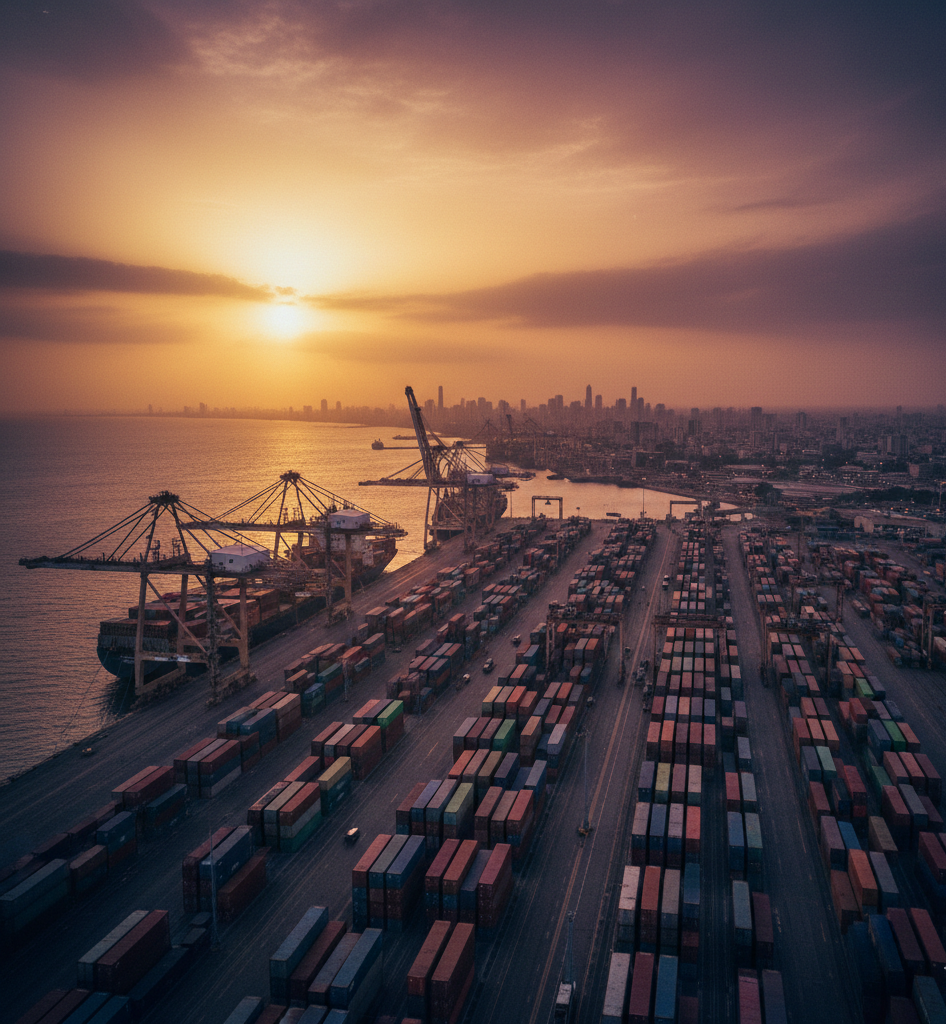
Modern maritime shipping has transformed global commerce through containerization, enabling the quick movement of goods between continents. This productivity, however, has also created structural vulnerabilities exploited by trafficking organisations. International shipping systems handle millions of containers annually, making comprehensive inspection logistically impossible. Law enforcement agencies routinely inspect only a small fraction of total cargo, creating opportunities for narcotics concealment.
Investigations by European and international security agencies have shown that trafficking groups utilise port congestion, subcontracted logistics services, and corrupted dockworkers to insert illicit shipments into legitimate supply chains. Containers carrying legal goods are used as cover for concealed narcotics, often passing through multiple transit hubs to conceal their origin. While major shipping companies invest heavily in compliance and security procedures, the large volume of global trade limits their effectiveness. As a result, container shipping infrastructure inadvertently facilitates transnational trafficking.
Case 3: Offshore Finance, Shell Companies, and Financial Secrecy
The global offshore financial system has played a central role in concealing drug-related wealth. Investigative journalism projects have exposed how law firms and corporate service providers created thousands of shell companies designed to obscure beneficial ownership. These entities enabled traffickers, corrupt officials, and intermediaries to hide assets below layers of anonymity.
The leaked financial documents demonstrated that shell corporations were routinely used to purchase real estate, move funds across jurisdictions, and establish front businesses. In many cases, incorporation services required minimal identity verification, allowing clients to operate under aliases or nominee directors. These structures were legally registered yet functionally opaque, providing lawful cover for illicit activity. Although regulatory reforms have been introduced in several jurisdictions, enforcement remains uneven, and offshore secrecy continues to undermine transparency.
Case 4: Digital Finance and Emerging Laundering Channels
In recent years, electronic payment platforms and cryptocurrency exchanges have introduced fresh avenues for financial concealment. While most major platforms comply in accordance with regulatory standards, enforcement agencies have documented cases in which insufficient customer verification and delayed reporting facilitated laundering. Decentralised systems, peer-to-peer transfers, and privacy-enhancing technologies additionally complicate monitoring efforts.
Regulatory systems have struggled to keep pace with these inventions as industry has grown. As a result, digital finance increasingly supplements traditional laundering methods rather than replacing them. Criminal organisations now employ hybrid strategies that combine cash-based operations, offshore structures, and digital tools to enhance protection against detection.
Structural Implications
Taken together, these cases reveal that large-scale narcotics trafficking depends less on isolated criminal ingenuity than on institutional vulnerabilities embedded within global commerce and finance. Banks, shipping networks, corporate registries, and internet platforms were not designed to facilitate illicit activity, yet their working complexity and regulatory limitations create persistent opportunities for exploitation. These enabling structures allow drug profits to circulate, accumulate, and stabilise over time. The durability of narco-economies is therefore inseparable from the institutional environments through which they operate.
Why Drug Wars Fail Systemically

Contemporary drug control strategies have repeatedly failed not because of insufficient enforcement, but because they confront symptoms rather than structures. Militarised campaigns, mass arrests, and eradication programs target visible actors while leaving intact the economic incentives, institutional weaknesses, and financial networks that sustain illicit markets. When one trafficking route is disrupted, another emerges. When one organisation is dismantled, successors rapidly occupy the resulting vacuum. This capacity to adapt reflects the assimilation of drug economies inside broader political and economic systems rather than their separation from them.
Furthermore, punitive approaches frequently deepen the conditions that enable trafficking. Aggressive enforcement destabilises communities, weakens local governance, and diverts public resources away from development and institutional reform. In many contexts, security-focused interventions intensify corruption, normalise violence, and weaken public trust. Without addressing poverty, financial secrecy, regulatory deficiencies, and political capture, drug wars function as cycles of displacement rather than solutions. Their persistence reveals not an operational failure, but a structural misalignment between policy objectives and the realities of the illicit political economy.
Shadow Power in the Global System
The global narcotics economy represents a form of shadow power that parallels and exploits formal systems of governance, finance, and trade. It operates through the same institutions that facilitate legitimate commerce, adapting to regulatory regimes while remaining insulated by complexity and fragmentation. From colonial monopolies to modern financial networks, illicit markets have consistently embedded themselves within structures designed for lawful exchange. Their durability does not reflect criminal exceptionalism, but institutional vulnerability.
Understanding narco-politics, therefore, requires abandoning the illusion that enforcement alone can take apart these systems. Drug economies persist because they serve economic functions, finance political actors, and circulate through global infrastructures. They endure where governance is weak, supervision is fragmented, and accountability is selective. Confronting this reality demands sustained institutional reform, fiscal transparency, and political commitment beyond episodic campaigns. Until such foundations are established, shadow power will continue to coexist with and shape the formal international order.

References
ASIA/PACIFIC GROUP ON MONEY LAUNDERING APG Typology Report on Trade Based Money Laundering. (2012).
Bellamy, A. (2025). Mechanisms of Morality: The Opium Trade and the End of East India Company Rule in India, 1833–1858. Journal of Colonialism and Colonial History, 26(1). https://doi.org/10.1353/cch.2025.a960512
Bhattacharya, N. (2016). Between the Bazaar and the Bench: Making of the Drugs Trade in Colonial India, ca. 1900–1930. Bulletin of the History of Medicine, 90(1), 61–91. https://doi.org/10.1353/bhm.2016.0017
Bojan Lepic. (2023, August 17). Eight tons of cocaine found in Maersk reefer at Rotterdam. Splash247. https://splash247.com/eight-tons-of-cocaine-found-in-maersk-container-at-rotterdam/
COCAINE TRAFFICKING IN WEST AFRICA The threat to stability and development (with special reference to Guinea-Bissau). (2007).
Collin, M. (2019). Illicit Financial Flows: Concepts, Measurement, and Evidence. The World Bank Research Observer, 35(1), 44–86. https://doi.org/10.1093/wbro/lkz007
Collins, J. (2020). Imperial Drug Economies, Development, and the Search for Alternatives in Asia, from Colonialism to Decolonisation. Revue Internationale de Politique de Développement, 12. https://doi.org/10.4000/poldev.3683
Compton, K. (2019, November 19). Bayer - Drug Manufacturer’s History, Problematic Drugs, & Lawsuits. Drugwatch.com. https://www.drugwatch.com/manufacturers/bayer/
CRS INSIGHT Prepared for Members and Committees of Congress Colombia’s Antidrug Efforts and the “Failed Demonstrably” Designation. (2025).
Drug Policy Consortium, I. (2008). IDPC Response to the UNODC’s World Drug Report. SSRN Electronic Journal. https://doi.org/10.2139/ssrn.1425107
Feige, C., & Miron, J. A. (2008). The opium wars, opium legalization and opium consumption in China. Applied Economics Letters, 15(12), 911–913. https://doi.org/10.1080/13504850600972295
Felbab-Brown, V. (2022). SECURITY, STRATEGY, AND ORDER CHINA AND SYNTHETIC DRUGS CONTROL FENTANYL, METHAMPHETAMINES, AND PRECURSORS.
Financial Action Task Force Groupe d’action financière TRADE BASED MONEY LAUNDERING. (2006).
Gaspareniene, L., & Remeikiene, R. (2016). The Methodologies of Shadow Economy Estimation in the World and in Lithuania: Whether the Criterions Fixing Digital Shadow are Included? Procedia Economics and Finance, 39, 753–760. https://doi.org/10.1016/s2212-5671(16)30277-5
Gautreau, G. (2012). To Rid the World of the Drug Scourge: A Human Security Perspective on the War on Drugs in Colombia and Mexico. Paterson Review of International Affairs, 12, 61–83.
Gerstein, D., Pardo, B., Davenport, A., & Chindea, I. (n.d.).
Getty Images, D. (n.d.). THE OPIUM WARS IN CHINA.
Greenfield, V., Crane, K., Bond, C., Chandler, N., Luoto, J., & Oliker, O. (n.d.). Reducing the Cultivation of Opium Poppies in Southern Afghanistan Appendixes A-E THIS FILE WAS EDITED BUT NOT FORMATTED.
Haider, S., Zaidi, A., Wang, Y., Ping, T.-X., & Meng-Qi. (2017). Panama Papers and the dilemma of global financial transparency. International Journal of Modern Research in Management IJMRM International Journal of Modern Research in Management, 1(2).
Heroin | EBSCO. (2024). EBSCO Information Services, Inc. | Www.ebsco.com. https://www.ebsco.com/research-starters/health-and-medicine/heroin
HSBC Bank PLC – The Preferred Financial Institution for Drug Cartels and Money Launderers, Vol. 6 – Cornell International Law Journal. (2017). Cornell.edu. https://publications.lawschool.cornell.edu/cilj/2017/05/20/hsbc-bank-plc-the-preferred-financial-institution-for-drug-cartels-and-money-launderers/
Illicit Financial Flows and Governance: The Importance of Disaggregation. (n.d.).
isheeta.sumra. (2024). South Asia: UNODC Container Control Programme targets illegal maritime trafficking. Unodc.org. https://www.unodc.org/southasia/frontpage/2014/Feb/south-asia_-unodc-container-control-programme-targets-illegal-maritime-trade.html
Koch, F. E. (1945). CARTELS AS INSTRUMENTS OF INTERNATIONAL ECONOMIC ORGANIZATION. The Modern Law Review, 8(3), 130–148. https://doi.org/10.1111/j.1468-2230.1945.tb02706.x
Levin, C., & Coburn, T. (2012). PERMANENT SUBCOMMITTEE ON INVESTIGATIONS Committee on Homeland Security and Governmental Affairs U.S. Vulnerabilities to Money Laundering, Drugs, and Terrorist Financing: HSBC Case History MAJORITY AND MINORITY STAFF REPORT PERMANENT SUBCOMMITTEE ON INVESTIGATIONS UNITED STATES SENATE RELEASED IN CONJUNCTION WITH THE PERMANENT SUBCOMMITTEE ON INVESTIGATIONS.
List, L. (2025, September 9). Drugs seized on Maersk vessel in Panama. Kuehne-Nagel.com. https://mykn.kuehne-nagel.com/news/article/drugs-seized-on-maersk-vessel
Loayza, N., Villa, E., & Misas, M. (2019). Illicit activity and money laundering from an economic growth perspective: A model and an application to Colombia. Journal of Economic Behavior & Organization, 159, 442–487. https://doi.org/10.1016/j.jebo.2017.10.002
Mccoy, A. W. (2003). The politics of heroin : CIA complicity in the global drug trade : Afghanistan, Southeast Asia, Central America, Colombia. Lawrence Hill Books, An Imprint Of Chicago Review Press, Independent Publishers Group.
Medina, L., & Schneider, F. (2018). Shadow Economies Around the World: What Did We Learn Over the Last 20 Years? IMF Working Papers, 18(17), 1. https://doi.org/10.5089/9781484338636.001
Mehay, S., & Liccardo Pacula, R. (1999). NBER WORKING PAPER SERIES THE EFFECTIVENESS OF WORKPLACE DRUG PREVENTION POLICIES: DOES “ZERO TOLERANCE” WORK?
Mejía, D., & Csete, J. (n.d.). THE ECONOMICS OF THE DRUG WAR: UNACCOUNTED COSTS, LOST LIVES, MISSED OPPORTUNITIES 1.
Mercille, J. (2011). THE U.S. “WAR ON DRUGS” IN AFGHANISTAN. Critical Asian Studies, 43(2), 285–309. https://doi.org/10.1080/14672715.2011.570569
Mexico: Organized Crime and Drug Trafficking Organizations. (n.d.).
Money Laundering from Fentanyl and Synthetic Opioids. (2022).
NOT JUST IN TRANSIT Drugs, the State and Society in West Africa An Independent Report of the West Africa Commission on Drugs. (2014).
O'brien, J. (n.d.). The Sword of Damocles: who controls HSBC in the aftermath of its deferred prosecution agreement with the United States Department of Justice?
Roks, R., Bisschop, L., & Staring, R. (2020). Getting a foot in the door. Spaces of cocaine trafficking in the Port of Rotterdam. Trends in Organized Crime, 24(2), 171–188. https://doi.org/10.1007/s12117-020-09394-8
Senam Amable, D. (2018). UNODC’s Fight against Drug Trafficking in West Africa: A Comparative Case Study of Ghana and Guinea-Bissau. Print) International Journal of Social Science and Humanities Research, 6, 252–261.
Sergi, A. (2023). Cocaine and the port: Utopias of security, urban relations, and displacement of policing efforts in the port of Piraeus. European Journal of Criminology, 21(3), 329–349. https://doi.org/10.1177/14773708231182782
UNITED NATIONS OFFICE ON DRUGS AND CRIME Vienna Final Independent Project Evaluation of the. (n.d.).
UNODC. (1953, January 1). UNODC - Bulletin on Narcotics - 1953 Issue 2 - 003. United Nations : Office on Drugs and Crime. https://www.unodc.org/unodc/en/data-and-analysis/bulletin/bulletin_1953-01-01_2_page004.html
UNODC. (2024a). KEY FINDINGS AND CONCLUSIONS. https://www.unodc.org/documents/data-and-analysis/WDR_2024/WDR24_Key_findings_and_conclusions.pdf
UNODC. (2024b). SPECIAL POINTS OF INTEREST. https://www.unodc.org/documents/data-and-analysis/WDR_2024/WDR_2024_SPI.pdf
War, Drugs, and Money: The Opium Trade in Afghanistan Link Terms of use Accessibility. (n.d.).
Zeiler, I., Sallusti, F., Kamprad, A., & Bisogno, E. (n.d.). Measuring illegal economic activities and illicit financial flows: challenges and possible solutions.