The Right to Eliminate: Intelligence Agencies, Assassinations and Limits of Justice.
Modern states utilise both overt and covert mechanisms of governance. Beyond diplomacy, legislation, and official actions, a discreet dimension of power functions through intelligence networks, covert operations, and strategic secrecy. Espionage constitutes a persistent feature of international politics rather than an anomaly. Intelligence agencies serve as enduring institutions responsible for identifying, neutralising, and, when necessary, eliminating threats beyond public scrutiny. In this domain, action frequently precedes acknowledgement, and justification typically follows prolonged periods of silence.
Intelligence agencies operate in secrecy, conducting operations intended to safeguard national interests and protect populations. However, the breadth of their activities raises critical questions: To what extent are these agencies willing to act? What specific measures are they prepared to employ? What are the consequences of operational failure? Do they operate strictly within legal frameworks, or do they function within ambiguous zones between legality and illegality?
The authority to eliminate, whether through targeted assassination, covert destabilisation, or concealed intervention, exists at the intersection of legality and necessity. Democracies seek to regulate such actions, while authoritarian systems obscure them; all states justify these measures using the rhetoric of security. The central issue is not the occurrence of such actions, but the extent to which institutions are permitted to act in defence of national survival. Understanding this boundary requires examining the historical foundations, legal tensions, and ethical dilemmas that define the modern intelligence state.
The Development of the Modern Intelligence State

The development of intelligence and security services has been profoundly influenced by major events in the rise and decline of civilisations, shaping the evolution and structure of these specialised state institutions, which are often characterised by secrecy and partiality. World War II and its aftermath were pivotal in establishing the organisational, personnel, methodological, and value-based foundations of modern intelligence services across various regions, despite notable differences and unique characteristics. A prominent example of World War II's impact is the establishment of the United States Central Intelligence Agency (CIA), which remains among the most influential intelligence organisations globally. This institutionalisation was formalised through the passage of the National Security Act of 1947.
After evaluating the operations of the CIA’s predecessors—the Office of Strategic Services (OSS) and the Central Intelligence Group (CIG)—United States policymakers identified significant deficiencies in intelligence collection, analysis, and dissemination. They also recognised the strategic advantages of a modern, well-structured intelligence agency. The creation of the CIA represented a critical strategic decision that positioned the United States and its intelligence apparatus for the Cold War, a period defined by intense geopolitical rivalry with the Soviet Union. Notably, the Soviet Union had already centralised its intelligence operations under the KGB (Committee for State Security) prior to the CIA’s formation.
Yugoslavia’s intelligence service underwent multiple structural and organisational transformations, ultimately evolving into Serbia’s present-day Security Information Agency (BIA), which traces its origins to the Confidential Police Affairs Department established in 1899 within the Ministry of Internal Affairs of the Kingdom of Serbia. British intelligence historian Keith Jeffery describes this adaptation process as an “adjustment to peace”. For many intelligence services globally, this transition marked a significant shift from wartime operations to peacetime functions. However, the new operational mode was soon shaped by the strategic imperatives of the Cold War, necessitating not only organisational and administrative changes but also ideological, doctrinal, and strategic revisions.
The post-war era witnessed the emergence of new states, such as Israel, necessitating the establishment of new intelligence structures. In Israel, this led to the creation of the national intelligence agency, the Institute for Intelligence and Special Operations, commonly known as the Mossad. Over the subsequent eight decades, Mossad became recognised as one of the most effective and prominent intelligence organisations, playing a central role in Israel’s security landscape. In the decades following World War II, the development of intelligence and security services generally reflected continuity, with some exceptions and regional variations. Rather than undergoing abrupt changes, these institutions adapted to emerging security threats, shifts in international relations, and technological advancements. The first significant transformation occurred during the final phase and aftermath of the Cold War, marked by German reunification, the dissolution of the Soviet Union, and the breakup of the Socialist Federal Republic of Yugoslavia. These political changes prompted a comprehensive reassessment of intelligence priorities, operational methods, and organisational structures. As in previous transitional periods, the primary objective remained adaptation to new geopolitical and security environments at global, regional, and national levels.
The moral ambiguity surrounding assassinations and covert operations involves actions by states or non-state actors that occur in the space between peace and open warfare. These actions are designed to achieve geopolitical objectives while avoiding the threshold of conventional military conflict. This domain is characterised by plausible deniability, as states often conceal their involvement through proxies, criminal networks, or compartmentalised operations, resulting in a complex network of indirect actors. Targeted assassinations have been a recurring aspect of human history. Members of political communities have killed tyrannical rulers to establish just governance, eliminated political leaders of rival communities to advance their interests, or targeted enemy military leaders to influence the outcome of conflicts. Although targeted assassinations have persisted in various forms over millennia, their frequency and the moral, legal, and functional evaluations of such actions have varied considerably.
For example, in Ancient Greece, several city-states enacted legislation permitting and rewarding the assassination of tyrants to preserve democratic rule. In 15th- and 16th-century Europe, the assassination of foreign leaders was widespread and generally regarded as morally legitimate. In subsequent centuries, however, evolving moral principles and the development of domestic and international norms and laws increasingly constrained the use of targeted assassinations. Although states and non-state actors continued to engage in such actions, they did so primarily in secrecy.
On August 20, 2020, Russian opposition leader Alexei Navalny was poisoned with a Novichok chemical weapon agent. Navalny’s case is not unique; the use of sophisticated poisons against him parallels high-profile attacks on former Russian Military Intelligence (GRU) officer Sergei Skripal in 2018 and former Federal Security Service (FSB) officer Alexander Litvinenko in 2006. The use of clandestine force to protect regime interests has long been a component of Russian statecraft. The Soviet Union, however, largely ceased foreign assassinations after Bogdan Stashinsky, an operative of the Committee for State Security (KGB), defected to West Germany in 1961. Following his defection, West German authorities prosecuted Stashinsky for the murders of two Ukrainian nationalist leaders on German territory.
During the trial, Stashinsky disclosed significant details about Moscow’s secret assassination program. This revelation proved highly damaging to Moscow and resulted in increased restrictions on the use of foreign assassinations. However, as demonstrated by the poisonings of Navalny, Skripal, and Litvinenko, since Vladimir Putin assumed power in 1999, poison has re-emerged as a tool of Russian statecraft. While some individual poisonings attract considerable attention and are well documented, the underlying motivations for targeting so-called “undesirable individuals” are often presumed, and limited scholarly analysis has addressed Moscow’s broader pattern of poison use. Intelligence agencies have also frequently orchestrated regime changes.
In 2013, the Central Intelligence Agency (CIA) declassified documents under the Freedom of Information Act that confirmed what many had long suspected and what was considered a ‘public secret’: the CIA played a significant role in overthrowing the democratically elected Prime Minister of Iran, Mohammed Mossadeq, in 1953. The documents further revealed that President Eisenhower was aware of the operation and authorised the CIA to execute the coup, codenamed AJAX.
At first, Iran was not seen as politically or strategically important to American foreign interests, as the British had been dominant in the region through the Anglo-Iranian Oil Company (AIOC). The United States and the CIA only became more involved in Iran the moment the Truman (Harry Truman, 33rd president of the USA) administration learned that the Soviet Union planned to establish a trade route through northern Iran to gain access to the oil fields, and after the Soviets refused to pull out their military assets from Northern Iran. The U.S. feared a potential Soviet takeover and decided to increase the presence of CIA agents and American personnel in Iran.
Intelligence Failures: Systemic Breakdown and Its Consequences
Intelligence agencies are established to reduce uncertainty, yet they function within systems susceptible to bias, political influence, and structural constraints. Intelligence failures seldom result from a single overlooked clue or individual analyst error. Instead, they typically arise from the interplay of institutional culture, cognitive framing, and policymakers' expectations. Although relevant information may be accessible, it is often misinterpreted, disregarded, or filtered through dominant assumptions about adversaries and threats. In high-pressure contexts, intelligence is not merely collected; it is shaped, prioritised, and frequently unconsciously aligned with strategic objectives. Therefore, understanding intelligence failure requires examining both the available information and the processes by which knowledge is interpreted, communicated, and operationalised within political hierarchies. President Bush argued that U.S. military action against Iraq was warranted due to Saddam Hussein's material breach of United Nations Security Council Resolution 1441. However, even if Iraq had violated this resolution, the principal role of the U.S. military is to defend the United States—its territorial integrity, national sovereignty, population, and foundational liberties—rather than to enforce United Nations mandates. Consequently, Iraq's violation of Resolution 1441 does not directly justify U.S. military intervention.ion.
The war against Iraq was misguided, not due to the use of pre-emptive military force—which may be justified in response to an imminent threat—nor because the United States acted without United Nations approval, as national defence should not rely on international consensus. Furthermore, the failure to discover weapons of mass destruction (WMD) in Iraq and the absence of evidence that such weapons posed a threat further undermine the rationale for intervention. The central issue was that the primary adversary was, and remains, Al Qaeda. Iraq did not constitute a direct military threat to the United States, even under the assumption that it possessed WMD.
United Nations inspectors conducted extensive searches in Iraq for several months without finding evidence of alleged weapons of mass destruction. Although Hussein did not grant inspectors access to all facilities and eventually expelled them, the Bush administration continued to justify the invasion on these grounds, even after this rationale was widely discredited. Ultimately, the U.S. justification proved unfounded. Officials in the Bush administration exaggerated the threat posed by Iraq's weapons of mass destruction and failed to establish any connection between Saddam Hussein and Al-Qaeda leader Osama bin Laden.

The attack on Pearl Harbour constitutes a major intelligence failure. On December 7, 1941, aircraft from the Imperial Japanese Navy (IJN) executed a surprise assault on the American naval base at Pearl Harbour and other Hawaiian Department military facilities, beginning at 0750. During the following two hours and twenty minutes, Japanese forces carried out coordinated and carefully planned strikes against the Pacific Fleet and Army Air Corps aircraft. The element of surprise rendered American resistance largely ineffective. Japanese losses were limited to 29 aircraft and 5 midget submarines, while over 3,400 American military personnel were killed or wounded. Additionally, 188 Army, Navy, and Marine Corps aircraft were damaged or destroyed, and 18 ships assigned to the Pacific Fleet—including eight battleships, three light cruisers, three destroyers, and four other vessels—were affected.
The disaster at Pearl Harbour stemmed from the Army and Navy's failure to implement measures to detect an approaching hostile force, achieve a state of readiness commensurate with the imminent threat of war, and utilise all available resources to repel the Japanese attack. Although the timing of Japan's strike surprised most personnel, officers in both Washington and Hawaii were aware of the risk of air attack, recognised the possibility of a Japanese assault on Pearl Harbour, and were adequately informed of the imminence of war.
Specifically, the Hawaiian commands did not fulfil their responsibilities despite warnings from Washington, other available information, and the principle of command by cooperation.
They did not integrate or coordinate defence facilities, nor did they properly alert Army and Navy establishments in Hawaii, despite the warnings and intelligence available between November 27 and December 7, 1941.
They also did not establish an effective liaison to ensure mutual awareness of operations and to fully exchange significant intelligence, both of which were necessary for joint security.
They did not maintain effective reconnaissance within the limits of their equipment and failed to achieve a state of readiness across Army and Navy establishments sufficient to address all potential attacks.
Available facilities, materiel, and personnel were not employed effectively, which could have significantly minimised the effects of the attack and aided in repelling the Japanese raiders.
They further failed to recognise the significance of the intelligence and other information available to them.
The errors committed by the Hawaiian commands were primarily errors of judgment rather than instances of dereliction of duty. The War Plans Division of the War Department did not fulfil its responsibility to inform the commanding general that the Hawaiian Department had not been properly alerted, particularly given the department's inadequate response to instructions. Although officers maintained a continuous watch, the Committee concludes that, based on all available evidence, the War and Navy Departments were insufficiently alerted on December 6 and 7, 1941, despite the clear imminence of war. These conclusions, though strongly supported by evidence, are frequently disregarded.
Surveillance and Democracy in the Post-Snowden Era
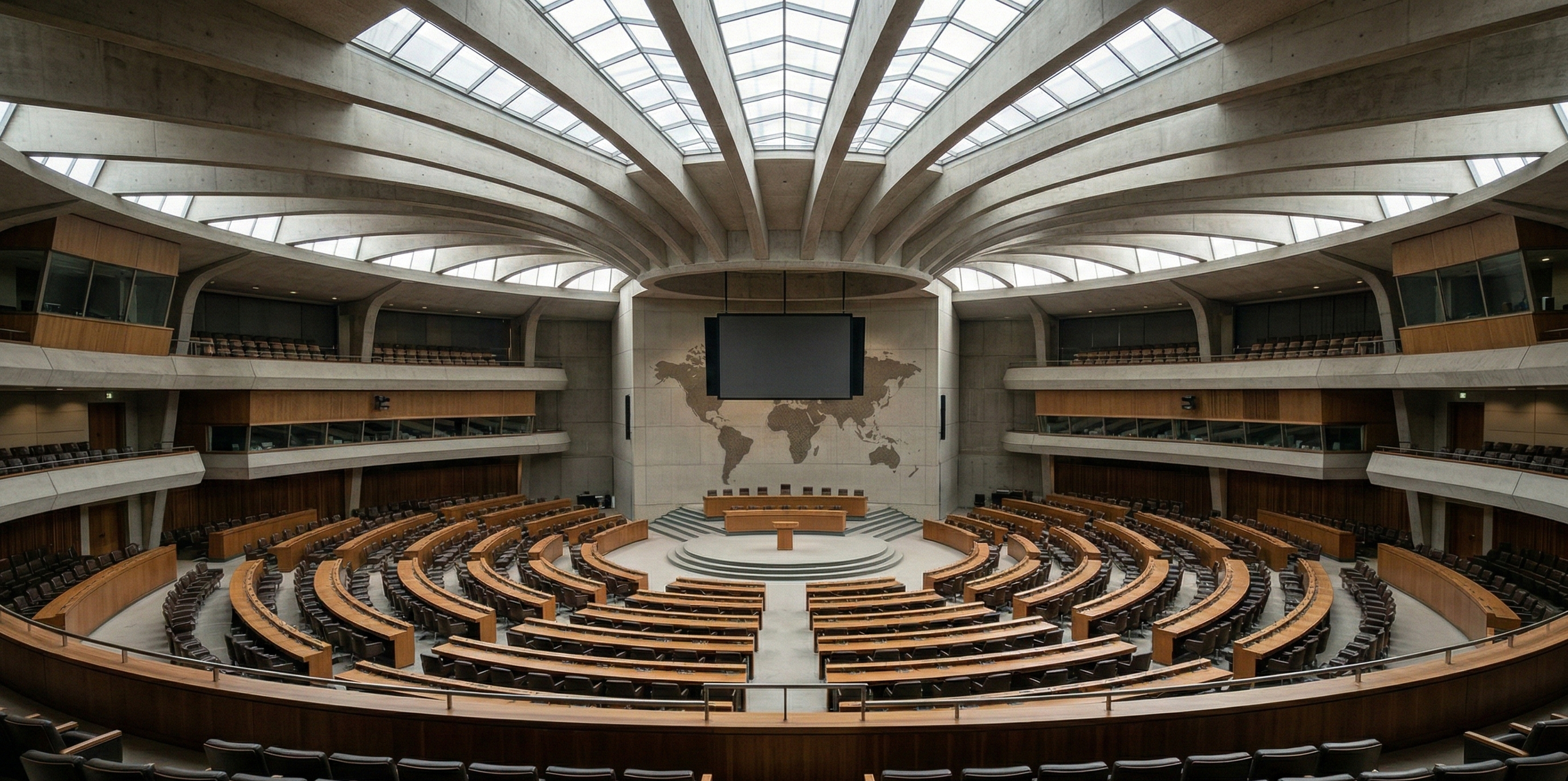
The post-Snowden era significantly transformed public understanding of intelligence infrastructure. Long-standing assumptions about state surveillance for security purposes were confirmed on an unprecedented scale. Revelations of mass metadata collection, global interception programs, and extensive collaboration between intelligence agencies and telecommunications providers demonstrated that surveillance had shifted from targeted monitoring to systemic data aggregation. The ensuing debate extended beyond privacy concerns to address the broader issue of balancing democratic consent with institutional secrecy.
In democratic systems, supervisory mechanisms exist in theory, yet they regularly operate within classified systems that limit meaningful public scrutiny. Legislatures may authorise surveillance powers, courts may review them, and executives may justify them, but the public frequently encounters these debates only after leaks expose them. The result is a structural tension: security institutions require secrecy to function effectively, yet democracy demands transparency to preserve legitimacy. The post-Snowden landscape did not eliminate surveillance; it normalised public knowledge of it.
The Privatisation of Espionage
Intelligence is no longer the exclusive domain of state bureaucracies. In the past two decades, private contractors, cybersecurity firms, data analytics companies, and spyware developers have become integral to national security ecosystems. States now rely heavily on external expertise for signals intelligence, cyber operations, and paramilitary logistics. This outsourcing has blurred traditional boundaries between public authority and private enterprise.
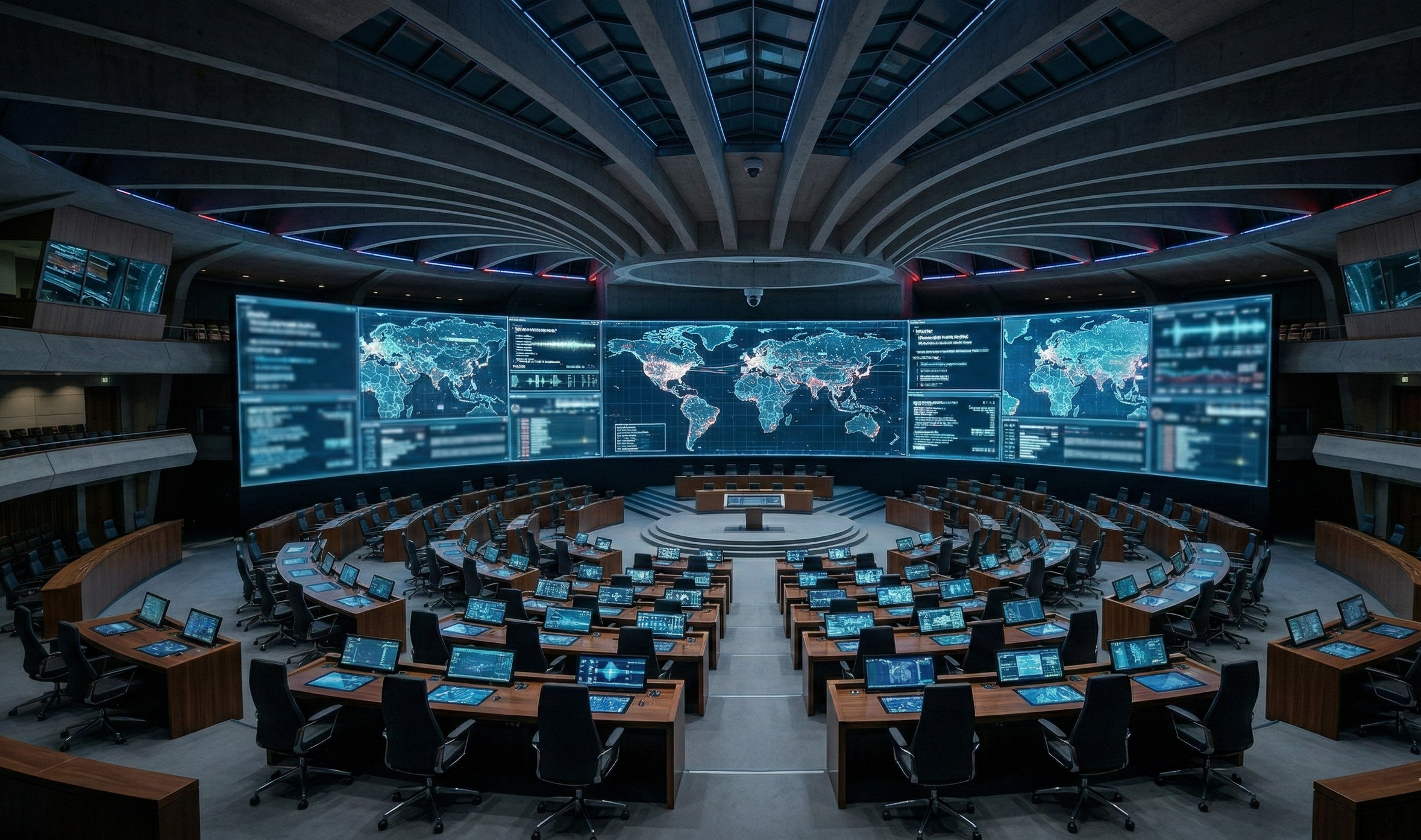
The development of a commercial market for surveillance tools and cyber weapons complicates accountability. In contrast to traditional military forces, digital capabilities may be developed, sold, and transferred across jurisdictions with significant opacity. As covert capacity becomes partially privatised, the state's monopoly over strategic secrecy diminishes. The authority to eliminate or infiltrate is no longer exercised exclusively by formal intelligence agencies; instead, it operates through a dispersed network of contractors and intermediaries, thereby expanding both operational capability and ambiguity.
Defining the Ethical Boundary
Covert power operates at the margins of moral justification. While classical just war theory addresses open conflict, targeted killings, cyber sabotage, and clandestine destabilisation frequently occur outside the context of declared war. The ethical dilemma arises not only from the actions themselves but also from their inherent invisibility. When democratic citizens are unable to fully evaluate decisions made on their behalf, moral accountability becomes indirect and abstract.
Intelligence agencies justify covert actions by citing the prevention of harm, disruption of threats, and preservation of stability. In contrast, critics caution against the normalisation of such measures, warning that extraordinary actions may become routine. Consequently, the ethical boundary is not static; it shifts in response to technological advancements and evolving international anxieties. The central issue is not solely whether covert action can be justified in extreme circumstances, but whether sufficiently robust systems exist to prevent its expansion into routine practice.

The Enduring Presence of Covert Operations
Espionage constitutes a structural element of international politics rather than an exception. Modern states function amid persistent uncertainty, necessitating that intelligence agencies manage it through secrecy, surveillance, and, in certain instances, elimination. These institutions are influenced by regulatory frameworks, political dynamics, and technological advancements, yet they often remain insulated from public oversight.
The “right to eliminate”, whether using targeted killing, cyber disruption, or covert intervention, is unlikely to disappear. Instead, it will adapt to emerging domains of conflict, from digital infrastructure to autonomous systems. The continuing challenge is not the existence of intelligence power, but its containment. In every era, the shadow grows with capability. The measure of a political system is not whether it possesses covert force, but whether it can restrain it.

References:
Aldrich, R. J. (2002). The Hidden Hand. The Overlook Press.
Bojang, M. B. S. & Department of International Relations, Sakarya University, Turkey. (2016). The hidden agenda behind the invasion of Iraq: the unjust war over Iraq in 2003. In Central European Journal of Politics (Vol. 2, Issue 2, pp. 1–14). https://utgalumni.wordpress.com/wp-content/uploads/2017/05/3rd-publication-unjust-war-in-iraq.pdf
Byers, M. (2010). Establishment of the Central Intelligence Agency and Its Vital Role in the Cold War Era. In S. Bowers, D. Snead, C. Murphy, & B. Ayres, Liberty University [Thesis]. https://digitalcommons.liberty.edu/cgi/viewcontent.cgi?article=1119&context=honors
Chesterman, S. (2008). “We can’t spy... if we can’t buy!”: the privatization of intelligence and the limits of outsourcing “Inherently governmental functions.” European Journal of International Law, 19(5), 1055–1074. https://doi.org/10.1093/ejil/chn055
Clark, J. R., Praeger Security International Advisory Board, Board Co-Chairs, Johnson, L. K., Wilkinson, P., Cordesman, A. H., Delpech, T., Howard, S. M., Kennedy, L. G. C. J., Kennedy, P. M., O’Neill, R. J., Telhami, S., & Zakaria, F. (2007). Intelligence and national security : a reference handbook. PRAEGER SECURITY INTERNATIONAL. https://www.praeger.com
Ferris, J. (2015). Intelligence. In Cambridge University Press eBooks (pp. 637–663). https://doi.org/10.1017/cho9781139855969.027
Greenwald, G. (2014). NO PLACE TO HIDE. In NO PLACE TO HIDE [Book].
Hafeez, N. (2013). DRONE WARFARE – A CRITICAL APPRAISAL. In the Strategic and Nuclear Studies Department, Faculty of Contemporary Studies, NDU Islamabad, Journal of Contemporary Studies.
Ignatius, D. (2014). THE DIRECTOR. W. W. NORTON & COMPANY.
Jervis, R. (2010). Why intelligence fails. In R. J. Art, R. Jervis, & S. M. Walt (Eds.), Cornell Studies in Security Affairs. Cornell University Press.
Kent, N. (2019). The Secret World: A history of intelligence. The RUSI Journal, 164(1), 86–93. https://doi.org/10.1080/03071847.2019.1605039
Kesselaar, S. (2024). Eisenhower, the CIA, and the 1953 Coup on Mossadeq: Assessing the Role of the CIA and whether the 1953 Coup was Justified under Leffler’s National Security Principle. In BA Thesis American Studies.
Kinzer, S. (2006). Overthrow: America’s century of regime change from Hawaii to Iraq [Book]. Henry Holt and Company, LLC. https://www.henryholt.com
Mazzetti, M. (2013). The Way of the Knife: the CIA, a secret army, and a war at the ends of the earth.
Military History Symposium (U.S.) (13th : 1988 : United States Air Force Academy). (1988). The intelligence revolution: a historical perspective. In W. T. Hitchcock (Ed.), Proceedings of the Thirteenth Military History Symposium (pp. 1–366). U.S. Air Force Academy.
Munro, I., & Kenny, K. (2023). Whistleblower as activist and exile: The case of Edward Snowden. Organization, 31(6), 994–1008. https://doi.org/10.1177/13505084231194824
Peña, C. V. & Cato Institute. (2003). Iraq: the wrong war.
Perlroth, N. (2021). This is how they tell me the world ends.
Piacine, R. F. & Air War College. (1997). Pearl Harbor: failure of intelligence? (By M. D. Muir). https://apps.dtic.mil/sti/tr/pdf/ADA397295.pdf
Pozen, D. E. & Columbia Law School. (2020). Edward Snowden, National Security whistleblowing, and Civil Disobedience [Book-chapter]. In KAETEN MISTRY & HANNAH GURMAN (Ed.), WHISTLEBLOWING NATION: THE HISTORY OF NATIONAL SECURITY DISCLOSURES AND THE CULT OF STATE SECRECY. COLUMBIA UNIVERSITY PRESS. https://scholarship.law.columbia.edu/faculty_scholarship/2585
Schneier, B. (2013). Carry On: Sound Advice from Schneier on Security. https://ciberativismoeguerra.files.wordpress.com/2017/09/bruce-schneier-data-and-goliath_-2015.pdf
Talukder, M. I. A. (2020). Sergei Skripal: A study of the covert operation to assassinate the Russian double agent. Opus Uluslararası Toplum Araştırmaları Dergisi. https://doi.org/10.26466/opus.800519
Walzer, M. (1977). Just and unjust wars (Fourth). Basic Books.
Weiner, T. & Bookey. (n.d.). Legacy of Ashes. In Legacy of Ashes.
World War II and the rise of American intelligence. (n.d.). https://smithsonianassociates.org/ticketing/programs/wwii-american-intelligence#:~:text=In%20the%20United%20States%2C%20a,for%20fighting%20the%20European%20enemy.
Željski, R., & Živaljević, D. (2025). The Evolution of Intelligence and Security Services After World War II: A Testimony to Perpetual Change. In - (pp. 171–176). https://doi.org/10.18485/iipe_ww2end80y.2025.ch16
Zhuk, S. I. (2024). The KGB, Russian Academic Imperialism, Ukraine, and Western Academia, 1946–2024. Lexington Books.
Zuboff, S., W. H. Auden, The Estate of W. H. Auden, Alex Pentland, Random House, Penguin Press, Penguin Publishing Group, & Penguin Random House LLC. (2018). The age of surveillance capitalism : the fight for a human future at the new frontier of power (First edition) [Book]. PublicAffairs. https://lccn.loc.gov/2018003901
ԻնստիտուտՀ. Գ. Ա., & Soghomonyan, H. (2022). The 1953 coup in Iran and Great Britain's role in it. BULLETIN OF THE INSTITUTE OF ORIENTAL STUDIES, 111–123. https://doi.org/10.52837/27382702-2022.2-111