Endmund Kemper: The Killer Who Shaped FBI Profiling.
Edmund Emil Kemper III, a man of imposing stature at six-foot-nine and nearly three hundred pounds, was known to local police officers as “Big Ed,” a polite and familiar presence in their social circles. Unbeknownst to them, while they discussed the ongoing “Co-ed Killer” case, Kemper was concealing evidence of his crimes in proximity. This paradox—his outward geniality contrasted with his concealed violence—underscored the complexity of a figure whose intellect would later contribute significantly to the evolution of law enforcement’s approach to serial homicide investigations into serial killers.
Kemper’s trajectory toward violent behaviour can be traced to a profoundly dysfunctional childhood. Raised by an alcoholic and domineering mother who subjected him to ridicule and confinement in a basement, he developed intense anger and resentment. Early manifestations of his pathology included staging mock executions with his sisters’ dolls and acts of animal cruelty, such as burying and later decapitating the family cat. At fifteen, Kemper killed his grandmother, reportedly to “see what it felt like,” and subsequently shot his grandfather, claiming it was to spare him the trauma of discovering his wife’s body.
Following his commitment to Atascadero State Hospital, Kemper utilised his high intelligence to manipulate psychiatric staff, ultimately securing an early release at age twenty-one. Upon release, he returned to his mother’s residence, where longstanding familial conflict persisted. Between May 1972 and February 1973, Kemper targeted female college students in Santa Cruz, murdering six individuals. He transported their bodies to his residence, where he engaged in acts of necrophilia, dismemberment, and decapitation, retaining body parts as trophies.
Kemper’s series of murders culminated on Good Friday in 1973, when he killed his mother while she slept, subsequently decapitating her and mutilating her remains. He then murdered her friend before travelling to Colorado, where he contacted law enforcement to surrender, stating that his compulsion to kill had ceased following his mother’s death.
Kemper’s enduring impact is most evident in his role as a key subject in the FBI’s early behavioural science research at the California Medical Facility. When agents John Douglas and Robert Ressler initiated interviews with incarcerated murderers to study criminal psychopathology, Kemper provided uniquely analytical and self-aware insights, distinguishing himself from other interviewees.
Kemper systematically described the psychological progression from violent fantasy to compulsion, offering detailed accounts that supported the validity of the “Macdonald Triad,” which links childhood animal cruelty to later violent behaviour. His methodical approach to victim selection, combined with social adeptness and mobility, informed the FBI’s development of the “Organised Nonsocial” offender classification. Through his cooperation, Kemper contributed behavioural data that advanced criminal profiling from a speculative practice to a more standardised investigative science.

Aptos: The Childhood That Never Loosened Its Grip
Edmund Emil Kemper III was born in 1948 in Burbank, California, and stood out from the very beginning. Weighing a massive 13 pounds at birth, he was already a head taller than his peers by the age of four. But beneath this towering physical presence was a young boy slowly being suffocated by a deeply toxic environment. The home of Edmund Emil Kemper Jr. and Clarnell Stage was characterised by bitter, relentless discord. Clarnell, a domineering and neurotic alcoholic, frequently belittled her husband’s career as an electrician, creating an atmosphere of intense hostility. The tension was so severe that Edmund Jr., a World War II veteran who had tested nuclear weapons, later remarked that suicide missions and atomic bomb testing were nothing compared to living with Clarnell.
When his parents separated in 1957, young Edmund was devastated by the loss of his father. He remained in the custody of his mother, moving to Helena, Montana, where he became the primary target of her unyielding rage. Clarnell viewed her son as an unwanted reminder of a failed marriage, frequently taunting him by saying he was exactly like his father. Believed by some experts to suffer from borderline personality disorder, Clarnell subjected Edmund to severe psychological and emotional abuse. She refused to show him any maternal affection out of a twisted fear that she would “turn him gay,” and cruelly assured him that no woman would ever be capable of loving him.
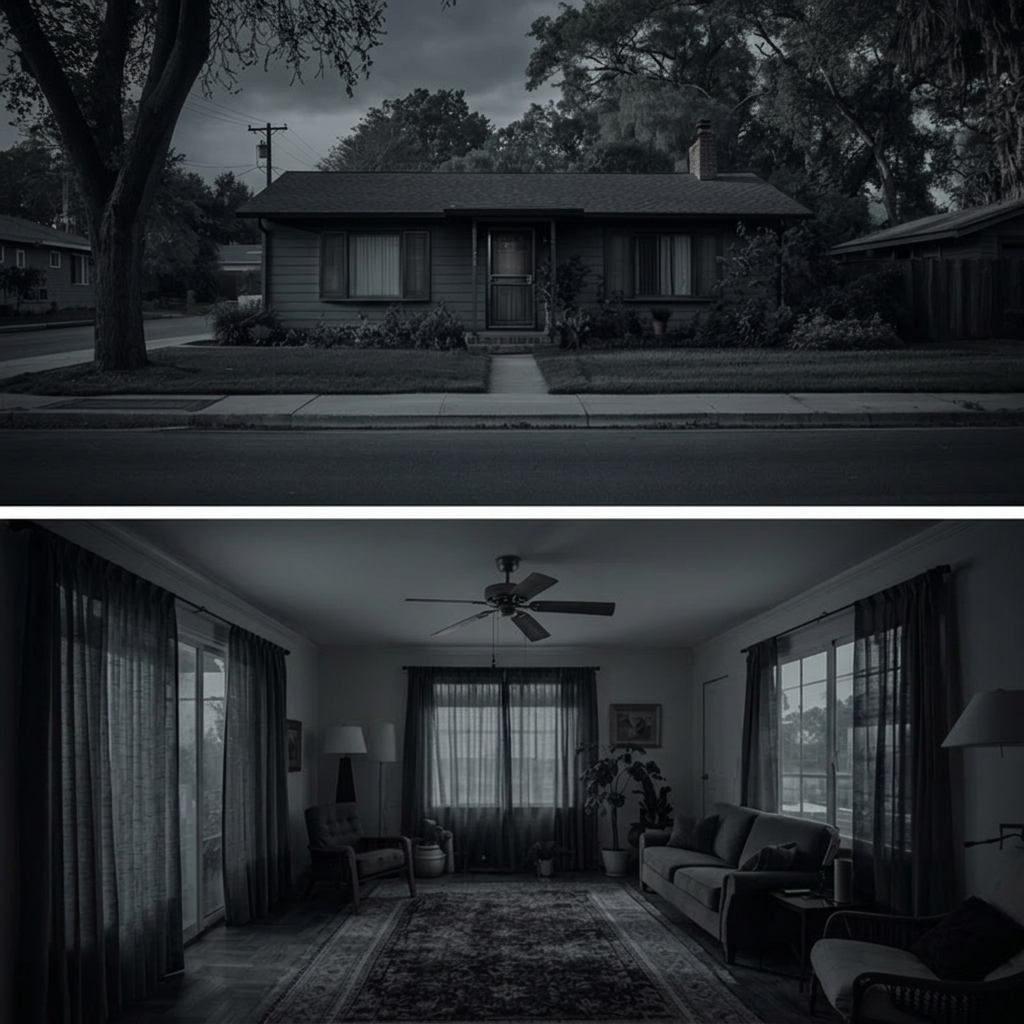
The abuse soon took a darker, more physical turn. Terrified by his rapidly growing size and paranoid that he might molest his two sisters, Clarnell forced Edmund to sleep in a locked, windowless basement. Relegated to a cot under a single bare bulb, the young boy listened to rats scurrying along the cold walls, seething with a profound sense of humiliation and rejection. A complete lack of safety compounded his alienation; Kemper endured two near-death experiences as a child, including an incident where his sister tried to push him in front of a moving train, and another where she pushed him into the deep end of a swimming pool. It was within this dark, isolated space that Kemper’s violent fantasies first began to take root, birthing an all-consuming hatred for the woman sleeping upstairs.
With no healthy outlet for his mounting rage, Kemper’s trauma manifested through disturbing, ritualistic behaviours. He coerced his sisters into playing macabre games like “Gas Chamber” and “Electric Chair,” demanding to be tied up while he writhed on the floor simulating a torturous execution. When games were not enough, he turned to the dolls his sisters played with, methodically pulling off their heads and hands, later admitting that the “pop” of the plastic joints gave him an early sexual thrill.
As the psychological torment escalated, so did the severity of his actions, shifting from toys to living creatures. This progression marked a crucial rehearsal phase for his future crimes. At age ten, Kemper buried the family cat alive, later exhuming the corpse to decapitate it and mount its head on a spike. At thirteen, he slaughtered another family cat with a machete, hiding its severed remains in his closet.
Desperate to escape his mother’s cruelty, a fourteen-year-old Kemper ran away to Van Nuys, California, hoping to live with his father. Instead of finding salvation, he encountered the ultimate rejection: his father had remarried, had a new stepson, and wanted nothing to do with him. Cast aside once again, Kemper was sent away to live with his paternal grandparents in the remote foothills of North Fork, California. There, he found his grandmother to be just as abusive, authoritarian, and emasculating as his mother had been. He was a walking time bomb, entirely isolated, stripped of his self-worth, and brimming with a violent resentment that was finally ready to explode.
Precursors to Adult Violence and Loss of Inhibition
While many violent offenders require years of adult independence before escalating to homicide, Edmund Kemper crossed this threshold at only fifteen years old. Sent to live with his paternal grandparents on their remote 17-acre ranch in the foothills of North Fork, California, Kemper was expected to benefit from a structured, peaceful environment. However, the isolation intensified the violent fantasies he had developed in his mother’s basement. Kemper perceived his grandmother, Maude, as equally authoritarian and domineering as his mother. He later described the environment as prison-like, stating that he had become a “walking time bomb” awaiting detonation.
This violent outburst occurred on August 27, 1964. The act was not the result of a chaotic altercation or panic, but rather stemmed from a cold, detached curiosity. Following an argument with his grandmother regarding household chores, Kemper retrieved a .22-calibre rifle given to him by his grandfather. While Maude sat at the kitchen table working on a children’s adventure story, Kemper shot her. He did not attempt to escape; instead, he waited for his grandfather, Edmund Sr., to return from errands. As his grandfather arrived, greeted him, and began unloading groceries, Kemper shot him as well.
Kemper’s rationale for the double homicide remains a particularly disturbing element of his psychological profile. He later claimed that he killed his grandfather to spare him the trauma of discovering his wife’s body. When questioned by authorities about his motive for killing his grandmother, Kemper stated he “just wanted to see what it felt like” to commit murder. This response illustrates a profound emotional detachment, as he approached homicide as a psychological experiment rather than an act of passion. The emergence of such extreme violence before adulthood demonstrates that his capacity for lethal harm was already firmly established.
The aftermath of the crime further underscored the psychological detachment evident in Kemper’s behaviour. Instead of fleeing, he calmly telephoned his mother to confess and, upon her instructions, contacted the local police. Kemper then waited on the porch for law enforcement to arrive. He was found mentally incompetent to stand trial, diagnosed with paranoid schizophrenia by court-appointed psychiatrists, and subsequently committed to Atascadero State Hospital for the criminally insane.
Within the maximum-security psychiatric facility, clinicians recognised that Kemper was not a typical juvenile offender. Psychological assessments indicated an IQ of 145, categorising him as a genius. This combination of significant psychological disturbance and high intelligence rendered him particularly dangerous. Although his placement at Atascadero was intended for rehabilitation, it ultimately provided an environment in which he refined his ability to conceal his violent impulses. The murders of his grandparents served as a clear warning that a predatory individual had already emerged, foreshadowing the risks associated with his eventual release into society.

Atascadero and The Failure to See Enough
After the murders of his grandparents, fifteen-year-old Edmund Kemper was diagnosed with paranoid schizophrenia by court-appointed psychiatrists and committed to Atascadero State Hospital. Situated on California’s central coast, Atascadero functioned as a maximum-security facility for mentally ill convicts and individuals deemed criminally insane. During the mid-1960s, the hospital faced severe understaffing, with approximately ten psychiatrists treating a population of 1,600 murderers and sex offenders. This overwhelmed institutional environment enabled Kemper to exploit his intellectual abilities.
Soon after Kemper’s admission, psychiatrists and social workers from the California Youth Authority questioned the initial diagnosis. Kemper did not exhibit the typical symptoms of schizophrenia; clinicians observed no flight of ideas, delusions, or hallucinations. Instead, psychological testing indicated a notably high intellect, with IQ scores of 136 and later 145. As a result, his diagnosis was revised to a less severe “personality trait disturbance, passive-aggressive type.” This apparent clinical success marked the onset of significant institutional failure.
Instead of receiving the intensive psychological intervention required, Kemper was permitted to manipulate his clinical environment. By presenting as introspective, articulate, and compliant, he gained the trust of the understaffed psychiatric team. He was granted unusual privileges, such as training to administer, score, and catalogue psychological assessments for other inmates. Kemper also claimed involvement in developing new assessment tools, including an “Overt Hostility Scale” for the Minnesota Multiphasic Personality Inventory (MMPI).
This level of access had severe consequences. By working with the assessments designed to identify psychological deviance, Kemper learned the diagnostic criteria for multiple disorders. He memorized the expected responses, enabling him to convincingly portray a rehabilitated and well-adjusted individual. The institution intended to address his violent tendencies instead facilitated his development of advanced psychological manipulation skills.
The culmination of this institutional oversight occurred on December 18, 1969. On his twenty-first birthday, after persuading the parole board of his full rehabilitation, Kemper was released from Atascadero. The tragedy of his release was intensified by the decision to parole him to his mother, Clarnell, despite explicit warnings and objections from some hospital psychiatrists. Clarnell was central to Kemper’s psychological trauma and violent impulses.
The institutional failure was comprehensive. Several years later, a psychiatrist evaluated Kemper to determine whether his juvenile records should be permanently sealed. Unaware that Kemper was already engaging in violent behavior, the psychiatrist concluded there was no psychiatric reason to consider him a danger to society, describing him as a “very well-adjusted young man.” The records were sealed, effectively erasing his violent history and allowing him to remain undetected along the California coastline.

The Hitchhikers, 1972-73
After his release from Atascadero, Edmund Kemper maintained an outwardly ordinary existence while covertly preparing for a calculated series of murders. Before his first homicide, he drove along California highways, picking up approximately 150 female hitchhikers and releasing them unharmed. These encounters allowed him to observe their behaviour, assess his capacity to gain their trust, and refine his manipulation strategies. Through these interactions, he systematically rehearsed his violent fantasies before ultimately committing murder.
This preparatory phase concluded on May 7, 1972, when Kemper picked up Fresno State College students Mary Ann Pesce and Anita Luchessa, who were hitchhiking near Berkeley. He transported them to a remote wooded area, where he overpowered and murdered them. Subsequently, he brought their bodies to his apartment, initiating a recurring pattern of violence.
From May 1972 to February 1973, Kemper murdered six young women, primarily targeting female college students, often referred to as co-eds, whom he picked up in his vehicle. He outfitted his car with plastic bags, blankets, handcuffs, and weapons, demonstrating thorough preparation for opportunistic crimes. Kemper exploited his high intelligence and a polite, imposing demeanour to gain the trust of his victims. He utilised psychological tactics, such as glancing at his watch to appear as a busy, non-threatening commuter, which helped put the women at ease. Additionally, his possession of a campus parking sticker, obtained through his mother’s employment at the University of California, Santa Cruz, further enhanced his perceived legitimacy and reassured potential victims.
Kemper’s series of murders continued with the abduction and killing of fifteen-year-old dance student Aiko Koo in September 1972, followed by nineteen-year-old Cynthia Schall in January 1973. In February, he abducted and murdered university students Rosalind Thorpe and Alice Liu. After isolating his victims, Kemper employed various methods of killing, including shooting, stabbing, or smothering. He subsequently transported their bodies to his apartment or, later, to his mother’s residence. At these locations, he committed post-mortem violations and dismemberment, systematically disposing of remains in the ocean, ravines, and remote mountainous areas. He also retained physical mementoes from these crimes to revisit his fantasies of control.
Kemper later disclosed to investigators his intense fear of failure in conventional male-female relationships. Through murder, he eliminated the possibility of rejection, reducing his victims to “human dolls” whom he could fully possess and dominate. Psychological experts concluded that these women, especially the university students whose academic accomplishments his mother often praised, functioned as substitutes for the primary focus of his anger: his mother.
As the number of victims increased, Kemper’s confidence escalated into pronounced arrogance. His capacity to integrate seamlessly into society enabled him to evade detection. On one occasion, he convinced a university security guard to let him pass while transporting two victims in his vehicle, claiming they were intoxicated students he was returning to their dormitories. In another instance, a police officer stopped him for a broken taillight while he was transporting remains in his trunk. Yet, his polite and cooperative demeanour resulted only in a warning.
Notably, Kemper regularly visited a local police gathering place known as “The Jury Room.” Referred to as “Big Ed” by off-duty officers, he socialised with law enforcement personnel and discussed the ongoing “Co-Ed Killer” investigation with those actively searching for him. This close association with the police offered him both a sense of excitement and access to investigative information, further reinforcing his belief that he was successfully evading capture.

His Mother
The entire horrific spree of the “Co-ed Killer” was, in reality, a proxy war. While Edmund Kemper took the lives of six young women, psychiatrists—and Kemper himself—later acknowledged that these students were tragic surrogates for his true target: his mother, Clarnell Strandberg. Clarnell was the absolute psychological epicentre of his rage, an imposing, domineering presence who had humiliated, isolated, and emasculated him since childhood.
Because she worked as an administrative assistant at the University of California, Santa Cruz, Clarnell frequently praised the bright young women attending the school. At the same time, she cruelly told her son he was inadequate, inferior, and that no woman would ever want him. By hunting and possessing those exact girls, Kemper was indirectly striking at his mother, systematically destroying the very people she admired.
However, murdering the college students did not resolve his deeply rooted psychological conflict. The compulsion continued to build until Good Friday, April 20, 1973. Kemper came home late and stopped by his mother’s room, hoping for a kind word to halt his dark urges. Instead, Clarnell dismissively snapped, “Oh my God, now I suppose you’re going to want to stay up and talk all night”. Deeply hurt and enraged, Kemper went to his own room and lay awake for hours, stewing over a lifetime of rejection and abuse.
Before dawn, the breaking point finally arrived. Kemper entered her bedroom and bludgeoned his mother to death with a claw hammer as she slept. What followed was a highly symbolic act designed to silence the voice that had tormented him for decades. Kemper decapitated her, cut out her larynx, and shoved her vocal cords down the garbage disposal. When investigators later asked why he committed this specific mutilation, he coldly explained that it seemed appropriate after the years she had spent “bitching and screaming and yelling” at him.
For Kemper, this was not just a murder; it was the execution of his greatest demon. In a final display of dominance, he used her severed head as a dartboard, screaming at it for an hour. He then invited Clarnell’s close friend, Sally Hallett, over to the house and strangled her, simply to assert ultimate control over his mother’s social life.
The most chilling revelation came immediately afterwards. With Clarnell dead, the twisted, overwhelming compulsion that had driven Kemper to slaughter vanished. The proxy war was over because the true enemy had been defeated.

Pueblo, Colorado: The Phone Booth Confession
Following the symbolic execution of his mother and the subsequent murder of her friend, Sally Hallett, the psychological turmoil that had motivated Edmund Kemper abruptly subsided. Prior to leaving the duplex, Kemper left a note for authorities near his mother’s body, apologising for the scene and stating, “No need for her to suffer any more at the hands of this ‘Murderous Butcher.’ It was quick—asleep—the way I wanted it.” He gathered his weapons, stole Hallett’s car, and began driving east. Relying on caffeine pills to remain awake, he drove continuously until reaching Reno, Nevada, where he abandoned the stolen vehicle, rented a green Chevrolet Impala, and continued toward Pueblo, Colorado.
While driving across the country, Kemper listened intently to the radio, expecting to hear news bulletins announcing the discovery of the bodies and his identification as the “Co-ed Killer.” He anticipated immediate national attention. However, no such reports were broadcast, as the crime scene had not yet been discovered and his mother’s neighbors continued their daily routines.
In addition to his disappointment at the lack of recognition, Kemper experienced a significant psychological shift: his compulsion to kill had disappeared. The motivation for his actions had been rooted in resentment and animosity toward his mother. With her death, the underlying conflict ended, and the violence lost its purpose. He later explained his decision to stop, stating, “It wasn’t serving any physical, real or emotional purpose. Toward the end there, I started feeling the folly of the whole damn thing, and at the point of near exhaustion, near collapse, I just said to hell with it and called it all off.”
Seeking to assert control over his circumstances, Kemper stopped at a public phone booth in Pueblo, Colorado, and contacted the Santa Cruz Police Department to surrender. The subsequent confession was unusual in its anticlimax. When Kemper calmly admitted to being the Co-ed Killer and to killing his mother, the police did not initially believe him. The officers on duty knew him as “Big Ed,” a polite and friendly individual who had socialised with them at The Jury Room. Believing it to be a practical joke, they dismissed his claims. Amid the confusion, a dispatcher inadvertently disconnected the call.
Undeterred, KemperKemper called back. To verify his identity, he provided specific, non-public details about the crime scenes and the victims that only the perpetrator would know. After convincing authorities of his guilt and providing the location of evidence in his mother’s home, Santa Cruz officials contacted the Pueblo police to apprehend him at the phone booth.e Officer David Martinez arrived at the scene, and he had been warned that the suspect was a towering six-foot-nine, 280-pound giant who was heavily armed. Martinez approached with his revolver drawn, later noting that Kemper was so massive he looked like three people stuffed into the small glass booth. Yet, there was no dramatic shootout, no high-speed chase, and no desperate manhunt climax. Kemper followed the officer’s instructions, stepped out of the booth, and waited peacefully with his arms out to be handcuffed. He put up no resistance and calmly directed the arresting officers to his rental car, which contained an arsenal of firearms, a knife, and hundreds of rounds of ammunition. The reign of the Co-ed Killer ended exactly as it had operated: entirely on Edmund Kemper’s terms.

Vacaville: The Interviews That Shaped FBI Profiling
Edmund Kemper, sentenced to eight concurrent life terms, was incarcerated at the California Medical Facility in Vacaville, a maximum-security psychiatric institution. In the late 1970s, the FBI’s newly established Behavioural Science Unit sought to transform criminal investigation from reactive guesswork into a predictive science. Agents Robert Ressler and John Douglas recognised that understanding the cognitive processes of existing offenders was essential for apprehending future perpetrators. Consequently, they initiated structured interviews with violent offenders in various prisons. Kemper emerged as a central figure in this pioneering research.
In contrast to many incarcerated murderers who were hostile, uncommunicative, or delusional, Kemper demonstrated high intelligence, articulateness, and self-awareness. He presented himself to the agents as a polite and cooperative subject, providing a detached and analytical account of his own psychopathology. Kemper’s participation in these interviews was motivated not by remorse, but by narcissism, as it reinforced his sense of power, uniqueness, and control over his narrative, while enabling him to vicariously revisit his crimes.
The insights obtained from Kemper proved transformative for the FBI. He systematically described the cognitive development of a serial killer, emphasising that his crimes originated as complex internal fantasies. Kemper noted that repeated immersion in these fantasies eventually failed to provide adequate psychological satisfaction, resulting in an escalating compulsion to enact them in reality. His detailed recollections of his youth also supported the “Macdonald Triad,” demonstrating to investigators that childhood animal cruelty, such as the decapitation of family cats, constituted a significant preparatory stage for later violent behaviour.
Additionally, Kemper served as the primary model for the FBI’s “Organised Nonsocial” offender classification. His meticulous planning, geographic mobility, social competence, and capacity to manipulate law enforcement illustrated that serial killers could integrate into society while concealing violent compulsions.
Despite his friendly and conversational demeanor with the agents, the persistent threat posed by Kemper remained evident. During one session in which Robert Ressler interviewed him alone, Kemper calmly observed that the facility was unmonitored due to a shift change. He remarked that before any guards returned, he could easily kill Ressler and leave his head on the table, thereby “owning the prison” as the individual who killed an FBI agent. Although Kemper later claimed this was a joke, the incident revealed a significant security vulnerability, leading the FBI to prohibit agents from conducting prison interviews alone. Through his willingness to analyze his own behavior, Kemper contributed data that advanced behavioral profiling into a standardized investigative science, leaving a legacy marked by both complexity and severity.

Edmund Kemper: The Organised Killer Who Provided Insight into His Crimes
Edmund Kemper’s legacy extends beyond the crimes committed in Santa Cruz and is embedded within the foundations of modern criminal psychology. Rather than solely perpetrating violence, Kemper contributed to the Federal Bureau of Investigation’s (FBI) understanding of serial offenders by providing detailed accounts during the Behavioural Science Unit’s prison interviews. His participation established the model for the “Organised Nonsocial” offender classification. Kemper systematically described the cognitive development of a serial killer, outlining the progression from internal fantasy to real-world violence. As a result of his testimony, investigators learned to identify the warning signs of the Macdonald Triad, such as severe childhood animal cruelty, as significant indicators of potential adult violence rather than transient adolescent behaviors. Kemper’s insights became instrumental for law enforcement in categorising and investigating future offenders.
The significance of the Edmund Kemper case extends beyond his actions to what he represented: the coexistence of high intelligence, self-awareness, and articulate expression with extreme violence. Common societal assumptions suggest that individuals who commit severe crimes must display outward signs of disorder or detachment from reality. Kemper contradicted this belief. With an IQ of 145, he analysed his own behaviour with clinical precision. He did not experience a break from reality; instead, he demonstrated a clear understanding of his actions and their consequences. Despite recognising the immorality of his behaviour, he acted with calculated intent, illustrating that psychological insight does not necessarily equate to moral restraint.
Kemper’s capacity for self-analysis posed significant challenges for the institutions responsible for his supervision. Authorities frequently misinterpreted his intelligence and cooperative behavior as evidence of rehabilitation. Psychiatrists at Atascadero State Hospital believed he was cured, overlooking his ability to manipulate diagnostic criteria to secure his release. Even experienced FBI profilers exercised caution in response to his charm during interviews. Kemper’s involvement in the Quantico interviews did not stem from remorse or a desire to contribute to public safety. Criminological research indicates that psychopathic offenders may experience “duping delight,” or satisfaction from deceiving others. For Kemper, discussing his crimes with federal agents served to reinforce his sense of control over his narrative and allowed him to revisit the power he once exercised over his victims.
The case of Edmund Kemper remains significant in behavioral science because it reveals the limitations of intuition and institutional assessment. Kemper demonstrated that an organised offender can use psychological insight to evade detection and maintain access to potential victims. His legacy serves as a cautionary example against equating observation with control or assuming that self-awareness mitigates dangerous behavior. This enduring reality is reflected in Kemper’s own words. Years after his incarceration, when asked by a reporter about his thoughts upon seeing a woman, he stated, “One side of me says, I’d like to talk to her, date her. The other side says, ‘I wonder how her head would look on a stick’.”

References
A new language | National Institute of Justice. (n.d.). National Institute of Justice. https://nij.ojp.gov/topics/articles/new-language
Becker, R. (2018). The true story of the brutal co-ed butcher. In Real Crime by Real Killers Vol 2 (Second Edition). Sea Vision Publishing.
Cepeda, M., Martinez, Z., Torres, L., Olivar, L., & Santamaria, H. (2021). Criminal psychological profile. In Diana Marcela Cárdenas, Legal Psychology.
Douglas, J., Olshaker, M., William Shakespeare, Ann Hennigan, Marysue Rucci, Jay Acton, Jack Douglas, Bennett Olshaker, John Douglas, & Mark Olshaker. (1995). MIND HUNTER (Lisa Drew, Ed.).
Forensic psychiatrists skeptical of FBI’s serial killer profile methodology. (2016, January 24). UC Davis. https://www.ucdavis.edu/news/forensic-psychiatrists-skeptical-fbi%E2%80%99s-serial-killer-profile-methodology
Kemper, E. (n.d.). The Co-Ed Killer: The Twisted Life of Edmund Kemper.
Kemper, E. E., III. (1969). Edmund Emil Kemper III.
Kemper, E. E., III. (2021). Criminal dossier: Edmund Kemper. In Criminal Dossier: Edmund Kemper.
Maranzani, B. (2026, May 12). Case File: Ed Kemper | A&E. AETV. https://www.aetv.com/articles/ed-kemper
Miller, L. & Royal Palm Medical Centre. (2014). Serial killers: I. Subtypes, patterns, and motives. In Aggression and Violent Behavior (pp. 1–11). http://dx.doi.org/10.1016/j.avb.2013.11.002
Negrete-Leon, J. (n.d.). Chapter 9: Edmund Kemper “Co-Ed Killer.” Uncovering Serial Killers. https://csi.pressbooks.pub/uncserkill/chapter/chapter-9-ed-kemper/
Ressler, R. K., FBI, Burgess, A. W., University of Pennsylvania, Douglas, J. E., James L. Luke, M.D., Horace J. Heafner, & Daniel L. Carter, Robert A. Prentky, and Ann W. Burgess. (1992). Sexual homicide. THE FREE PRESS.
Ressler, R. K., Jr., & Shachtman, T. (1993). Whoever fights monsters. In St. Martin’s Paperbacks, St. Martin’s Paperbacks.
Rosewood, J. (2015). Edmund Kemper: The True story of the co-ed killer. In Historical Serial Killers and Murderers: Vol. Volume 2 [True Crime].
Singh Saxena, D. (n.d.). Abnormal Psychology Case Study: Ed Kemper “Co-Ed Killer” Antisocial Personality Disorder [Journal-article].
Stephens, H. (1973). I’ll show you where I buried the pieces of their bodies. In INSIDE DETECTIVE.
Stories, E. K. (2019, August 26). “I would be less than honest if I didn’t admit that I liked Ed.” - Edmund Kemper Stories. Edmund Kemper Stories. https://edmundkemperstories.com/blog/2019/08/26/i-would-be-less-than-honest-if-i-didnt-admit-that-i-liked-ed/
Walter, D. (2018). Offender profiling under investigation [Thesis]. In City, University of London, Department of Sociology, & E. Taylor, MSc Criminology and Criminal Justice (pp. 1–70).