Part 1. The Puzzle: Why Do Wars Resist Endings?

The Clausewitz Analysis
The definition of war is often open to different interpretations. Common views of war tend to focus on violence and fighting between opposing groups for various reasons, yet this perspective is incomplete. Carl von Clausewitz, a notable Prussian general and military theorist of the late eighteenth century, described war as a duel on a larger scale. He argued that war is an act of force meant to compel the enemy to submit to one’s will.
There is a widespread belief that it is possible to disarm or defeat an opponent with minimal or no bloodshed, which is regarded as the ideal in the art of war. However, this idea can be misleading. War is inherently dangerous, and mistakes made from a compassionate stance can have serious consequences. War is not fought for chaos.
Clausewitz rejects the idea that war is a contained or isolated act. He notes that war is never separate but is constantly influenced by the presence, intentions, and reactions of adversaries. Each choice made by one side prompts a response from the other, causing the conflict to develop in unpredictable and uncontrollable ways. This reciprocal interaction prevents war from following a rigid plan or achieving a final outcome through a single military goal. Instead, war is an ongoing process with uncertain and mutable results.
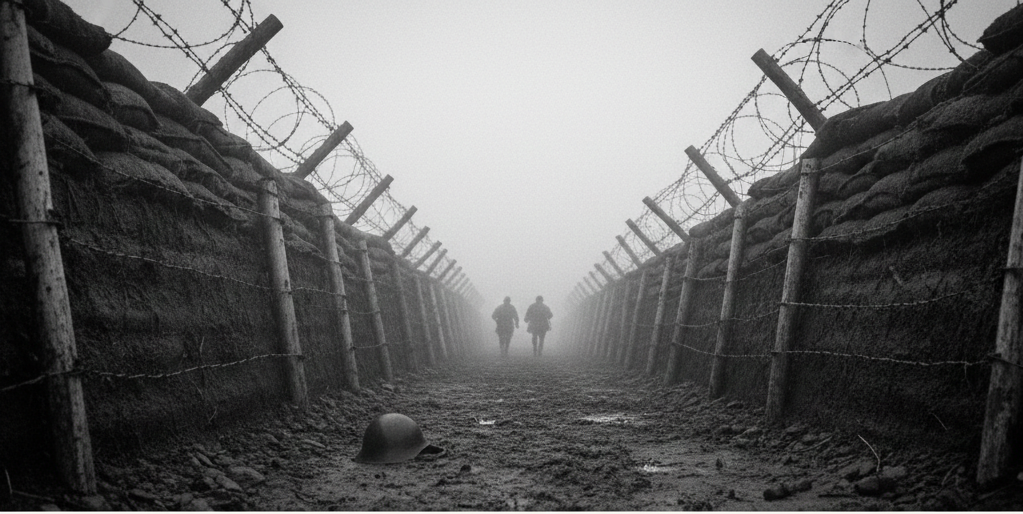
Although war can be conceptualised as the unlimited application of force toward absolute outcomes, practical realities intervene. Probabilities, uncertainties, and human flaws replace these theoretical extremes. Limitations such as limited information, human error, and political risks impact every phase of conflict. As a result, wars rarely follow a straight path or reach clear conclusions. The gap between theoretical victory and real-world execution widens over time, reducing the chances of straightforward resolutions.
Because war takes place under real conditions rather than idealised ones, Clausewitz affirms that political goals remain the highest priority. Military action is subordinate to political purposes. As situations change, political calculations about cost, legitimacy, and consequences shift what is considered acceptable or effective violence. Wars do not end when force is exhausted but when political aims are redefined, abandoned, or left unresolved. The dominance of politics explains why many conflicts stagnate or persist.