The Anatomy Of Coups: Why Governments Are Overthrown.
A coup d'état represents one of the most abrupt and dramatic mechanisms of political transition in the modern era. In contrast to revolutions, which depend on the gradual and often chaotic mobilisation of the masses to transform society, and civil wars, which involve prolonged violent conflict between organised factions, coups are elite-driven events executed with notable speed. These are illegal and overt attempts by the military or other state elites to remove the sitting executive from within the very apparatus designed to protect them. Rather than attacking the state externally, a coup involves a hostile takeover of the state's central command structure. This process demonstrates a form of political judo, as it leverages the state's own resources, authority, and bureaucratic machinery against its political leadership.
The modern state is designed to withstand external threats by employing professional staff and advanced communication systems, and by maintaining a central monopoly on the use of force. However, this concentration of resources simultaneously creates vulnerabilities to internal threats, particularly coups. Coup organisers require control over only a critical segment of the state apparatus, rather than the entire military. By seizing key assets such as telecommunications, transportation hubs, and administrative centres, a small but organised group can incapacitate the broader government, neutralising resistance and suppressing opposition.
Nevertheless, tactical proficiency alone does not determine the success of a coup; the broader structural context must also be conducive to usurpation. The occurrence of coups is closely linked to significant structural vulnerabilities. Economic underdevelopment, widespread poverty, and pronounced income inequality substantially increase political instability. In societies marked by high inequality, deep polarisation alienates citizens from the prevailing economic order and erodes the legitimacy of civilian institutions. When wealth is concentrated, and political participation is limited to a small elite, the majority of the population becomes politically disengaged. It may respond to the violent overthrow of leaders with indifference. In these circumstances, political power is not derived from democratic consensus but is instead treated as a tangible asset controlled by a narrow elite, making it susceptible to violent seizure.
The type of political regime also influences a government's susceptibility to coups. Hybrid regimes, which exist between established democracies and rigid autocracies, are particularly vulnerable to being overthrown. These regimes lack the robust, internalised norms of legal succession found in consolidated democracies and do not possess the intense, coup-preventing repression characteristic of totalitarian dictatorships, leaving them exposed to internal threats. Furthermore, states with a history of military interventions often become trapped in a persistent "coup trap." Successful coups create path dependence, establishing a cycle in which the military views itself as the ultimate arbiter of political authority. Once the precedent for unconstitutional seizure is established, the costs of breaking this cycle become prohibitive, resulting in a recurring pattern where coups lead to further coups.
In addition to these structural and regime-related factors, immediate causes also contribute to government overthrows. Leaders must continually provide benefits and rewards to maintain elite loyalty. When economic decline, resource misallocation, or failure to appease key supporters occurs, elite backing can rapidly dissipate. Coups often begin when military elites perceive greater advantage in overthrowing the status quo than in supporting it. Public unrest, mass protests, and strikes further indicate a loss of governmental legitimacy. Ultimately, the anatomy of a coup reveals that such overthrows are not simply contests of military strength, but rather complex, high-stakes coordination challenges. The success of a coup relies on the psychological management of expectations. Organisers must quickly establish a sense of inevitability, projecting confidence in victory to convince the armed forces that resistance is futile. By controlling public information and seizing prominent symbolic targets, conspirators create self-fulfilling prophecies of success. Even governments with substantial military support can collapse within hours once a psychological tipping point is reached and the majority align with the usurpers. Thus, the overthrow of a government results from the convergence of structural fragility, socio-economic distress, elite opportunism, and precise execution: When Power Breaks Form.
When Power Breaks Form
Understanding the true nature of a government’s overthrow requires dispelling the glorified myths of mass uprising. A coup d’état is not a disorderly outburst of public anger or a spontaneous riot. Rather, it is a sudden and illegal seizure of the state’s executive, orchestrated from within the state apparatus. Military analyst Edward Luttwak observed that coup planners exploit the power of the modern state against its leaders through calculated infiltration and subversion. A small but critical segment of the security forces is co-opted, while the remainder are temporarily neutralised.
Coups are distinct from other forms of political violence. Unlike revolutions, which seek broad societal transformation through mass mobilisation, coups replace only the leadership while preserving basic institutions. They are not motivated by ideology; instead, coups involve replacing elites at the top while leaving the existing structure unchanged.
A coup is also distinct from a civil war. Civil wars involve prolonged conflict and widespread destruction, whereas coups are designed to avoid large-scale violence. If a coup attempt escalates into extended armed conflict, it ceases to be classified as a coup and becomes a civil war. The ideal coup relies on the threat of force, rather than its actual use, achieving change through surprise and strategic leverage rather than brute strength.
A central aspect of understanding coups is identifying the main actors and their methods of operation from within the state. The formal definition widely accepted in modern political science describes coups as "illegal and overt attempts by the military or other elites within the state apparatus to unseat the sitting executive." These actors include generals, colonels, police chiefs, and high-ranking bureaucrats. They already occupy privileged positions in society and possess the instruments of coercion they intend to employ. Operating from the "inside," they do not need to breach the modern state's defences from the outside; they already have access to its core mechanisms. This characteristic distinguishes the modern coup from ancient "Palace Revolutions," which focused on directly manipulating the monarch. In contrast, the modern coup operates within the broader professional civil service and armed forces, aiming to separate these permanent employees from the political leadership.

The feasibility of a sudden seizure of power depends on the mechanistic structure of the modern state. Modern bureaucracy functions as a vast, highly organised hierarchy governed by standardised procedures and a rigid chain of command. Bureaucrats and soldiers are conditioned to comply with orders issued from recognised authorities in prescribed formats. Coup plotters exploit this predictability. By capturing key instruments of state control, such as telecommunications networks, government buildings, and military command centres, they issue directives that the rest of the apparatus follows without question. The effectiveness of these instruments is contingent upon the state functioning as an unthinking entity, programmed to obey whoever commands its organisational core.
Disrupting power in this manner results in both psychological and physical victories. The perpetrators are not required to detain every loyalist or defeat all military units; instead, they must immobilise the situation. By seizing prominent symbolic targets and controlling broadcast media, conspirators foster an impression of inevitability. Their primary objective is to maintain public order and convince the uncommitted majority in both the military and the general population that resistance is futile and that the transition has already occurred.
Most of the population and lower-level bureaucrats respond to abrupt governmental changes with passivity. Their interests rarely coincide with the survival of the ousted regime. When official broadcasts declare the overthrow of the previous government and the onset of a new era, the general public typically reacts with indifference, viewing the event as remote and irrelevant to daily life. This widespread apathy is crucial to the success of a coup. Rather than reflecting public will, it stems from the deliberate paralysis of state defences, which allows a small armed group to rapidly restructure political authority.
Motivations Behind Seizure of Power
Explaining the overthrow of governments requires an assessment of the interaction between human motivation and institutional vulnerability. Coups do not occur spontaneously; a pronounced desire for power drives them. The impetus to disrupt a state's political order frequently arises from a combination of personal greed, elite survival instincts, and ambition. When the state possesses the majority of national wealth, capturing the central executive offers both political and substantial financial rewards. In environments lacking effective institutional constraints and marked by corruption, the incentives to participate in a coup are significant. The disparity between the limited compensation of military officers and the wealth amassed by autocratic leaders can prompt individuals to seek power through unlawful means. Historical figures such as Idi Amin in Uganda and Jean-Bédel Bokassa in the Central African Republic illustrate leaders motivated more by the pursuit of absolute control and personal enrichment than by ideological commitment.
However, ambition constitutes only part of the explanation; fear is equally significant. The imperative of elite survival underpins many coups. Within autocratic or transitional hybrid regimes, political insiders often experience persistent anxiety. Paradoxically, when an incumbent leader provides excessive rewards to their coalition, this over-provision may provoke a violent response. Experienced military and political supporters may interpret sudden generosity as a warning of an impending purge. Fearing the abrupt loss of privileges, freedom, or even life, these elites may act preemptively, initiating a coup to remove the leader before being targeted themselves. Fear thus serves as a powerful catalyst; when inaction is perceived to risk execution or exile, the illegal seizure of power becomes a rational survival strategy.
Beyond individual paranoia lies the significant force of institutional rivalry. The military does not merely serve as an unthinking extension of the state; rather, it operates as a highly organised, heavily armed entity that is deeply protective of its corporate interests. When civilian leaders threaten these interests, whether by reducing defence budgets, interfering in internal promotions, or establishing rival paramilitary forces and so-called "praetorian guards," the military often perceives intervention as a necessary response. Any challenge to the military’s autonomy or prestige is interpreted as a direct threat to national security. As a result, the armed forces may act against political leaders to defend their institutional dominance, believing that their own survival is inseparable from the state's. Since overt ambition and self-interest are rarely acceptable justifications to the public, the pursuit of power is frequently framed as an ideological commitment or a mission of national salvation. Coup plotters typically present their actions as patriotic imperatives, claiming that intervention is required to prevent the state from falling into corruption, disorder, or foreign influence. This rationale forms the basis of the "guardian coup," wherein the military intervenes to address perceived failures of civilian leadership and pledges to restore order and effectiveness. Ideological motivations further reinforce this narrative. During the Cold War, the perception that either left-wing or right-wing dominance threatened national stability led factions to justify coups as essential ideological interventions.
Today, coup leaders continue to dominate media channels, delivering proclamations of national salvation. These actors often assert that their intervention is necessary to defend the constitution, restore national dignity, and liberate citizens from neocolonial influence or systemic corruption. In regions such as Francophone Africa, contemporary coups are frequently framed as anti-imperialist movements, utilising historical grievances to legitimise the removal of struggling governments. Nevertheless, such justifications often function as ideological cover. Promises of a prompt return to civilian governance are frequently unfulfilled, and those who seize power often become entrenched in the same corrupt practices they initially condemned. Ultimately, the pursuit of power is driven by a calculated blend of fear, rivalry, and ambition, presented as patriotism but serving to reinforce the dominance of a select few.
Conditions of State Fragility
Modern states may appear resilient due to their extensive bureaucracies, physical infrastructure, and security apparatus. However, the primary determinant of governmental survival is adaptability rather than perceived strength. Vulnerability arises when a state loses its capacity to absorb crises, typically due to prolonged structural decline. When a political system can no longer effectively mediate conflict or allocate resources, it becomes fragile and susceptible to collapse under even minor pressures.
Economic collapse is the most significant factor accelerating state fragility. Poverty, pronounced inequality, and low economic productivity are not merely social issues; they represent fundamental threats to political stability. Severe and sustained economic crises, characterised by hyperinflation, widespread unemployment, and the breakdown of public services, undermine the social contract between government and citizens. In societies marked by deep poverty or inequality, the general population often remains politically passive while a small elite controls national resources. When governments experience macroeconomic decline and fail to deliver public goods or maintain the support of key elite groups, their legitimacy erodes. In such fragile contexts, loyalty is transactional, and a depleted treasury cannot secure defenders.
Declining economic performance directly undermines regime legitimacy. Governments lacking popular consent depend almost exclusively on effective governance to justify their authority. When this performance deteriorates, the state becomes highly vulnerable. This vulnerability is particularly pronounced in hybrid regimes, which occupy the ambiguous space between established democracies and absolute autocracies. Such transitional or semi-authoritarian states lack both the entrenched democratic norms that safeguard legal succession and the repressive mechanisms that protect totalitarian rulers. In these fragile systems, limited tolerance for opposition fosters resentment, while constitutional avenues for meaningful change remain obstructed. As a result, political actors may conclude that extralegal or unconstitutional means are the most effective strategies for acquiring power.
Weak institutions and fragmented elites significantly exacerbate the risks associated with political instability. Effective political institutions are intended to mediate elite competition and channel ambitions into peaceful, rule-based processes. When these institutions deteriorate, political competition devolves into a zero-sum struggle for survival. Intense polarisations and ethnic or factional divisions fragment the political elite, leading to perceptions of opponents as existential threats rather than legitimate rivals. In such an environment, the stakes of political loss are perceived as extremely high. Elites, immobilised by mutual distrust and unable to resolve conflicts constitutionally, often seek external intervention. Consequently, they may appeal to the armed forces as the only actor capable of resolving political deadlock.
When political elites invite military intervention to resolve domestic disputes, they contribute to the politicisation of the armed forces. Once involved in political affairs, the military abandons its neutral defensive role and assumes the position of ultimate political arbiter. If a government consistently relies on the military to suppress protests, break strikes, or maintain its own survival, military leaders may recognise the civilian administration's dependence on their support. These realisations prompt military officials to question the rationale for supporting a government perceived as corrupt, ineffective, or unpopular, especially when it possesses the capacity to govern directly. Widespread social instability further convinces military elites that the civilian government has forfeited its legitimacy.
Ultimately, these conditions of fragility render the state highly unstable. When weak institutions are unable to manage dissent, economic collapse deprives the regime of necessary resources, and a politicised military perceives the civilian leadership as illegitimate, the environment becomes conducive to a coup. In such circumstances, the system is too fragile to withstand additional crises and is vulnerable to sudden collapse.
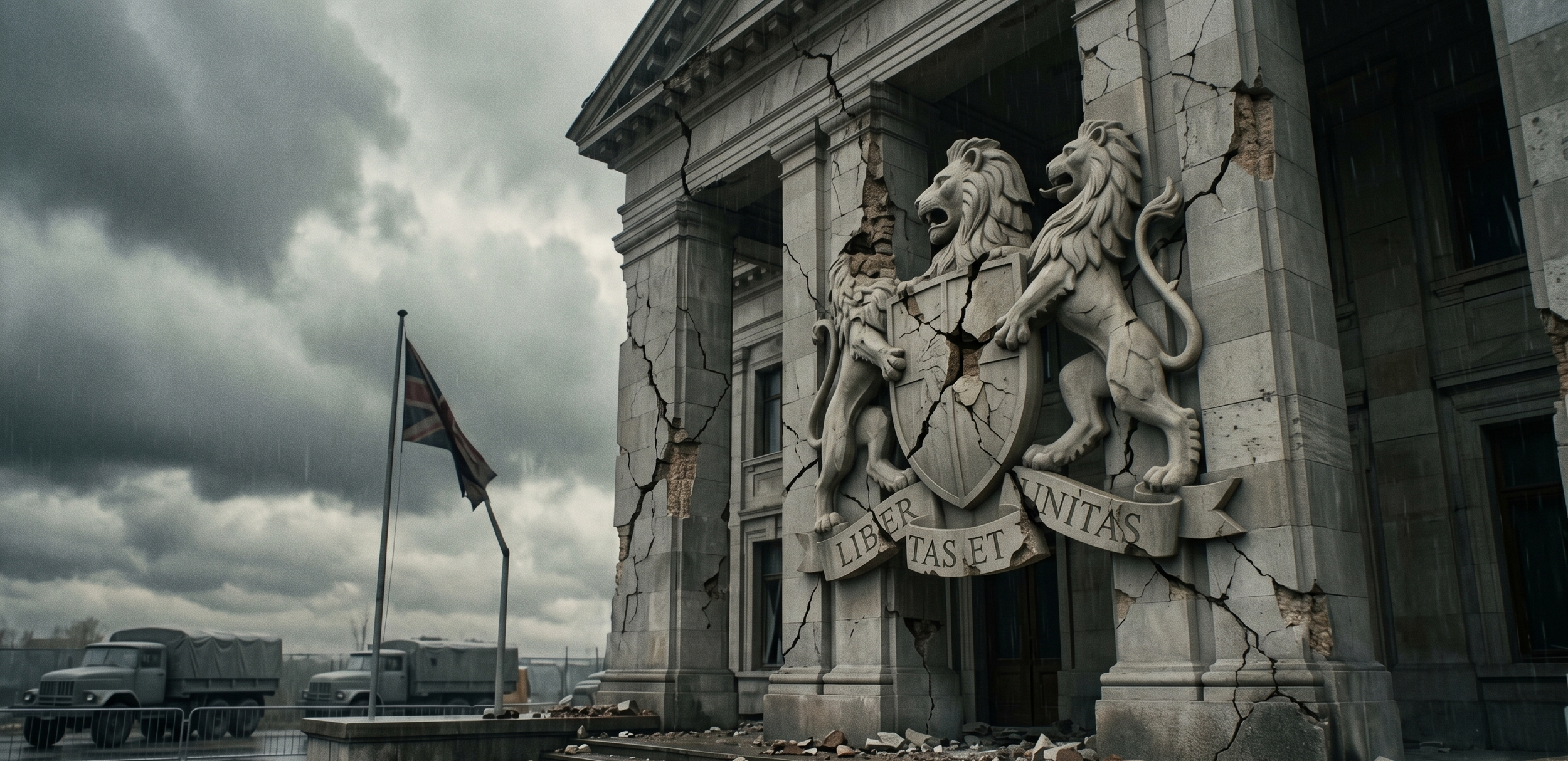
Mechanisms of State Capture During a Coup d'État
The execution of a coup d'état constitutes a military operation devoid of the flexibility characteristic of conventional combat. In traditional warfare, commanders retain forces in reserve and adapt to the evolving dynamics of battle. In contrast, a coup requires absolute and total commitment from the outset. The operation is temporally compressed, leaving no opportunity for planners to correct errors, replace equipment, or adjust tactics during execution. Success depends on precise, rapid action, with simultaneous strikes against the core of the state’s organisational structure. Any delay exposes vulnerabilities, enables opposition forces to regroup, and compromises the conspirators’ anonymity. Operational teams must emerge from concealment and launch a coordinated assault, ensuring the regime's security apparatus is overwhelmed by conflicting intelligence and confusion, leaving it too late to organise an effective defence.
The initial operational objective is the removal of leadership, often referred to as decapitation. Without its leaders, the state apparatus becomes paralysed, unable to issue directives or coordinate a response. Specialised capture teams, frequently operating covertly immediately before the broader assault, must isolate and detain key figures such as the chief executive, ministers of defence and interior, and loyalist police chiefs. This action serves not only an administrative function but also fulfils a critical psychological purpose. Charismatic and influential leaders must be physically separated from both the public and loyalist forces. Should a prominent leader evade capture and mobilise uncommitted forces or appeal to the populace from a secure location, the coup risks escalating into the civil conflict it was designed to prevent.
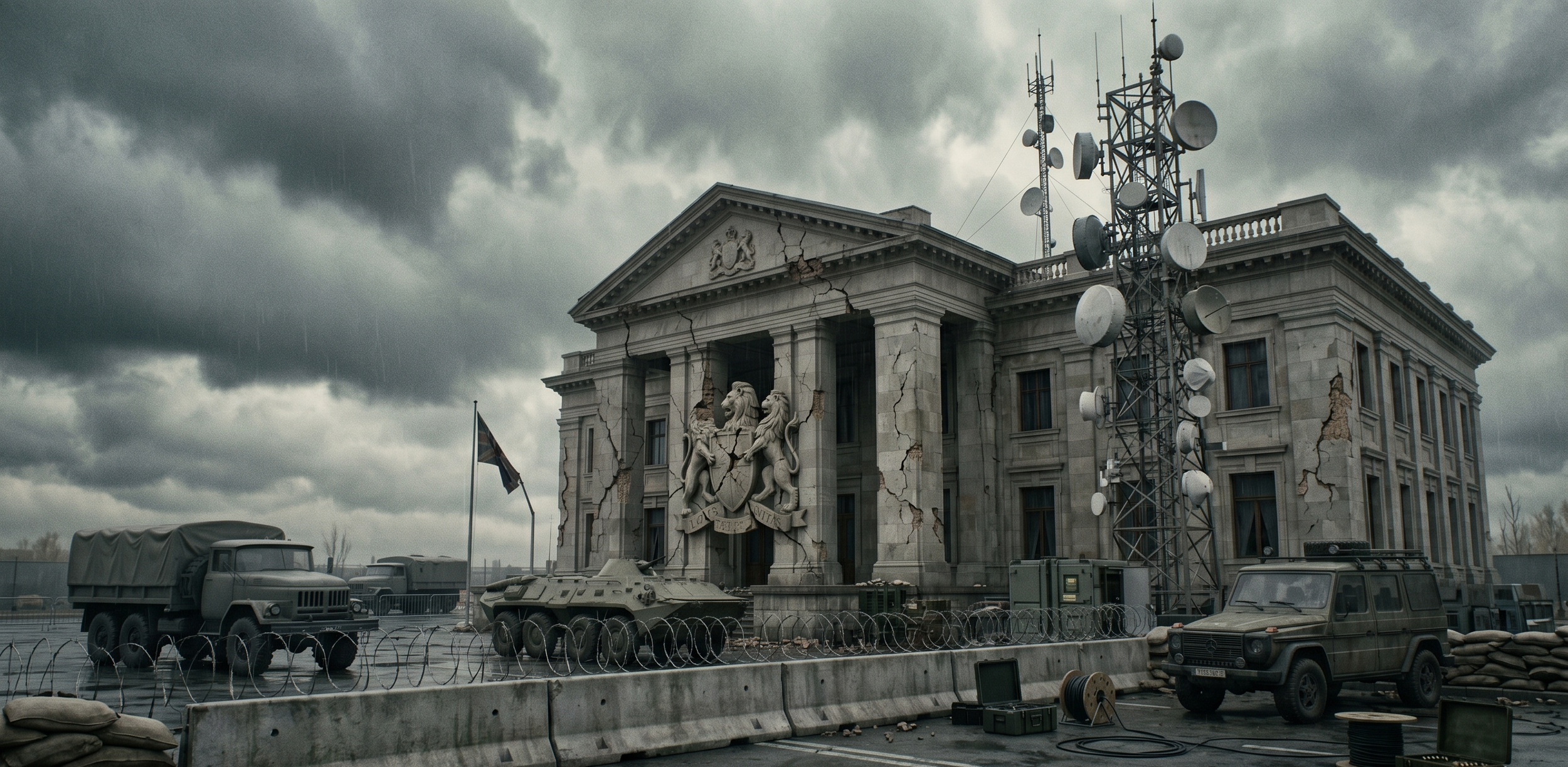
Concurrently, conspirators must seize control of the state's communication infrastructure to establish a monopoly over public information. Strike teams are tasked with capturing primary broadcasting facilities, including national radio and television stations, while neutralising alternative telecommunications through sabotage. Severing phone lines, taking control of telephone exchanges, and disrupting military radio relays to blind and silence the incumbent regime, preventing it from coordinating a response or requesting external intervention. In the modern context, this effort extends to cyberspace, where coup leaders often impose immediate internet blackouts to suppress social media activity, hinder civilian mobilisation, and intensify uncertainty. Control over broadcasting enables the new regime to define the prevailing narrative.
Physical control is further consolidated by securing critical infrastructure. Conspirators must immediately close airports, block landing strips, and suspend railway operations to isolate the capital and prevent loyalist reinforcements from arriving. Strategic roadblocks are established at key traffic points to create a controlled perimeter and restrict hostile movement. Additionally, teams occupy prominent public buildings, such as parliament or presidential palaces, and deploy military vehicles in central locations. Although these sites may lack direct tactical value, their occupation serves as a symbolic demonstration, providing both the bureaucracy and the public with clear evidence that political authority has shifted.
Ultimately, the success of a coup depends less on violent confrontation and more on achieving psychological dominance. A coup represents a complex coordination challenge in which the victorious faction imposes a new political reality. By promptly announcing the collapse of the previous regime and the restoration of order, the new authorities foster a perception of inevitability. Loyalist forces are then confronted with the choice of resisting or acquiescing to the new leadership. The rapid and largely nonviolent nature of the takeover often persuades the majority to align with the apparent victors. Consequently, the state is subdued not by overwhelming force, but by the rapid establishment of a perception of defeat.
Foreign Influence in Government Overthrows
Although a coup d'état is typically understood as an internal seizure of state power, a comprehensive analysis of governmental overthrow must consider the influence of external actors. In the complex landscape of geopolitics, domestic unrest is frequently cultivated, financed, and directed by foreign powers intent on aligning a target nation's policies with their own strategic objectives. Externally sponsored coups offer a cost-effective alternative to overt military intervention, avoiding the political and human costs of direct conflict. These operations are covert, utilising internal armed forces, mercenaries, or dissident factions as proxies for foreign sponsors.
Foreign governments that sponsor coups typically do so with the objective of installing sympathetic leaders to neutralise perceived threats and secure vital national interests. During the Cold War, both the United States and the Soviet Union frequently employed covert regime change to establish or defend their spheres of influence. However, these interventions were often justified to domestic audiences through ideological rhetoric such as anti-communism or anti-imperialism; underlying motivations generally included protecting multinational corporate assets, ensuring uninterrupted extraction of critical resources, or establishing secure military positions. Foreign powers often calculate that replacing a non-aligned or independent leader with a compliant protégé will transform a hostile relationship into one characterised by cooperation and subservience.
Foreign sponsorship of coups rarely involves direct military intervention. Instead, such efforts depend on a sophisticated network of intelligence support, financial manipulation, and psychological operations. Agencies such as the CIA or MI6 often facilitate overthrows by providing weapons, logistical assistance, and specialised training to domestic actors. Additionally, these agencies systematically conduct extensive propaganda campaigns to undermine the legitimacy of incumbent governments. Tactics may include staging false-flag attacks, funding opposition media, and organising disruptive protests, all of which contribute to a manufactured atmosphere of instability. This environment offers the military a clear justification for intervening and restoring order.
Financial incentives play a critical role in facilitating coups. Foreign sponsors often provide substantial, untraceable funds to secure the loyalty of key military officers, influence parliamentarians, and bribe religious or civic leaders. This funding addresses the collective action problem inherent in coup attempts by ensuring that participants are adequately compensated for the risks involved. Beyond financial and tactical support, sponsoring states also offer essential diplomatic backing. Following a coup, plotters are vulnerable to international isolation and economic sanctions. Foreign sponsors mitigate these risks by promising immediate diplomatic recognition, continued financial assistance, and assurances that the new regime will not face punitive measures from the sponsor’s international allies.
The 1953 overthrow of Iranian Prime Minister Mohammad Mossadeq acts as the quintessential paradigm of a foreign-sponsored coup. Mossadeq, a highly popular nationalist, had audaciously nationalised Iran's British-controlled oil industry, prompting British and American intelligence agencies to orchestrate "Operation Ajax " jointly. The CIA and MI6 flooded Tehran with cash, budgeting thousands of dollars a week to suborn members of the Iranian parliament and bribe high-ranking military officers like General Fazlollah Zahedi. Simultaneously, foreign agents financed thugs to launch staged, violent attacks on religious leaders, explicitly framing Mossadeq's supporters to turn public sentiment against him rapidly. The result was the violent restoration of the Shah, an autocratic monarch who subsequently safeguarded Western oil interests and suppressed domestic dissent for a quarter of a century.
This strategy was implemented in various contexts worldwide. In Guatemala in 1954, the CIA orchestrated the removal of democratically elected President Jacobo Árbenz, whose agrarian reforms threatened the interests of the American-owned United Fruit Company. The United States supported a small exile force. It employed psychological warfare, including radio broadcasts and the threat of military intervention, to pressure the Guatemalan army into ousting Árbenz without armed conflict. Similarly, in Chile two decades later, the U.S. government used comparable tactics against President Salvador Allende. The CIA provided substantial funding to opposition groups and imposed economic sanctions intended to destabilise the economy, facilitating General Augusto Pinochet’s 1973 military coup.
Foreign intervention in coups represents a substantial violation of national sovereignty, transforming domestic political systems into arenas for international competition. While foreign-sponsored regime changes may achieve short-term objectives, they often produce significant unintended consequences. These interventions undermine the institutional stability of the target nation, place new leaders in a vulnerable position between external and internal pressures, and foster enduring resentment. Historical outcomes demonstrate that attempts by foreign powers to shape another nation's political trajectory through covert means often lead to dictatorship, civil conflict, and persistent backlash.
When Coups Collapse
The success of a coup d'état depends on maintaining a psychological illusion of absolute inevitability. As a high-risk coordination game, a coup's survival requires persuading the uncommitted majority within the armed forces and state bureaucracy that the previous regime has already fallen and that resistance is futile. If conspirators fail to construct this perception, the operation does not merely stall; it collapses entirely. A coup unravels the moment hesitation, poor coordination, or loyalist resistance disrupts the perception of inevitable victory, rapidly reversing momentum and leaving the plotters isolated and vulnerable.
Loss of surprise and poor coordination are primary catalysts for a coup's collapse. A coup allows virtually no margin for tactical flexibility or error correction once initiated. Every strategic objective must be achieved with precise, synchronised timing. When this schedule falters, failure is almost inevitable. Edward Luttwak observes that a ten-minute delay in the arrival of warplanes, unexpected fog, and failed political arrangements led to the June 1955 anti-Perón coup in Argentina becoming a fiasco. Similarly, the July 1944 assassination attempt against Adolf Hitler failed due to operational friction: a heavy oak conference table shielded Hitler from the explosion, and critical communication delays enabled loyalists to organise a counter-coup before conspirators could secure control.
A coup will also collapse rapidly if the plotters hesitate and fail to control public information. Control over telecommunications and broadcast media is essential for shaping expectations and establishing perceived facts. Without dominance of the airwaves, conspirators cannot project strength. In February 1992 in Venezuela, Hugo Chávez's coup attempt failed after his forces were unable to seize the central broadcast facilities in the capital. A logistical error led to a scrambled tape being aired, which did not convey the challengers' strength. Within six hours, Chávez recognised the futility of the effort and surrendered.
The 1991 Soviet coup attempt illustrates this dynamic even more clearly. Despite controlling the KGB, the regular army, and the interior ministry, the conservative junta failed to manage the media narrative. This allowed Russian President Boris Yeltsin to take over public broadcasts and rally crowds, notably from atop a Soviet tank, thereby reinforcing the perception that the junta was weak and the military was defecting. Fearing the outbreak of civil conflict, the indecisive junta cancelled its planned assault on the parliament, resulting in the coup's collapse without violence.
When the illusion of inevitability is broken, divided loyalties emerge, and the previously uncommitted majority often aligns with loyalist resistance. If an incumbent leader can disrupt the plotters' communications blackout, it becomes possible to mobilise the undecided elements within the military. During the 1961 Generals' Putsch in Algeria, four French generals seized power with elite paratroopers but failed to neutralise civilian and political actors. This oversight enabled President Charles de Gaulle to deliver a televised appeal—"Françaises, Français, aidez-moi!"—which mobilised uncommitted military personnel, trade unions, and the public. Deprived of momentum, the military putsch dissolved within days.
In Ghana’s 1967 coup attempt, Lieutenant Arthur seized key symbolic targets and made a radio broadcast, nearly achieving victory. However, loyalist officers challenged his claim of commanding a large, unified conspiracy during a direct meeting. Once a loyalist officer broadcast a counter-message announcing the coup's failure, expectations shifted immediately. Officers who had previously supported Arthur withdrew their backing, leading to the collapse of his forces.
Ultimately, when a coup collapses, it lays bare the brutal calculus of elite survival. The penalties for a failed coup are unforgiving—frequently resulting in exile, imprisonment, or a firing squad. Therefore, the moment a plot looks doomed, conspirators and fence-sitters will eagerly abandon ship to save themselves. The collapse of a coup is rarely decided by brute military firepower; it is decided in the minds of the armed forces. When plotters fail to create the psychological reality of victory, the military's instinct is to crush the rebellion, preserve the institution, and avoid the devastating abyss of civil war.
The Morning After Seizure
The initial, mechanical phase of a coup d'état, characterised by the rapid and precise seizure of the state's physical infrastructure, is typically brief. However, the subsequent challenge emerges immediately: seizing power proves far less difficult than consolidating it. After broadcast stations are occupied and the incumbent executive is neutralised, the plotters possess only physical control of the state. While the previous regime has been removed, the new authorities lack legitimate governance. The situation remains precarious, as the post-coup environment is marked by volatility and uncertainty, necessitating a rapid transition from destabilising the former order to establishing a new one. Any hesitation by the usurpers risks dissipating the initial shock, thereby enabling loyalist forces and political opposition to regroup and counterattack.
To prevent a coup reversal, the immediate priority is to immobilise the nation, both physically and legally. The new junta typically imposes a state of emergency, declares martial law, suspends the constitution, and dissolves parliament. Strict curfews are enforced, public transportation is halted, borders are closed, and telecommunications networks are severed. By enforcing widespread immobility, coup leaders fragment potential resistance. In the absence of crowds, dissent is limited to isolated individuals, making mass mobilisation nearly impossible. The political sphere is effectively eliminated; the constitution is set aside in favour of the military council's unilateral decrees.
Physical coercion alone cannot sustain a regime; it must be paired with immediate psychological dominance. The absolute control of mass media becomes the junta’s most vital weapon. Physical coercion is insufficient to sustain a new regime; psychological dominance is also essential. Control of mass media becomes the junta’s primary tool for manufacturing compliance. The airwaves are monopolised to broadcast the junta's initial communiqués, which are intended to suppress resistance by projecting overwhelming strength and inevitability. Coup leaders often frame their actions as a necessary mission to "wash clean the shame" of the nation and to rescue the populace from a corrupt civilian elite. At the same time, assurances are given to lower-level civil servants regarding job security, based on the expectation that local officials will comply with those in control of the capital. To further pacify the population, the junta frequently blames internal traitors or foreign influences, promising a rapid restoration of order, social justice, and national dignity, even as they dismantle the institutions that could uphold these promises—ad hoc facilities, or brutally executed to prevent them from becoming a rallying point for a counter-coup. Ycountercouptest threat to the new rulers often comes from within their own ranks. The soldiers and mid-level officers who have just tasted the thrill of successful treason may quickly realise their own indispensable power. To prevent a coup within a coup, the leaders must aggressively stabilise their own forces through ruthless purges. The new regime must frantically divide, distract, or eliminate dangerous allies, shuffling military assignments and dispatching potential rivals to remote diplomatic or command posts. When soft methods fail, horrific violence ensues. History is replete with grisly post-coup cleansings, such as the gruesome execution of Thomas Quiwonpka following a failed 1985 putsch in Liberia, or the execution of former military heads of state during Ghana’s 1979 "house cleaning". Midnight arrests become commonplace as the junta forcibly cleanses the armed forces and the civil bureaucracy of any questionable loyalties.
In conclusion, the aftermath of a coup frequently leads to sustained institutional decline. By circumventing the rule of law to seize power, the new regime operates amid persistent insecurity, often resulting in heightened state repression. Empirical studies demonstrate that successful coups correlate with reductions in civil liberties and increases in human rights violations, as authorities employ censorship, purges, and arbitrary detention to maintain control. Furthermore, the country may become trapped in a cycle of repeated coups, as military intervention in politics becomes normalised and instability persists. As former Iraqi Prime Minister Abu Zuhair Tahir Yahya observed, "I came in on a tank, and only a tank will evict me." The violent seizure of power, though often rationalised as a temporary measure, typically produces long-term instability and inflicts lasting harm on the state.
The Coup In Disguise
The traditional image of a coup d'état, characterised by armoured vehicles in the capital, the seizure of broadcasting stations, and the arrest or execution of leaders, remains prominent in public perception. However, questioning whether the era of coups has ended overlooks the adaptability of power. The coup has not disappeared; rather, it has evolved. In the contemporary context, the most consequential overthrows are frequently orchestrated by elected leaders through legal and administrative means. This phenomenon, often termed the "coup in disguise," entails the gradual subversion of democracy from within through the use of state mechanisms to undermine its foundations.
Contemporary usurpers do not seize power through force; instead, they attain office legally via elections. Once in power, they do not overtly suspend the constitution but rather weaponise it. Through a process known as "abusive constitutionalism," these elected autocrats manipulate constitutional amendments, referendums, and legal frameworks to systematically dismantle institutional checks and balances. The absence of tanks in the streets and the continuation of regular elections create a deceptive appearance of legality. As a result, the public is often pacified, believing they remain in a functioning democracy, even as the fundamental rules are permanently rewritten to entrench incumbents.
The primary arena in a disguised coup is not the military garrison but the courtroom. To consolidate authority, aspiring autocrats must first "capture the referees"—the judicial system, law enforcement, and electoral commissions intended to serve as neutral arbiters. Independent and empowered courts pose a significant threat to executive overreach. Consequently, modern usurpers initiate targeted assaults on the judiciary through public defamation, forced judicial purges, and court-packing strategies. This pattern is evident when leaders lower retirement ages to remove independent judges or expand the size of the Supreme Court to appoint loyalists. For example, Hugo Chávez's government in Venezuela increased the Supreme Tribunal from 20 to 32 justices, filling the new positions with loyalists to prevent adverse rulings for nearly a decade. Similarly, in El Salvador, Nayib Bukele used a legislative supermajority to dismiss the attorney general and all members of the Supreme Court's Constitutional Chamber. When the highest court is controlled by the incumbent, unconstitutional power grabs are legitimised and presented as fully legal.
Once the judiciary and oversight bodies are subdued, the state apparatus is transformed into a partisan instrument. Rather than employing overt violence, modern autocrats neutralise opposition through administrative capture and "lawfare." Tax authorities, intelligence agencies, and regulatory bodies are used to harass, bankrupt, or legally disqualify political rivals, independent journalists, and opposition-affiliated business leaders. Instead of facing physical repression, opponents are subjected to continuous audits, fabricated corruption charges, and constitutionally questionable impeachment proceedings. This method of silencing dissent is highly effective, depriving the opposition of resources and leadership without provoking the international condemnation that typically follows violent purges.
To legitimise incremental authoritarian measures, disguised coups often exploit crises. Economic disasters, natural calamities, or severe security threats—whether genuine or manufactured—serve as effective pretexts for consolidating power. Leaders invoke emergency laws under the guise of national security or public order, granting themselves broad, unchecked authority. During acute crises, populations tend to support their leaders, frequently accepting or endorsing authoritarian actions in exchange for perceived safety. For instance, Ferdinand Marcos in the Philippines fabricated a security crisis, citing unexplained bombings to justify martial law and the suspension of the constitution. This legal manoeuvre enabled his dictatorship to persist for over a decade. Once extraordinary emergency powers are assumed, the remaining safeguards of democracy are swiftly dismantled.
In summary, the coup in disguise constitutes a sophisticated form of modern political usurpation. Its effectiveness derives from avoiding overt, illegal violence typical of traditional coups. Instead, it utilises "constitutional hardball," pushing legal boundaries and exploiting institutional ambiguities to neutralise opposition. By the time the public becomes aware of the erosion of democratic institutions, executive power is often fully consolidated. In such cases, governments are not overthrown by force but through legal and administrative manipulation that gradually erodes the rule of law.
The Underlying Fragility of State Authority
The state is frequently regarded as a permanent and stable entity, reinforced by visible symbols such as government buildings, military parades, and official ceremonies. However, the swift success of a coup d'état challenges this perception, revealing that the modern state primarily functions as a complex bureaucratic machine. Governed by standardised procedures and hierarchical command structures, the state apparatus operates according to established protocols, often indifferent to the legitimacy of those issuing orders.
Beneath the lofty rhetoric of civic duty and democratic mandates, the foundation of political authority is ruthlessly transactional. A regime's survival hinges not on an abstract, mystical right to rule, but on a volatile, shifting equilibrium of loyalty, fear, belief, and force. In both fragile democracies and entrenched dictatorships, the obedience of the elite and the armed forces must be continuously purchased, either through the distribution of patronage and privileges or through the psychological paralysis of state-sponsored terror. The "dictator's dilemma" perfectly encapsulates this precarious balance: rulers must repress their subjects to deter rebellion, yet this very repression blinds them to the populace's true intentions and the secret plotting within their own inner circle. When severe economic ruin or egregious, systemic corruption starves the regime of the resources needed to buy loyalty, the social contract abruptly evaporates, and the state loses its fundamental "mandate of heaven". The belief that once bound the citizens to the overarching polity dissolves, replaced by deep-seated apathy or localised factions. A coup reveals the underlying realities of political power by stripping away the formalities and rhetoric that usually obscure them. During such events, parliamentary debates and judicial decisions become secondary to demonstrations of control through force. The presence of military forces in public spaces and the occupation of key communication channels indicate that authority is determined by coercive capacity rather than popular consent. Although new leaders may employ rhetoric to justify their actions and assert legitimacy, these narratives often conceal the exercise of power through control of the state's essential infrastructure.
This exposure compels a reconsideration of the nature of political collapse. A coup d'état does not succeed because a small group of conspirators possesses overwhelming military power to conquer an entire nation through open conflict. The modern state, supported by professional personnel, diversified communications, and a monopoly on weaponry, is largely impervious to direct external assault or spontaneous civilian rebellion. If the state were truly unified by an unbreakable bond of legitimacy between rulers and the ruled, conspirators would be swiftly defeated by loyalist resistance and popular uprising. Instead, the success of a coup depends on redirecting the state's own structural advantages against its political leadership.
Thus, a successful overthrow is not an isolated historical accident or solely the result of tactical skill. It reflects a critical diagnosis of the state's preexisting vulnerabilities. Governments collapse because they have already been weakened from within. Deep-seated poverty, widespread corruption, the erosion of civil institutions, and the politicisation of the military progressively undermine the regime's foundation. When the state becomes a predatory instrument serving only a narrow elite, the general population becomes alienated and often responds to violent leadership changes with indifference. In such cases, usurpers do not conquer the state by force; rather, they exploit its inherent instability.
Ultimately, analysing the dynamics of an overthrow provides insight into the fundamental nature of the state. Coups are not merely expressions of ambition; they reveal underlying structural characteristics. While a government may appear stable and legitimate, its cohesion often depends on a balance of loyalty, fear, belief, and coercion. A coup exposes the essential mechanisms of power, demonstrating that some states collapse not because of external invasion but because their internal structures are more fragile than they appear.

References
Absher, S., Grier, R., Grier, K., RAND Corporation, Department of Ag and Applied Economics, Texas Tech University, & Department of Political Science, Texas Tech University. (2023). The consequences of CIA-sponsored regime change in Latin America. In European Journal of Political Economy [Journal-article]. https://doi.org/10.1016/j.ejpoleco.2023.102452
Acho, M. C., & Tacham, F. P. (2023). Examining the Reasons For and Effects of Military Coups in West Africa since 1990: The Obstacles to Democracy and Progress. In International Journal of Humanity and Social Sciences (Vol. 1, Issue 2, pp. 20–33). https://www.carijournals.org
Akcan, M. (2018). The dynamics of successful and failed coup attempts: the case of Turkey. In Central European University, Central European University.
Ammons, J., Wabash College, Shakya, S., Appalachian State University, Zhukov, K., & Indiana University Kokomo. (2025). Covert regime change and ideology. JSTOR. https://doi.org/10.21203/rs.3.rs-6225812/v1
Bass, A. (2019). Defending the American way of life: sport, culture, and the Cold War. Journal of American History, 106(3), 817–818. https://doi.org/10.1093/jahist/jaz635
Beaulieu, D. (2019). The meaning of a coup. In Medium.
Belkin, A., & Schofer, E. (2003). Toward a structural understanding of coup risk. Journal of Conflict Resolution, 47(5), 594–620. https://doi.org/10.1177/0022002703258197
Ben Hammou, S., Powell, J., Rice University, & University of Kentucky. (2025). Following the Free Officers: explaining the politics of coup contagion and containment. International Studies Review. https://doi.org/10.1093/isr/viaf033
Bennett, D. L., Bjørnskov, C., Gohmann, S. F., Research Institute of Industrial Economics, Bjørnskov-Rode, Baugh Center for Entrepreneurship & Free Enterprise, Hankamer School of Business, Baylor University, Department of Economics, Aarhus University, Center for Free Enterprise, Department of Economics, College of Business, University of Louisville, & Jan Wallander and Tom Hedelius Foundation. (2019). Coups, regime transitions, and institutional change.
Bevins, V. (2020). The Jakarta method: Washington’s anticommunist crusade and the mass murder program that shaped our world. PublicAffairs.
Bjørnskov, C., Pfaff, K., Aarhus University, Department of Economics, The Research Institute of Industrial Economics (IFN), & Vienna University of Economics and Business, Institute for Sociology and Social Research. (2021). Differences matter: The effect of coup types on physical integrity rights. In European Journal of Political Economy [Journal-article]. https://doi.org/10.1016/j.ejpoleco.2021.102027
Bueno De Mesquita, B., Smith, A., & New York University. (2025). Coups: Different mechanisms and their consequences for institution change. JSTOR.
Byrne, B. M., & Byrne, B. M. (2025, March 24). Russia in Africa: private military proxies in the Sahel. Georgetown Journal of International Affairs. https://gjia.georgetown.edu/global-governance/russia-in-africa-private-military-proxies-in-the-sahel/
Codjo, J. (2022). Consencracy: A Post-Coup model of consensual transition to democracy in Africa. In Ph.D. Dissertation.
Downes, A. A. B. (2021). Catastrophic success. In Robert J. Art, Alexander B. Downes, Kelly M. Greenhill, Robert Jervis, Caitlin Talmadge, & Stephen M. Walt (Eds.), Cornell Studies in Security Affairs. Cornell University Press.
Finer, S. E. (1962). THE MAN ON HORSEBACK: The role of the military in politics. PALL MALL PRESS.
Frantz, E., & Ezrow, N. (n.d.). Dictators and Dictatorships: Understanding authoritarian regimes and their leaders (Marie Claire, Barbara Geddes, James DeNardo, George Tsebelis, Lawrence Ezrow, Lawrence, Yvette, Jeff, Pam, Jim, Kamie, Mark, LJ, Paul H. Lewis, & Stanley G. Payne, Eds.) [Book].
Frantz, E., & Ezrow, N. (2011). The politics of dictatorship. Lynne Rienner Publishers, Inc.
Gupta, R. (2025). United States-Led Coups d’état: A Comprehensive Analysis of American Foreign Intervention and Regime Change Operations (1893-2011).
Hebditch, D., & Connor, K. (2005). How to stage a military coup [Book]. Greenhill Books/Lionel Leventhal Limited. https://www.greenhillbooks.com
Hiroi, T., & Omori, S. (2013). Causes and Triggers of Coups d’état: An Event History Analysis. Politics & Policy, 41–41(1), 39–64. https://doi.org/10.1111/polp.12001
Kemence, K. O. (2013). Understanding the root causes of military coups and governmental instability in West Africa [Master’s Thesis]. JSTOR, 87.
Kinzer, S. (2003). All the Shah’S Men: An American coup and the roots of Middle East terror. John Wiley & Sons, Inc. https://ebooknice.com/product/all-the-shah-s-men-an-american-coup-and-the-roots-of-middle-east-terror-wiley-2003-2135114 (Original work published 2003)
Levitsky, S., & Ziblatt, D. (2018). How democracies die. In Crown Publishing (First edition). Crown Publishing.
Luttwak, E. N. & Luther Patenge. (2016). COUP D’ÉTAT: a PRACTICAL HANDBOOK (Revised Edition). Allen Lane The Penguin Press. (Original work published 1968)
Marinov, N., Yale University, Goemans, H., & University of Rochester. (2013). Coups and democracy.
MO IBRAHIM FOUNDATION. (2023). A coup is never a solution: Analysis of the warning signs and impact of recent coups in Western Africa.
Naduvath, J. & Observer Research Foundation. (2025). American aid and regime change in Bangladesh: A primer. In ORF Special Report (No. 253).
Nomikos, W. G., Alexander B. Downes, & Jonathan Monten. (2013). Reevaluating Foreign-Imposed Regime change [Journal-article]. International Security, 37–37(4), 90–131.
Policy Exchange, Roger Gough, Douglas Hurd, Hurd, D., Gough, R., Heder, S., Handley, A., Morrell, J., Renton-Green, A., Evenson, K. D., Doric, P. E., Evans, A., Doric, P., Evenson, K., Evans, A., Handley, A., Heder, S., & Morrell, J. (2003). Regime change (R. Gough, Ed.). Policy Exchange. https://www.policyexchange.org.uk
Powell, J., Chacha, M., & Smith, G. E. (2018). Failed coups, democratization, and authoritarian entrenchment: Opening up or digging in? African Affairs, 118(471), 238–258. https://doi.org/10.1093/afraf/ady050
Powell, J. M., & Thyne, C. L. (2011). Global instances of coups from 1950 to 2010: A new dataset. Journal of Peace Research, 48(2), 249–259. https://doi.org/10.1177/0022343310397436
Quinlivan, J. T. (1999). Coup-Proofing: its practice and consequences in the Middle East. In International Security (Vols. 24–24, Issue 2, pp. 131–165). https://www.jstor.org/stable/2539255
Rotberg, R. I. (Ed.). (2004). WHEN STATES FAIL. Princeton University Press.
Roush, J. (2022). The Relationship between Coup-proofing and Counterinsurgency: Insights from Iran. In University of Saint Andrews [Thesis].
Singh, N. (2014). Seizing power: the strategic logic of military coups. Johns Hopkins University Press.
Su, R., Downes, A. B., & O’Rourke, L. A. (2018). Reconsidering the outcomes of Foreign-Imposed Regime change. International Security, 42(3), 172–177. https://doi.org/10.1162/isec_c_00309
Thyne, C. L., & Powell, J. M. (2016). Coup d’e´tat or Coup d’Autocracy? How Coups Impact Democratization, 1950–2008. In Foreign Policy Analysis (pp. 192–213). International Studies Association. https://doi.org/10.1111/fpa.12046
Willard-Foster, M. (2019). Toppling foreign governments. University of Pennsylvania Press.
WISEMAN, L., KARIYAWASAM, K. A., PASQUALE, S. D., HOWE, A., NADARADJANE, A., ARDILL, A., BRAITHWAITE, J., KIRBY, M., BURNSIDE, J., NORTH, G., & WILSON, T. (2023). GRIFFITH JOURNAL OF LAW & HUMAN DIGNITY. GRIFFITH JOURNAL OF LAW & HUMAN DIGNITY.
Zahrani, M. T. (2002). The Coup That Changed the Middle East: Mossadeq v. The CIA in Retrospect. In World Policy Journal (Vol. 19, Issue 2, pp. 93–99). Duke University Press. http://www.jstor.com/stable/40209809